How to Explain Rosh Hashanah to Kids (Ages 2–6)
Apples, honey, a loud horn, and the idea that everyone gets a fresh start — here's how to explain Rosh Hashanah to young kids in ways that actually land for ages 2 through 6.
You want this holiday to mean something to your child — not just be a day they vaguely remember involving a lot of adults standing around. But try explaining "a new year for the world" to a three-year-old and you'll get a blank stare, possibly followed by a request for a snack. That's not a failure. That's just how toddler brains work: big ideas only land when they're attached to something you can taste, hear, touch, or — best of all — live inside a story.
Quick answer: To explain Rosh Hashanah to kids ages 2–6, anchor each idea to something physical. The shofar is a special horn that wakes everyone up to be their best self. The apple and honey mean we're wishing for a sweet new year. The round challah means time goes in a circle — it's everyone's birthday for the whole world. Keep explanations to one sentence each, and let kids participate with their hands.
Below, you'll find age-appropriate ways to talk about each tradition, hands-on activities that make the ideas stick, and a story-based approach that turns your child from a bystander into the main character of their own Rosh Hashanah. That last one, in particular, is more powerful than it sounds.
Rosh Hashanah in Toddler-Sized Ideas
The holiday carries a lot of theology — judgment, repentance, the Book of Life — none of which belongs in a conversation with a two-year-old. The good news is that every adult concept has a toddler-sized version, and those small versions are genuinely beautiful on their own. You're not dumbing it down; you're starting where your child actually is.
Here's a one-sentence script for each major element of Rosh Hashanah that works for ages 2–6:
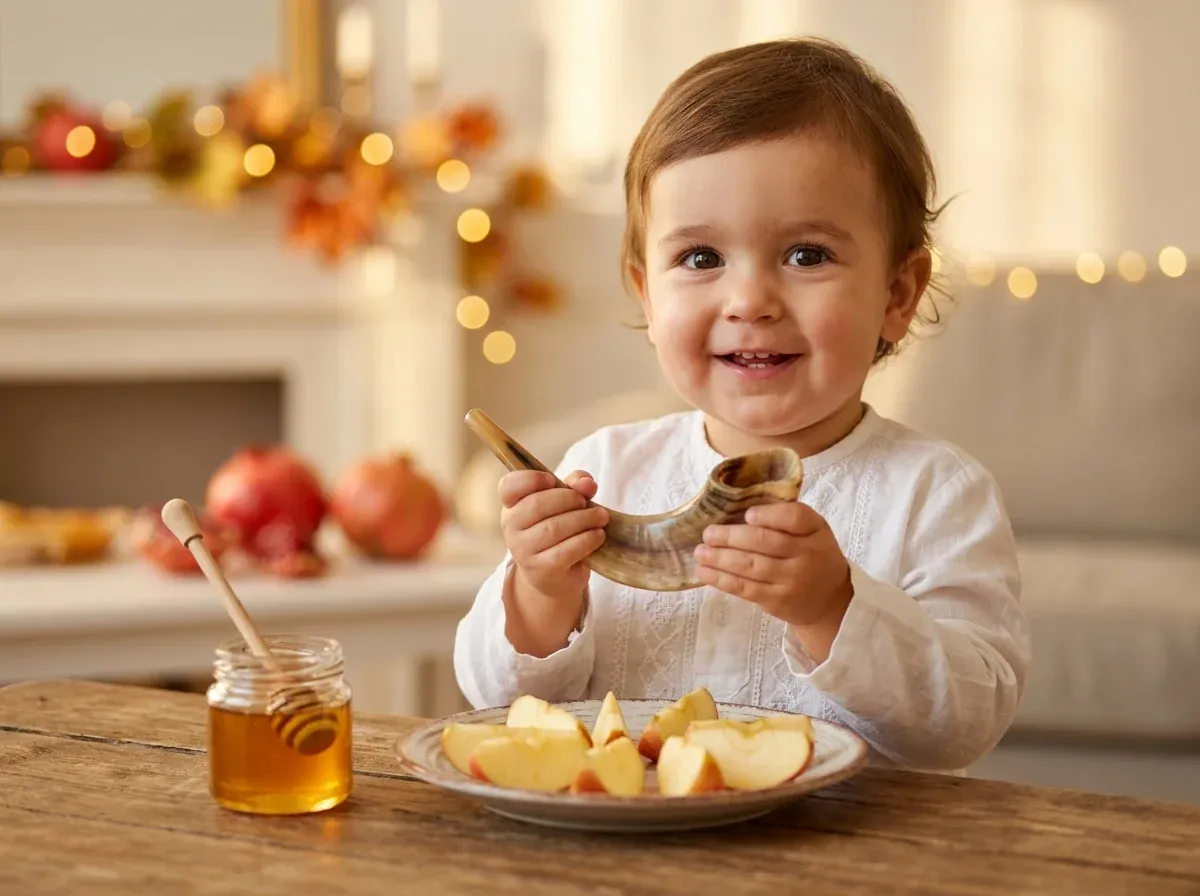
- 🍎 Apple and honey: "We dip the apple in honey because we're wishing our whole family a sweet, yummy new year."
- 📯 Shofar: "That's a shofar — it's made from a ram's horn, and when we blow it, it's like a big wake-up call that says: let's be extra kind this year."
- 🍞 Round challah: "Our bread is round today because the year goes round and round, like a circle — and a new one is starting right now."
- 🌟 Fresh start: "Rosh Hashanah is like a birthday for the whole world. Everyone gets to say sorry for anything they did wrong and start over fresh."
- 🍏 Pomegranate (for older preschoolers): "See all those little seeds? We eat pomegranate because we hope our new year is as full of good things as the pomegranate is full of seeds."
Don't try to deliver all five in one sitting. Spread them across the days leading up to the holiday. Say the apple-and-honey line when you're at the grocery store picking up apples. Say the shofar line right before you watch a video of one being blown. Repetition in context is how toddlers build lasting understanding — the same principle behind why reading the same book forty-seven times in a row is actually great for them, not just exhausting for you.
Hands-On Traditions Little Kids Love
For children under six, participation is comprehension. If they can touch it, taste it, or make noise with it, the meaning transfers. Abstract concepts — "renewal," "repentance," "divine judgment" — stay abstract. But dipping an apple into honey and hearing the word "sweet" used about the coming year? That's a sensory memory that links directly to a feeling, and feelings are how traditions take root.
A few hands-on activities that work beautifully with this age group:
- Make a "sweetness jar": In the days before Rosh Hashanah, have your child drop a small slip of paper into a jar each time something good happens. On the holiday, read them together as wishes for the new year.
- Blow a toy horn or kazoo: If you don't have a shofar at home, letting a toddler hear the sound (search for shofar on YouTube) and then blow their own noisemaker connects them to the tradition physically.
- Round challah pull-apart: Let them help tear pieces of the round loaf. The act of sharing it with everyone at the table — and naming each person — makes the "whole world" idea concrete.
- Apple-print cards: Dip a halved apple in paint or ink and stamp cards to send to grandparents. It links the apple symbol to the idea of wishing others a good year.
- Draw "something I want to do better": Even a scribbled picture from a three-year-old ("I'll try not to take Lila's toys") captures the idea of teshuvah — return — in a way the child actually owns.
These activities don't require any religious background knowledge from your child. They just need to feel the holiday — and meaning will accumulate over years of repetition, the same way all the best family traditions work. Think of it like the approach parents use to beat the summer reading slump: rather than forcing comprehension, you create enjoyable associations with the activity and let curiosity do the rest. The same principle applies as you move through the fall season — if Halloween is on the horizon, it's worth thinking about which non-candy Halloween treats kids actually remember so every celebration leaves a lasting impression.
Making the Story Personal
Here's something that child development research keeps confirming: young children absorb information far more deeply when they are part of the story. Not when they watch a character do something — when they ARE the character. It's why a toddler who squirms through a documentary about animals will sit perfectly still listening to a story where they go on a jungle adventure. The brain pays more attention to stories about itself.
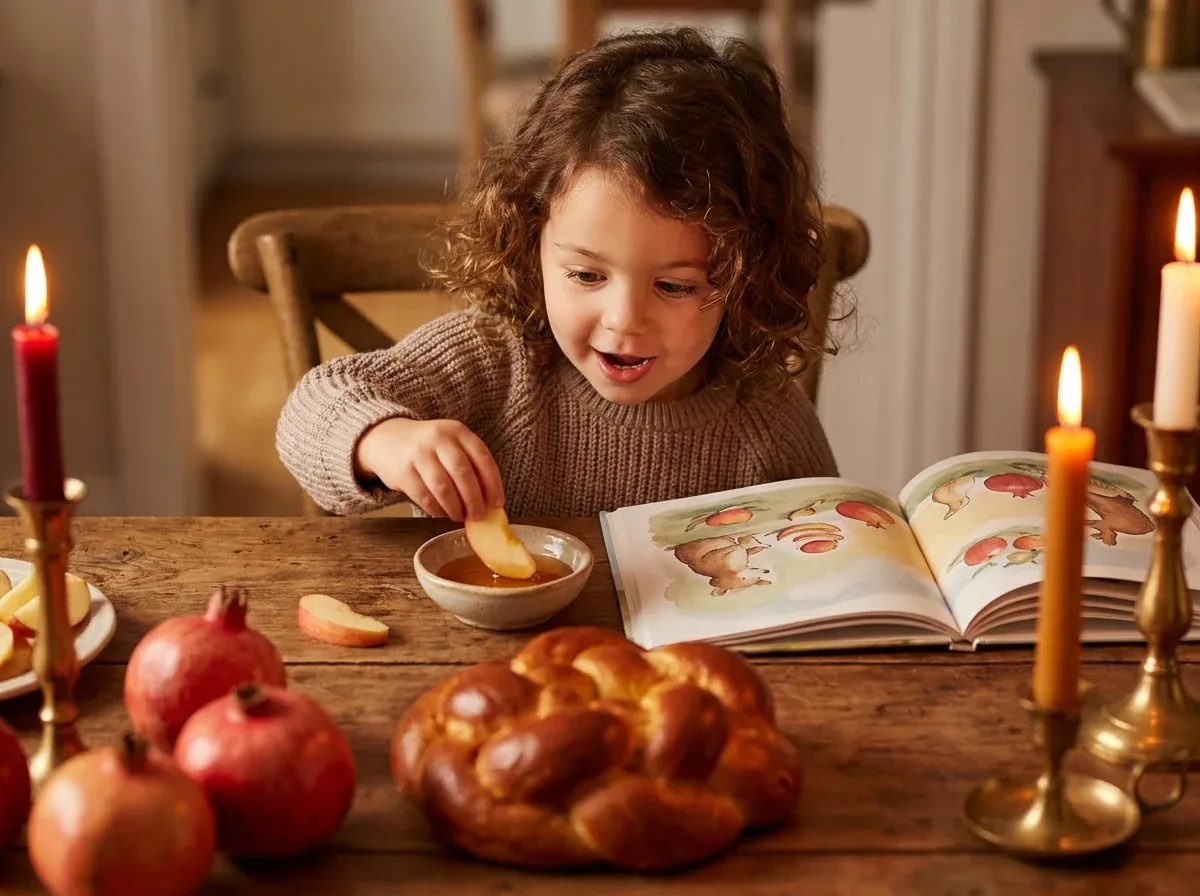
This is especially powerful when introducing abstract concepts like a new year, forgiveness, or fresh starts. If the story is "a bunny celebrated Rosh Hashanah and ate honey," your child learns about a bunny. If the story is "Liam blew the shofar and dipped his apple in honey and decided to be extra kind to his sister this year," your child lives through the holiday as themselves — and the emotional imprint is completely different.
When your child sees their own face in the illustrations of a Rosh Hashanah story — not just their name on the cover, but their actual features in every scene — the holiday stops being something that happened to characters in a book and starts being something that happened to them. That sense of personal ownership over a tradition is one of the most powerful gifts you can give a young child. It's the same reason personalized birthday books create stronger associations with celebration than generic ones: the child's brain treats "I was there" very differently from "someone else was there." If you're curious what genuine face personalization looks like versus simple name-swapping, this guide to personalized children's books with name and picture breaks down exactly what to look for.
For Rosh Hashanah specifically, a story where your child blows the shofar, shares honey with the family, and makes a kind wish for the new year isn't just entertainment — it's a rehearsal. And rehearsal is one of the most effective learning tools there is for ages 2–6. If you're already thinking ahead to what to give as a holiday gift, the post on Rosh Hashanah gifts for kids explores exactly this idea in more depth.
Frequently Asked Questions
How do you explain Rosh Hashanah to a child?
Start with the physical before the philosophical. Tell them: "Rosh Hashanah is the Jewish New Year — it's like a birthday for the whole world. We eat sweet foods to wish for a sweet year, and we hear a special horn called a shofar that reminds us to be our best selves." Keep it to one idea at a time, repeated across a few days. Understanding deepens with each encounter, not from a single explanation.
What is Rosh Hashanah in simple terms?
Rosh Hashanah (literally "head of the year" in Hebrew) is the Jewish New Year, observed on the first and second days of the Hebrew month of Tishrei. It marks the start of ten days of reflection — the High Holidays — that end with Yom Kippur. Traditions include hearing the shofar, eating apples with honey, and sharing round challah. For kids, the most accessible framing is: "Everyone gets a fresh start, and we celebrate with sweet food."
How do you teach Rosh Hashanah to preschoolers?
Preschoolers (ages 3–5) learn best through doing and through stories. Combine both: involve them in a hands-on activity (making the apple-honey dip, tearing the round challah, listening for the shofar) and reinforce the meaning through a story where they are the main character. Avoid long explanations — one sentence per symbol is plenty. Return to the same language each year, and concepts will accumulate naturally over time.
How do you explain Rosh Hashanah to a non-Jewish child?
Focus on the universal ideas: a new beginning, wishing people well, being kind on purpose. You can say: "Jewish families celebrate a special New Year in the fall. They eat apples dipped in honey to wish for sweetness, and they listen to a horn called a shofar. It's a time to think about being their best self." Most children find the shofar fascinating and the apple-honey ritual immediately appealing — start there and let curiosity guide the conversation.
At what age can kids understand what Rosh Hashanah means?
Toddlers from about age two can participate meaningfully in sensory traditions — the food, the sounds, the gathering. The concept of "a new year" with associated wishes becomes more concrete between ages four and six. The deeper ideas of reflection and intentional kindness develop through the early school years. The key is to start early with the physical experience and layer in meaning gradually — by the time they're old enough to ask real questions, the emotional foundation is already in place.
Introducing Rosh Hashanah to a young child isn't a one-day project — it's a years-long conversation that starts with honey on an apple slice and grows into something much richer. The most important thing you can do this year is give them an experience that feels personal, joyful, and theirs. Whether that's through the apple-dipping ritual, the sound of the shofar, or a story where they're the one blowing it and wishing their family a sweet new year — when a child feels like they belong inside a tradition, they carry it forward. If you'd like to create a personalized Rosh Hashanah storybook where your child's own face appears in every illustration, you can start building one at Epic Little Hero — it takes just a few minutes, and the result is something they'll ask to read every year.
👉 Ready to make your child the hero of their own Rosh Hashanah story? Create your personalized book and upload a photo — we'll handle the rest. Shanah tovah u'metukah — a good and sweet new year to you and your little one.