Name on the Cover vs. Their Actual Face Inside: What 'Personalized' Really Means in a Kids' Book
Most 'personalized' children's books just swap in a name. Here's what separates that from a book where your child's real face appears on every illustrated page — and why the difference matters more than you'd think.
You've found a sweet personalized children's book online. It has your daughter's name on the cover, maybe on the dedication page, maybe shouted by a friendly bear on page four. It's lovely. She'll smile when she hears her name read aloud. And then — quietly, gradually — the book becomes just another book on the shelf.
That's not a failure of the book. It's a clue about what "personalized" actually means to a child. Because there are two very different things being sold under that word right now, and most people shopping for personalized books don't realize they're choosing between them.
Quick answer: Name personalization swaps in your child's name (and sometimes hair color or skin tone) across a pre-written story. Face personalization uses your child's actual uploaded photo to generate illustrations where the hero genuinely looks like them — same face, same features, every page. The experiential difference between the two is enormous, and it changes how a child connects with the story.
What Most 'Personalized' Books Actually Do
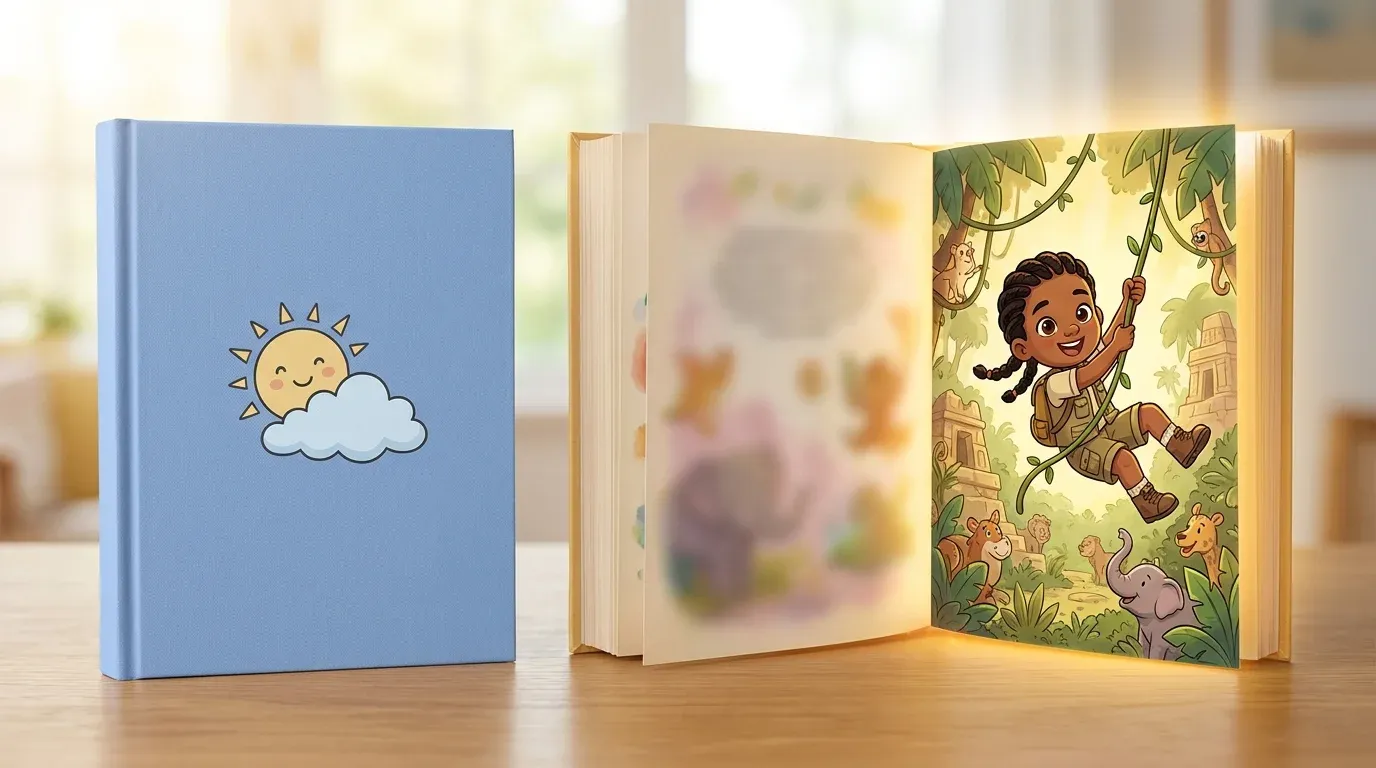
The majority of popular personalized children's books — including many bestsellers from well-known brands — are built on what's called name-merge technology. It works exactly like a mail-merge letter: a fixed story template is written once, and your child's name, and sometimes a few physical descriptors, are dropped into the gaps. "One day, [NAME] set off on a great adventure..." The illustrations don't change. The hero in the pictures is a generic illustrated character who could be anyone.
Many of these books also offer light physical customization — you might choose 'brown hair' or 'light skin tone' at checkout, and the illustrator's original character gets a slight adjustment. It's a step up from pure name-merge, but the face in those drawings is still not your child's face. It's an artist's approximation of a type. Your daughter with the gap-toothed grin and the specific way her eyes crinkle when she laughs? That's not in there. And it goes further than just the main character — if you want siblings, grandparents, or parents to appear in the story too, name-merge books can't do that either, which is exactly what personalized children's books with family names and real faces set out to solve.
None of this makes name-personalized books bad. They can be beautifully written, warmly illustrated, and genuinely delightful. But it's worth being honest about what you're getting: a story in which your child's name appears, not a story in which your child appears. That's a meaningful distinction — especially when you're comparing options before buying. Our full comparison of leading brands breaks this down side by side: Wonderbly vs. Hooray Heroes vs. Epic Little Hero.
Why Seeing Their Own Face Changes Everything
Children's relationship with stories is fundamentally about identification. When a child sees a character in a book, they're asking — consciously or not — "Is that me? Could that be me?" Educators and parents consistently observe that self-recognition in stories increases engagement, the desire to re-read, and how deeply a child connects with the plot. Hearing your name is a signal. Seeing your face is proof.
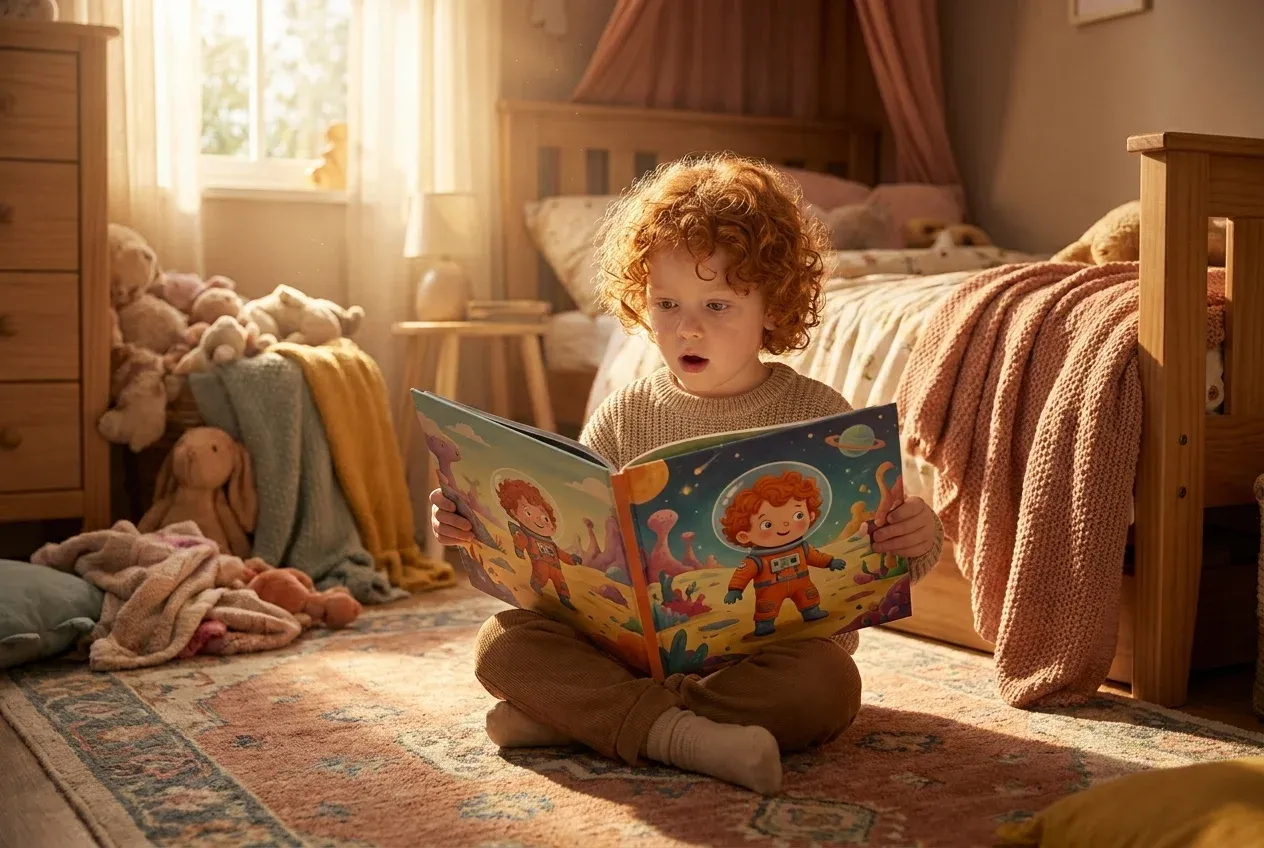
There's a specific moment parents describe again and again: the first time a child opens a face-personalized book and realizes that the kid on the page actually looks like them. Not a character with similar hair. Not a generic hero with their name in a speech bubble. Their face. Their eyes. Their expression. The pause before the reaction — that small, silent moment of recognition — is something name-only books simply cannot produce.
For younger children especially (roughly ages 2–7), this distinction carries extra weight. At this developmental stage, the line between story-world and real world is wonderfully porous. A 3-year-old doesn't fully separate "that character is supposed to represent me" from "that IS me." When the hero of the story genuinely looks like them, the story isn't fiction — it's a vision of who they are and who they could be. That kind of mirror is quietly powerful for confidence and self-concept in ways that a name swap simply doesn't reach. If you're thinking about this as a gift, our guide to personalized book gifts for toddlers covers why the face-first approach lands so differently at this age.
How Face Personalization Actually Works
Until recently, putting a specific child's face into a storybook illustration meant hiring a custom illustrator — a process that cost hundreds of dollars and took weeks. AI illustration technology has changed that completely. At Epic Little Hero, the process works like this:
- You upload 3–5 clear photos of your child — different angles, good lighting works best.
- You choose a story theme: Space, Fantasy, Jungle, Ocean, Dinosaurs, or Magic.
- Our AI generates a fully illustrated storybook where every illustration features a character who genuinely looks like your child — same face shape, same features, same expression.
- You receive a print-ready digital PDF, usually within minutes.
- Print it at home or at any local print shop — no shipping wait, no subscription required.
The result isn't a photo dropped onto a clip-art background. The AI creates illustrations in a consistent storybook style, with your child's real face rendered as part of the art — not pasted on top of it. The character moves through the story the way an illustrator would draw them across a full book: from different angles, in different scenes, with expressions that match the plot. It's the difference between a sticker and a painting.
The whole experience — upload, customize, generate, download — typically takes under 10 minutes. And at $29, it costs less than most name-only personalized books from premium brands. You can see exactly how it works at our How It Works page, or browse finished examples at our example gallery to see what the illustrations actually look like before you commit.
Frequently Asked Questions
What is the difference between name personalized and face personalized books?
Name personalized books insert a child's name (and sometimes basic physical traits) into a pre-written story template. The illustrations are generic and don't change. Face personalized books use the child's actual uploaded photos to generate illustrations where the story's hero genuinely looks like that specific child — same facial features, across every page of the book.
Are face personalized books better than name personalized books?
"Better" depends on what you're looking for. Name personalized books are often beautifully written and make a lovely gift. But if your goal is deep engagement — a book the child returns to repeatedly because they genuinely see themselves in it — face personalization produces a more powerful reaction, particularly for children under 7. The self-recognition element changes how children relate to the story.
How many photos do I need to upload for face personalization?
At Epic Little Hero, 3–5 photos give the AI enough reference to generate consistent, accurate illustrations. Clear, well-lit shots work best — a mix of front-facing and slight angles helps the AI capture your child's features from different perspectives, which makes the storybook illustrations more recognizable and natural-looking.
Do popular brands like Wonderbly or Hooray Heroes use face personalization?
Most major name personalization brands use name-merge templates with optional physical customization (hair color, skin tone). Hooray Heroes offers some facial resemblance features, but the process is limited compared to AI-generated face matching. For a detailed breakdown, see our full comparison of Wonderbly, Hooray Heroes, and Epic Little Hero.
Can I print a face personalized book at home?
Yes. Epic Little Hero delivers a print-ready PDF that you can print at home, at a local print shop, or at any major printing service. There's no shipping delay, no subscription, and no minimum order — just a single $29 book, ready to print when you are.
What age is face personalization most effective for?
Face personalized books tend to have the strongest impact between ages 2 and 8, when children are most captivated by stories featuring characters they identify with directly. That said, parents of older children regularly report that seeing themselves accurately illustrated is still a genuinely surprising and memorable experience at any age. The bedtime story context is particularly powerful for younger children, who revisit favorite books night after night.
If you've been weighing name-only books against something more personal — and you want the gift to actually land — the difference really does come down to recognition. A child hearing their name in a story knows the book is "about" them. A child seeing their own face in the illustrations knows the story is them. If you're ready to see what that looks like for your child, create your book at Epic Little Hero in under 10 minutes, starting at $29.