Stories to Help Kids Be Brave: Why Narrative Rehearsal Works
When something scary is coming — a doctor's visit, a first day of school, the dark — the right story can quietly prepare your child to face it. Here's why stories work, and how to make yours even more powerful.
Your child has something scary coming up. Maybe it's a vaccination they've been dreading for weeks. Maybe it's the first day at a new school, or the moment the lights go out and the shadows feel too big. You've reassured them. You've explained that everything will be fine. And somehow, none of it has landed. Not really.
That's not a parenting failure — it's a developmental truth. Young children don't process fear through logic. They process it through story. Stories to help kids be brave work differently from reassurance: a child who has heard a hundred "you'll be okay"s can still freeze at the doctor's office, but a child who has already lived through a scary moment inside a story shows up with something different — a memory of what brave feels like.
Quick answer: Stories to help kids be brave work because they let children emotionally rehearse scary situations before facing them in real life. When a child hears — or better yet, stars in — a story about facing a fear and coming out the other side, their brain stores it as experience. They arrive at the real moment not as a stranger to it, but as someone who has already been there and survived.
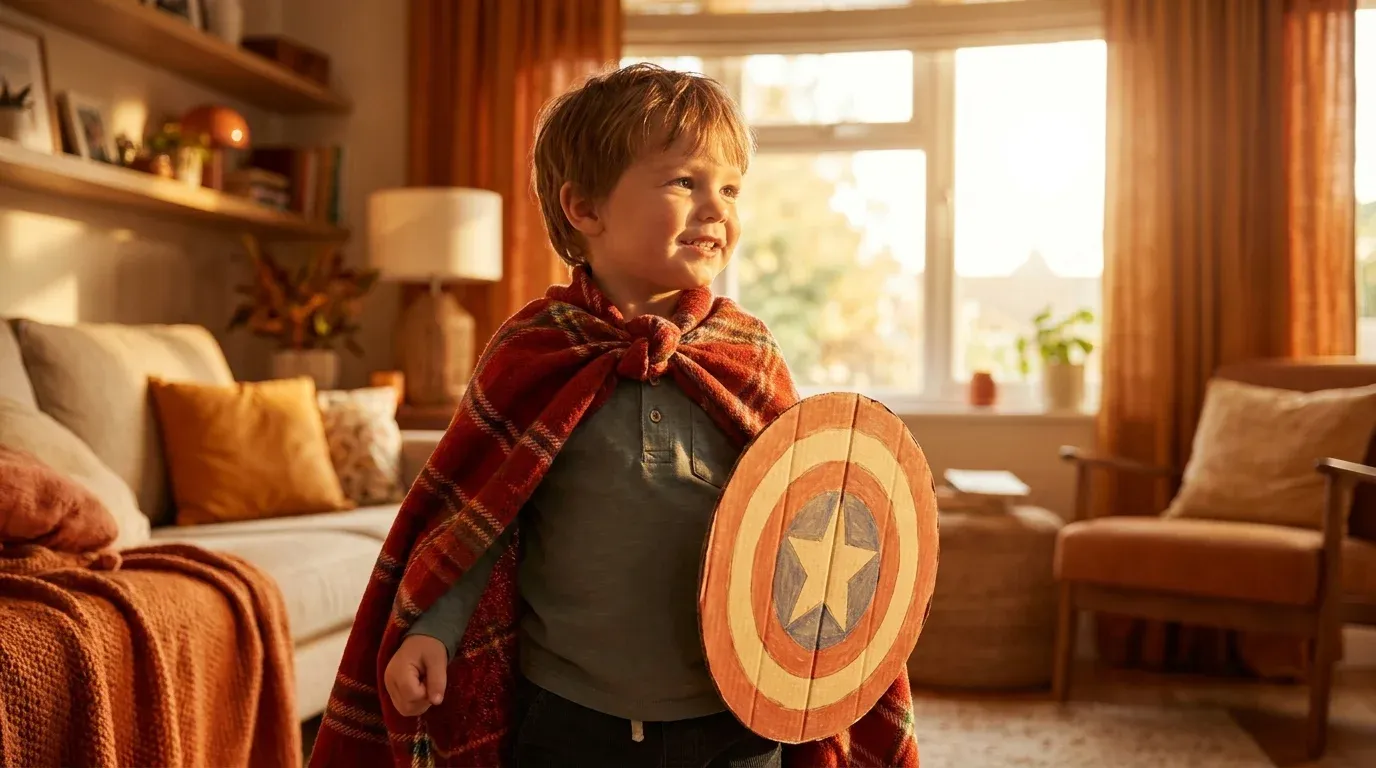
Why Stories to Help Kids Be Brave Actually Work
Child development researchers have long understood that play is how children prepare for life. Pretend play — where your four-year-old "operates" on a stuffed animal before their own check-up — isn't just cute. It's functional. The brain is rehearsing an emotional sequence: the anticipation, the discomfort, the resolution. Stories work the same way, and in some respects they work even better, because they can reach the "resolution" part with much more satisfying detail.
Psychologists call this narrative rehearsal — the idea that by mentally walking through a challenging scenario in a safe context, we reduce the emotional charge attached to it. For adults this might look like visualising a difficult conversation before having it. For a five-year-old, it looks like hearing a story where someone just like them feels scared, takes a deep breath, and discovers they can do hard things. The story becomes a script the child can silently reference when reality arrives.
This is also why repetition matters. If you've ever wondered why your toddler wants the same book read forty-seven times, it's partly because each re-reading deepens the neural groove. They're not bored of the story — they're strengthening a feeling. For a child facing a specific fear, a relevant story read multiple times before the event is far more useful than a single reassuring conversation.
Everyday Scary Moments Stories Can Ease
Most childhood fears cluster around a handful of universal experiences. The good news is that these are exactly the moments stories handle best — because they're emotionally intense, time-limited, and have a clear "you did it" ending that a story can deliver in advance.
- The doctor's office or a vaccination: Fear of pain and of strangers doing things to their body. A story where a child character feels scared, breathes through it, and gets a sticker on the other side can genuinely shift the anticipation. For more strategies, see our guide on helping a child who's afraid of the doctor — a practical prep playbook worth reading alongside.
- Starting at a new school or nursery: The fear of the unfamiliar, of not knowing anyone, of not knowing where anything is. Stories about brave characters navigating new places help children mentally map the emotional territory. Our post on helping your child adjust to a new school goes deeper on this transition.
- Fear of the dark: This one is less about a specific event and more about a nightly moment. Stories where darkness turns out to hold something magical rather than dangerous — and where the child character discovers their own ability to stay calm — can slowly reframe the bedroom at night.
- Big changes: A new sibling, a house move, a change in routine. Any disruption to a young child's world can feel enormous. Stories that acknowledge the feeling ("this is strange and a bit scary") before moving to resolution ("and here is what brave looks like") validate and equip at the same time.
- Social anxiety or shyness: For children who hang back in groups or feel nervous meeting new people, stories about a character who feels exactly that way — and who finds their voice anyway — can quietly build the template. Our piece on helping a shy child build confidence offers complementary approaches.
The pattern is consistent across all of these: the story doesn't eliminate the fear. It gives the child a map for navigating it. There's a difference between "don't be scared" (which closes the conversation) and "here's what brave looks like" (which opens a path forward).
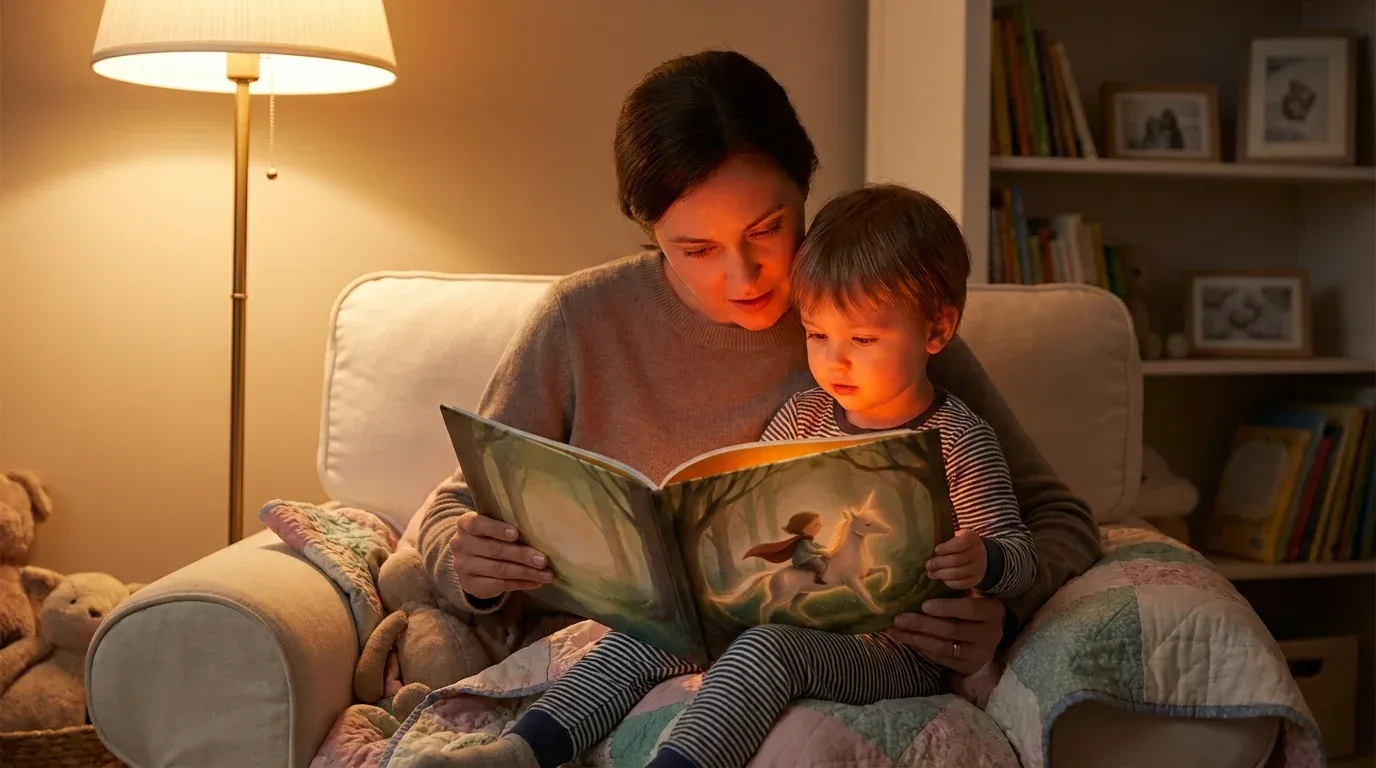
Making Your Child the Brave Hero (Not Just the Reader)
There's a meaningful difference between a child who reads about a brave character and a child who is the brave character. When your child hears a story about "Mia" who felt scared at the doctor but took a deep breath and was so brave — that's useful. When they hear a story where they felt scared at the doctor, took a deep breath, and everyone cheered for them by name — something different happens in the brain. It shifts from observation to memory.
This is the core of what personalized stories do that generic picture books can't: they give the child a reference point that feels like it belongs to them. A child who has already "been brave" in a story — with their own face in the illustrations, their own name spoken in every moment of triumph — arrives at the real scary moment with a kind of quiet ownership over the script for courage. They've done this before. Sort of. And "sort of" is enough to shift the emotional math.
This works especially well because young children's brains don't sharply distinguish between things that happened in stories and things that happened in real life — not in the way adult brains do. To a four-year-old, being the hero of a story is genuinely formative. It is, in a real sense, something they did. That's not a quirk to be corrected — it's a feature to be used. A personalized story where your child's actual face appears in every illustration, where they are shown being curious, calm, and courageous, plants an identity seed: I am someone who can be brave.
When choosing a story for this purpose, the emotional arc matters as much as the theme. Look for stories that acknowledge the scary feeling (not ones that skip straight to "it's fine!"), show the character choosing to try anyway, and end with a genuine sense of accomplishment — not just "it wasn't so bad after all," but "I did something hard and I'm glad I did." That arc is the one worth rehearsing.
Frequently Asked Questions
What are some inspiring stories for kids about bravery?
Classic picture books like The Cowardly Lion's arc in The Wizard of Oz, The Very Brave Lion, and countless stories about first-day jitters all touch on bravery — and they work precisely because they show a character feeling scared and choosing to try anyway. For a child facing a specific fear, the most useful story is one that mirrors their exact situation: same type of event, same age character, same emotional arc of fear → courage → pride. A personalized story that puts your child directly in this arc — with their real face in every illustration — tends to land most powerfully, because the brain doesn't have to make the imaginative leap of "this is like me" — it simply sees them.
How do I help my child be brave?
The most effective approach isn't to tell a child to be brave — it's to help them rehearse what bravery feels like before the moment arrives. This means: naming the scary thing openly ("I know the doctor visit feels scary"), normalising the feeling ("lots of people feel nervous about that"), and then giving them a story where someone like them — or ideally, where they themselves — felt that way and came through it. Practice also helps: role-play, books, and gentle, low-stakes versions of the scary situation whenever possible.
What are some good books to teach kids to be brave?
Some reliable picture books for teaching courage include Go Away, Big Green Monster! (for fear of the dark), The Invisible String (for separation anxiety), First Day Jitters (for school nerves), and Ruby the Copycat (for social anxiety). For fear of doctors specifically, The Berenstain Bears Go to the Doctor remains a gentle classic. Beyond off-the-shelf titles, a personalized storybook — where the theme, character, and emotional journey are built around your specific child's specific fear — can go further than any generic title, because the identification is complete rather than partial.
How does reading brave stories actually change how a child behaves?
Stories change behaviour through identity, not instruction. When a child repeatedly hears stories in which a character like them is brave, curious, and capable — especially stories where they are the character — they begin to integrate that trait into their self-image. The next time a real scary moment arrives, the question shifts from "will I be okay?" to "what would the brave version of me do?" — and they already have an answer, because they've lived it in story. That's a meaningful shift, and it's why reading the same brave story multiple times before a scary event is a worthwhile investment.
What are some real-life examples of bravery kids can relate to?
For young children, relatable bravery isn't about extraordinary acts — it's about ordinary hard moments met with ordinary courage: going to the doctor even when you're scared, saying hello to a new friend even when it feels awkward, sleeping in a dark room even when the shadows feel big, trying a new food, speaking up in class. These micro-braveries are what picture books about courage are best at depicting, because they meet children exactly where they are. Pointing out these moments in your child's own life — "remember when you walked into that birthday party and you didn't know anyone? That was brave" — reinforces the identity you want them to carry.
If your child has a scary moment coming up — a first day, a medical appointment, a big new experience — there's something genuinely useful you can do right now, before the day arrives. Give them a story where they're already the brave one. At Epic Little Hero, you upload a photo of your child, choose a theme that fits their world, and we create a personalized illustrated storybook where their real face appears on every page — as the hero. It's a story they'll want to hear again and again, which means the rehearsal keeps working. Start creating their book — it's one of the more meaningful things you can put in their hands before a hard day.