Back-to-School Anxiety in Preschoolers: 7 Signs and How to Soothe Them
Back-to-school anxiety in preschoolers looks different from older kids' nerves — and the fixes are different too. Here are 7 signs to watch for and practical strategies that actually work for ages 3–5.
Your 4-year-old was excited about starting school all summer. You bought the backpack together. You practiced their teacher's name. And then, sometime in the last two weeks of August, something shifted. The meltdowns started. The clinging. The stomach aches that appear right after breakfast. If this sounds familiar, you're not watching your child fall apart — you're watching them feel something very big in the only way they know how.
Back-to-school anxiety in preschoolers is not the same as the nerves an 8-year-old might feel about a new teacher. For children aged 3–5, school anxiety is wired into their most primitive fear: separation from you. They don't yet have the language or the cognitive tools to say "I'm scared I won't see you again." So instead, they say it with their bodies, their behavior, and sometimes a tantrum in the cereal aisle.
Quick answer: The most common signs of back-to-school anxiety in preschoolers are clinginess, sleep disruption, regression, physical complaints, tantrums, withdrawal from play, and repetitive questions about drop-off. The most effective soothing strategies combine consistent goodbye rituals, simple language scripts, and rehearsing the first day through story before it happens.
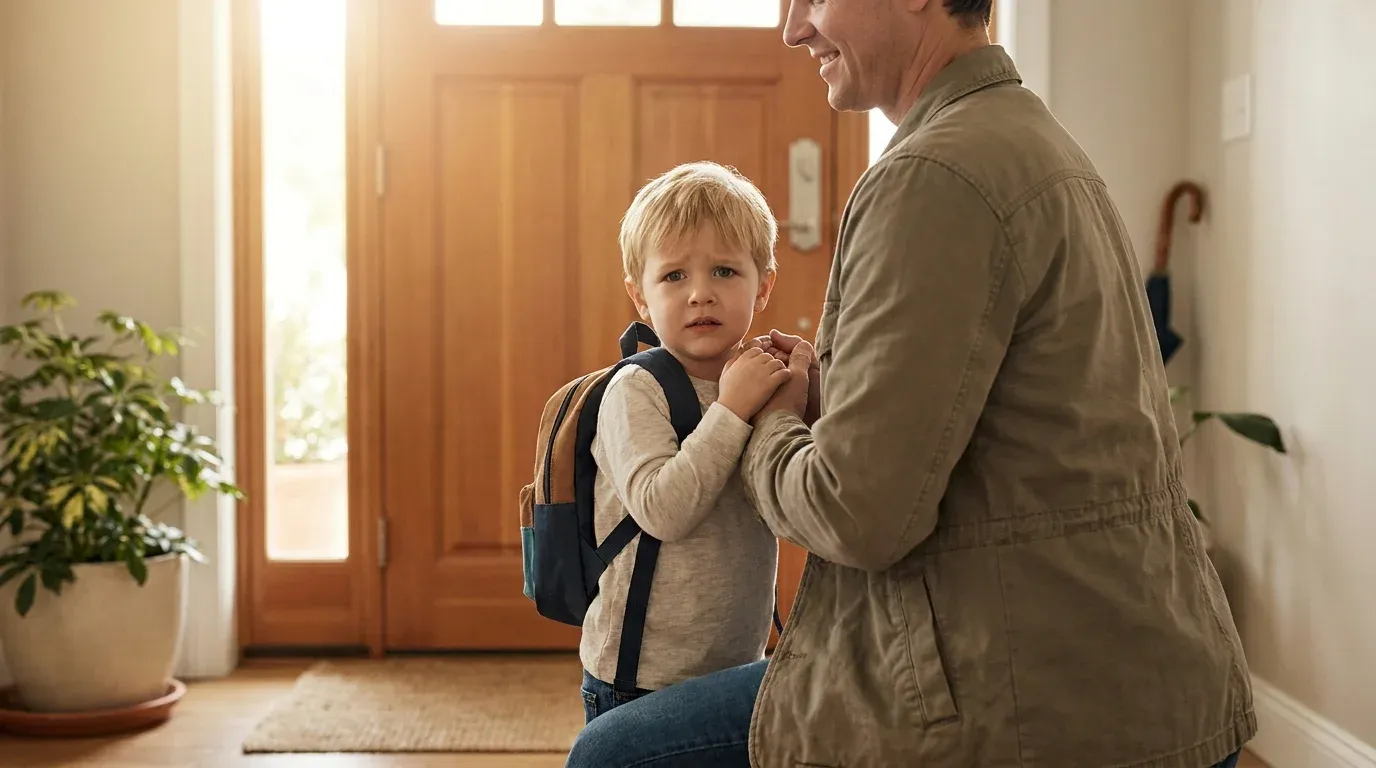
7 Signs of Back-to-School Anxiety in Preschoolers
Here's the tricky thing about anxiety in preschoolers: it rarely looks like worry. It looks like defiance, tummy trouble, and suddenly needing to sleep in your bed again. Because young children's nervous systems haven't developed the emotional vocabulary to say "I'm anxious," their bodies do the talking instead.
Watch for these 7 signs in the weeks leading up to — and just after — the first day of school:
- Clinginess or separation distress that's more intense than usual — even at home
- Sleep disruption: trouble falling asleep, night waking, or nightmares about school
- Physical complaints with no medical cause — stomach aches, headaches, or nausea at drop-off time
- Regression: returning to behaviors they'd outgrown (baby talk, accidents, thumb-sucking)
- Increased tantrums or emotional outbursts, especially around school-related topics
- Withdrawal from play or loss of interest in activities they normally love
- Repetitive anxious questions: "Will you come back?" "What if I need you?" "Who will help me?"
The last sign is actually a hopeful one. Repetitive questions mean your child is trying to mentally rehearse the situation — they're seeking reassurance that the story has a good ending. Your job isn't to silence those questions. It's to answer them so consistently and warmly that their brain begins to believe the answer.
One note for parents who are wondering how to help an anxious child go to school without forcing or bribing: avoidance makes anxiety worse in the long run. The goal isn't to make them not feel scared — it's to help them feel scared and go anyway, with your support as the safety net.
Calming Routines That Actually Work for Ages 3–5
Preschoolers are creatures of ritual. Their brains find safety in predictability — when they know exactly what comes next, the unknown feels smaller. This is why a consistent morning routine isn't just logistically helpful. It's genuinely therapeutic for an anxious 3–5 year old.
Here are the routines that child development specialists return to again and again — and the specific scripts that make them land:
- The same goodbye every single day. Choose a short ritual — a special handshake, three kisses on the nose, a whispered phrase — and repeat it identically. This gives their nervous system a "this is how the goodbye goes" signal. Then leave promptly and confidently. Lingering, however loving, amplifies distress.
- "I will always come back" — said the same way, every time. Preschoolers don't have a firm grasp of time, but they do track patterns. The more reliably you return after saying you will, the more their brain can hold onto that promise on hard days.
- A connection object. A small piece of home they carry in their pocket — a photo of the family, a small smooth stone you both touched — gives anxious children a tangible anchor when they miss you.
- Pre-loaded language for moments they'll face alone. Teach them two or three simple sentences: "Can I play with you?" "I feel sad. Can I talk to the teacher?" "I miss my mom, but I'm okay." Children who have words for their experience feel less overwhelmed by it.
- An anchor activity waiting for them. Find out what's first in the classroom routine and make it something they're excited about. "When you walk in, it's free play time with the blocks" gives them something to walk toward, not just away from you.
If your child is starting preschool for the first time rather than returning, the two-week window before school begins is your most powerful preparation window. Our guide on how to prepare your toddler for their first day of daycare walks through a gentle, day-by-day approach to building readiness — many of the same principles apply to preschool.
One thing to avoid: over-explaining or over-reassuring. Saying "School will be SO fun, you'll love it, I promise!" can backfire, because if the first day is hard, your child loses trust in your words. Better: "Some days at school will be great. Some days will feel tricky. And I will always come pick you up." Honest, specific, and unconditional.
Rehearsing the First Day Through a Story
Here's a technique that child therapists and early childhood educators use — and that many parents have never heard of: narrative rehearsal. The idea is simple and grounded in how young children's brains actually work. When a child hears a story about a character facing something scary and coming out okay on the other side, their brain processes it as a kind of lived experience. They absorb the emotional arc — the fear, the small brave step, the good outcome — and file it as a reference point.
For preschoolers, this is especially powerful because they're still learning to distinguish story from reality in a fluid, magical way. If the character in the story looks like them, has their name, and handles the first day with courage, that story becomes a script their own nervous system can draw on. "I know how this goes," their brain registers. "The kid who looks like me did this, and it was okay."
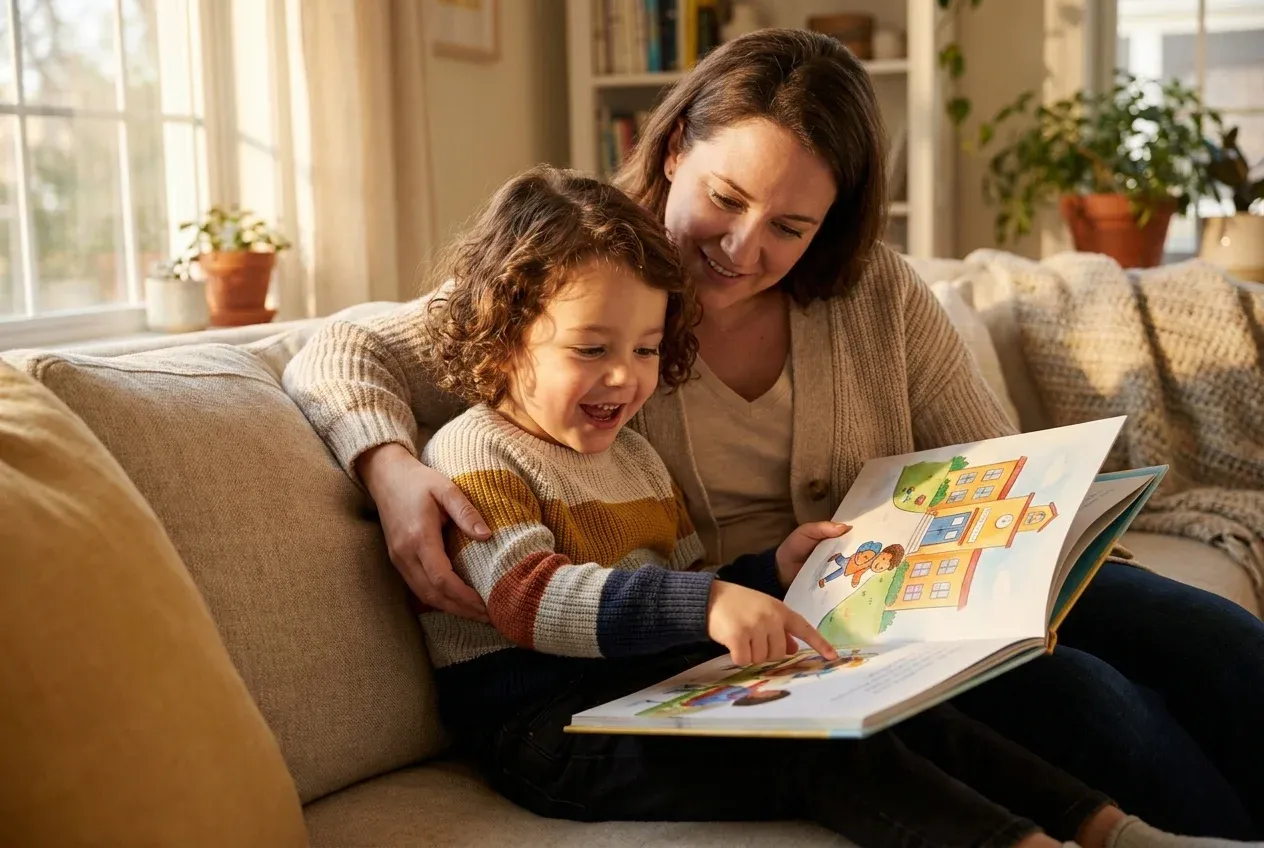
You can create a simple version of this at home. A few nights before school starts, tell a story at bedtime where the main character has your child's name and faces their exact situation. Keep it realistic — not a fairytale where everything is magically perfect, but a story where the character feels nervous, takes a breath, finds one kind person, and ends the day feeling proud. The key details: the child misses their parent, tells a teacher, and Mom or Dad arrives exactly as promised.
For parents who want to take this further, a personalized book — one where your child's actual face appears in every illustration — gives this rehearsal technique its most powerful form. Rather than a story about a character who sort of sounds like them, your child sees themselves: their own eyes, their own hair, their own expression, confidently navigating that first school morning. We've written more about how stories help build a child's self-esteem and why this kind of positive mirroring works on a deeper level than praise alone.
Pair the story with a conversation afterward: "What did [child's name in the book] do when they felt nervous?" "What happened at the end?" Letting your child narrate the story back to you solidifies the positive script in their memory. Read it again the night before school. And again the morning of, if there's time.
If you're looking for gift ideas for the preschooler in your life who's heading into their first year, the piece on the best gift for a child starting preschool covers exactly why story-based gifts outperform almost everything else on the list — and why a confidence-building book tends to get read far more than a backpack charm ever gets noticed.
Frequently Asked Questions
What is the most common sign of back-to-school anxiety in preschoolers?
Clinginess and physical complaints — particularly stomach aches on school mornings — are the most common signs. Because preschoolers can't yet name their anxiety, it often shows up as physical symptoms or regression to younger behaviors. Repetitive questions about drop-off ("Will you come back?") are also very typical and are actually a healthy attempt to process the situation. Unlike older children who may worry about friendships or performance, preschoolers' anxiety almost always centres on one core fear: that their parent won't return.
Should I force my anxious child to go to school?
In most cases, yes — but with enormous empathy and structure. Avoidance (keeping an anxious child home) typically makes anxiety worse over time, because the brain learns that school is a threat worth escaping. The goal is to help your child tolerate the discomfort with your support, not to eliminate the discomfort entirely. If anxiety is severe or persistent beyond the first few weeks, speak with your child's pediatrician or an early childhood counselor.
How long does back-to-school anxiety last in preschoolers?
For most 3–5 year olds, separation distress at drop-off eases within 2–4 weeks as the new routine becomes familiar. If your child's anxiety is not improving after a month, or if it's accompanied by physical symptoms throughout the day (not just at drop-off), it's worth checking in with your pediatrician to rule out other factors.
What can I say to my preschooler to calm school anxiety?
Use simple, honest, and consistent language. Scripts that work well for ages 3–5 include: "I will always come back after school." "It's okay to miss me. Your teacher will help you." "Feeling nervous means something new is happening — that's okay." Avoid over-reassuring with "You'll love it!" — stick to statements you can keep. Consistency matters more than the perfect words.
Are personalized books actually helpful for anxious preschoolers?
Yes — when used intentionally. A book where the child sees their own face handling a scary situation activates what's called narrative rehearsal: the brain processes the story as a kind of lived experience and stores the positive outcome as a reference point. This is different from a story about a generic character. Seeing yourself — your own face — be brave makes bravery feel personally possible. It's not magic, but it's well-supported by how young children process story and identity.
If your little one is heading into their first school year with a case of the big feelings, know that what you're seeing is not a warning sign — it's a completely normal response to a completely enormous life change. The children who struggle most with first-day anxiety often have the richest inner lives and the strongest attachments. Your job is not to talk them out of their feelings, but to give them enough tools — scripts, routines, and stories — to feel brave anyway.
At Epic Little Hero, we create personalized storybooks where your child's real face appears in every illustration — not just their name on the cover, but their actual features woven into the artwork. For an anxious preschooler, a book where they see themselves walking through the school door with confidence is more than a sweet keepsake. It's a rehearsal they'll come back to, night after night, building the quiet belief that they can do hard things. If that sounds like something your child needs right now, create their personalized first-day book at Epic Little Hero — it takes about five minutes and arrives as a print-ready PDF you can have in hand before the first bell rings.