How Stories Quietly Build a Child's Self-Esteem (More Than Praise Ever Could)
Praise alone doesn't build a confident child — but the right kind of story does. Here's what the psychology of self-worth in early childhood tells us, and a gentler, more lasting way to help it grow.
You've said it a hundred times. "Good job!" After the drawing. After the somersault. After they spelled their name without help. And you meant every word — because watching your child try hard and succeed is one of the small joys that make parenting feel worth all the hard parts. But if you've ever noticed the compliment landing flat, or your child shrugging it off within seconds, you're not imagining things.
Research in developmental psychology has shown for decades that generic praise — the "great job," the gold-star sticker, the endless "you're so smart" — doesn't reliably build a child's self-esteem. Sometimes it does the opposite, creating kids who are more fragile under pressure, more dependent on external validation, and less willing to try difficult things. So what actually works? The answer, quietly backed by science, might surprise you: stories.
Quick answer: To boost a child's self-esteem, the most lasting approach isn't more praise — it's giving them experiences where they see themselves as capable. When a child reads a story in which a character like them faces a real challenge and succeeds through effort and courage, they begin to internalize "I can do hard things" in a way that sticks far longer than any "good job" ever could.
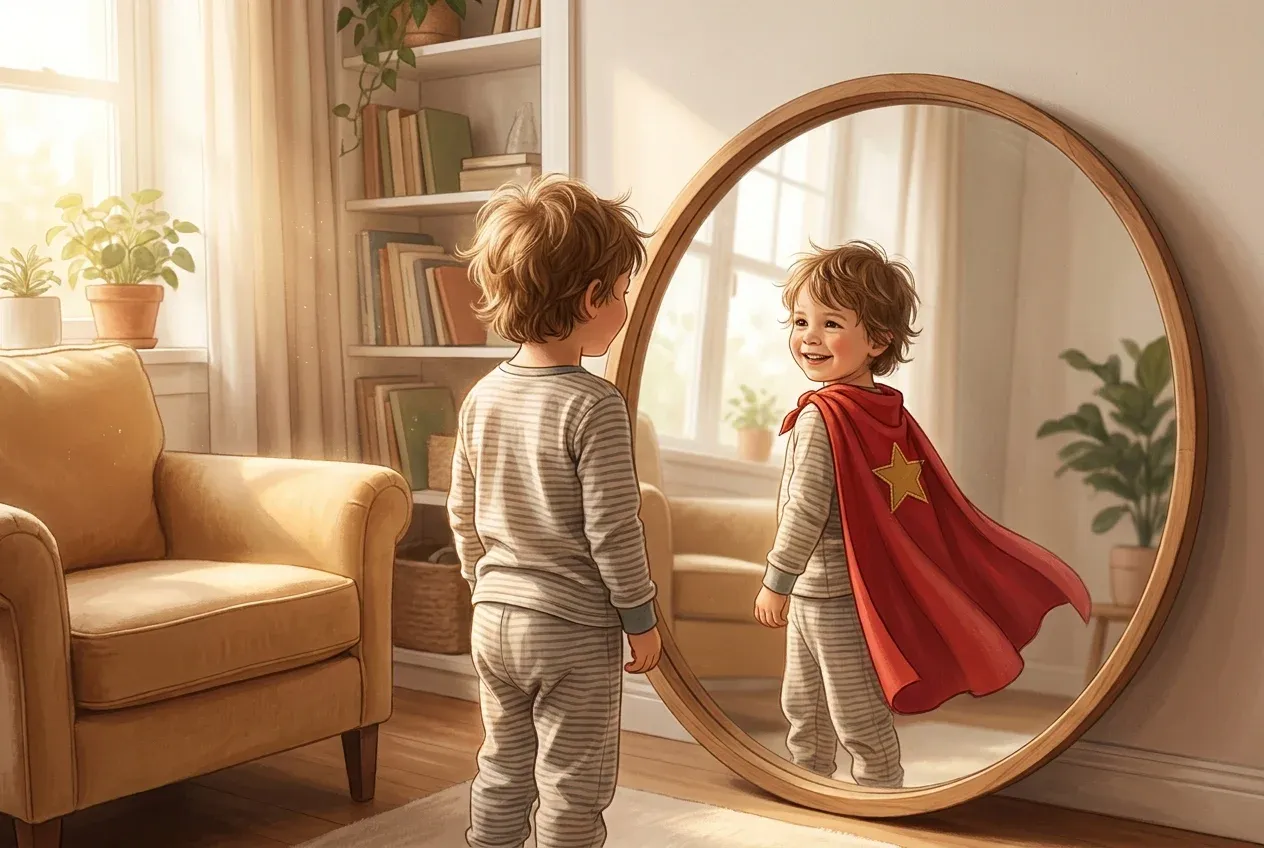
Why Praise Alone Backfires
Carol Dweck's landmark research at Stanford gave us the concept of the growth mindset — the idea that children who believe their abilities can grow through effort are more resilient than those who believe talent is fixed. What Dweck also found, in study after study, was that praising a child's traits ("You're so smart!") rather than their process ("You worked really hard on that!") actually undermines the growth mindset. Children praised for being smart become reluctant to attempt anything that might prove them otherwise.
But even process praise has its limits. Praise of any kind is external — it comes from you, and your child knows it. Self-esteem that depends on someone else's approval is inherently unstable. A child who feels good about themselves only when an adult tells them so is one difficult day at school away from feeling worthless. That's not confidence; that's conditional self-worth. Real confidence — the kind that helps a child raise their hand when they're not sure of the answer, try out for the team, or comfort a friend who is sad — has to come from inside.
This is the gap that most advice on how to improve a child's self-esteem misses. The goal isn't to make children feel good. It's to help them build an internal narrative — a story about who they are — that can hold up under the inevitable pressures of childhood. And that's where actual stories, the kind children hear and read, become surprisingly powerful tools.
How Narrative Shapes Self-Worth
Humans are story-making animals. From the earliest age, children don't just absorb facts — they absorb identities. The books a child hears at bedtime, the characters they return to again and again (and if you've ever wondered why toddlers demand the same book forty-seven times in a row, the answer really is fascinating — that repetition is the brain locking in meaning), all of it is quietly building the story your child tells themselves about who they are and what they're capable of.
Developmental psychologists call this narrative identity — the internal autobiography a child begins constructing as young as age three. Long before a child can articulate "I am a brave person," they can feel it, through the characters they identify with and the stories that feel true to them. This is why representation in children's books matters so much. It's not just about feeling seen in a demographic sense — it's about the brain encoding: that character is like me, and that character succeeded, so maybe I can too.
This mechanism is also why stories can reach children that praise simply can't. Praise comes from outside; narrative gets inside. A child isn't being told they're brave — they're experiencing bravery vicariously, through a character they care about. And the emotional truth of a good story bypasses the skepticism that even young children can have about compliments. If you tell a shy four-year-old they're brave, they may not believe you. But if they read about a child just like them who was scared and did the hard thing anyway, something quieter and more durable takes hold.
Letting Kids See Themselves Succeed
The most powerful version of this idea is also the most literal: what happens when the child in the story isn't just a character like your child — but is actually, unmistakably, your child? Not just their name on the cover (a sweet touch, but limited), but their real face in every illustration. Their expressions, their features, the look they get when they're determined.
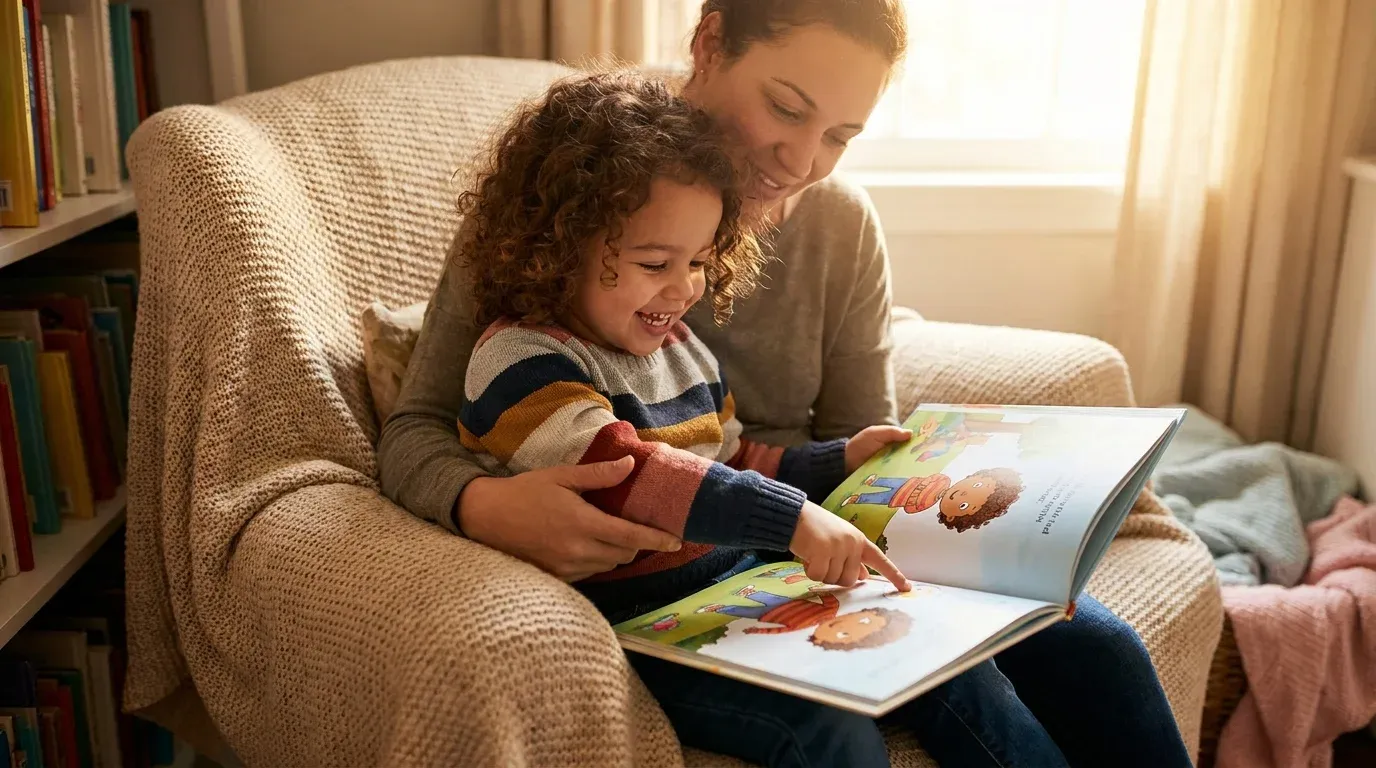
When a child opens a book and sees their own face on the hero — the astronaut who saves the crew, the explorer who finds the hidden treasure, the young adventurer who is brave enough to try — the identification isn't metaphorical. It's direct. The brain doesn't have to work to make the leap from "that character" to "me." It lands immediately, visually, emotionally. And in that moment, "I can do hard things" is not an affirmation someone else is repeating at them. It is something they have just witnessed themselves doing.
This is especially meaningful for children who are working through specific challenges. A child who is learning to be brave about new situations, or who struggles with feeling confident among peers, benefits enormously from stories that cast them — specifically them — as capable and courageous. If you're also thinking about building a child's self-esteem alongside their social confidence, the strategies in our guide on how to help a shy child build confidence without pushing too hard pair beautifully with the narrative approach described here.
The same principle applies to reluctant readers — children who don't yet see books as relevant to their world. Our piece on how to encourage a reluctant reader at every age covers it well. But the short version is that personalization — especially seeing your own face — does something no reading incentive chart ever has. It makes the book undeniably, immediately about you.
What the 5 C's of Self-Esteem Tell Us About Stories
Psychologists sometimes describe healthy self-esteem in children through the framework of the 5 C's: Competence, Confidence, Connection, Character, and Contribution. These aren't five separate goals — they're five interlocking roots that hold the whole tree up. And looking at each one, it's striking how naturally a well-crafted story can nourish all five at once.
- Competence — Stories show children navigating challenges and succeeding through skill and persistence, reinforcing the belief that they are capable.
- Confidence — When a child is literally the hero of the story, the message "I can try this" is encoded visually and emotionally, not just told.
- Connection — Shared storytime creates a moment of genuine closeness between child and caregiver, which itself is foundational to a secure sense of self.
- Character — Good stories don't just show heroes succeeding; they show heroes making choices, being kind, and trying again after failure.
- Contribution — When a story's hero saves the day or helps others, the child sees themselves as someone whose actions matter — a powerful antidote to powerlessness.
Praise, at its best, touches one or two of these. A good story — especially one in which the child sees their own face doing brave and meaningful things — can quietly water all five. That's not a small thing. That's the kind of daily investment that, over hundreds of bedtime readings, genuinely shapes who a child believes they are.
And for parents wondering how to choose the right kind of story to maximize this effect, our guide to choosing the perfect story theme for your child's personalized book walks through how to match a theme — space, jungle, magic, ocean, and more — to your child's specific personality and interests. The right theme isn't just fun; it's the difference between a hero a child admires and a hero a child becomes.
Frequently Asked Questions
What are the 5 C's of self-esteem in children?
The 5 C's are Competence, Confidence, Connection, Character, and Contribution. Together, they describe a child who feels capable, believes in themselves, feels genuinely loved and seen, acts from good values, and understands that their actions matter to the people around them. Psychologists and pediatricians use this framework because it captures the full picture of healthy self-worth — not just "feeling good" but genuinely being grounded.
How can I improve my child's self-esteem at home?
The most effective strategies focus on building internal confidence rather than external approval. Encourage effort and process over results. Give your child real, age-appropriate responsibilities so they experience genuine competence. Spend one-on-one time that is purely about connection, not correction. And use stories intentionally — books whose heroes navigate challenges and succeed through courage give children a template for seeing themselves as capable. For younger children in particular, a personalized book where they are the hero can make that template feel personally true.
What is the 7-7-7 rule for kids?
The 7-7-7 rule is a parenting framework suggesting that children need 7 minutes of focused one-on-one attention, 7 hours of sleep, and 7 acts of positive connection per day to thrive emotionally. While it's more of a heuristic than a clinical prescription, the underlying principle is sound: children build security — the foundation of self-esteem — through consistent, predictable, positive attention from their caregivers. Bedtime reading neatly combines at least two of these three.
How can I tell if my child has low self-esteem?
Signs that a child may be struggling with low self-esteem include: avoiding new activities out of fear of failure, frequently saying "I can't" before trying, being unusually sensitive to criticism or teasing, needing excessive reassurance, comparing themselves negatively to peers, or seeming indifferent to achievements they previously cared about. If several of these feel familiar, it doesn't mean anything is wrong with your child or your parenting — it means your child is asking, in the only way young children know how, for more experiences that help them feel capable and loved.
Can books really make a difference to a child's confidence?
Yes — and the research on narrative identity supports it. Children who regularly hear and read stories featuring characters they identify with develop stronger senses of their own capability and social belonging. The effect is even more pronounced when the identification is explicit and visual, as with books where the child's own face appears in the illustrations. This isn't anecdotal magic; it's the same mechanism that makes all great children's literature work — the feeling of "that's me" — taken to its most direct and personal form.
If you're looking for a place to start — a single, concrete thing you can do today — consider giving your child a story in which they are unmistakably the hero. At Epic Little Hero, parents upload a photo of their child and our AI creates a fully illustrated adventure where their child's real face appears on every page, alongside a narrative designed around themes of courage, kindness, and capability. Because the best time to tell your child they can do hard things is always, and the best way is a story they'll want to hear again and again. Create your child's personalized book — and watch what happens when they see themselves as the hero.