How to Encourage a Reluctant Reader: Age-by-Age Tactics That Actually Work
If your child runs from books, you're not failing — you just haven't found their key yet. Here are evidence-based, age-by-age tactics to turn a reluctant reader into a kid who asks for one more page.
You've tried. You've bought the beautiful books, set aside the bedtime slot, done the voices. And your child has wriggled, stared at the ceiling, asked for water, asked for more water, and done basically anything except look at the page. If that sounds familiar, take a breath — this isn't a reflection of your parenting, and it almost certainly isn't a sign that your child doesn't have a rich inner imagination. It's a sign that the right book, in the right format, at the right moment, hasn't clicked yet.
Reading resistance in young children is more common than most parents realize, and it rarely has one cause. Attention span, past frustration, visual processing, the simple competition of more stimulating alternatives — any or all of these can make a child turn away from books before the story even starts.
Quick answer: The most reliable way to encourage a reluctant reader is to reduce friction and increase personal relevance — choosing shorter books that match their exact interests, reading together without pressure, and using tactics that make the child feel like the story belongs to them. The sections below walk through what works, age by age, and why.
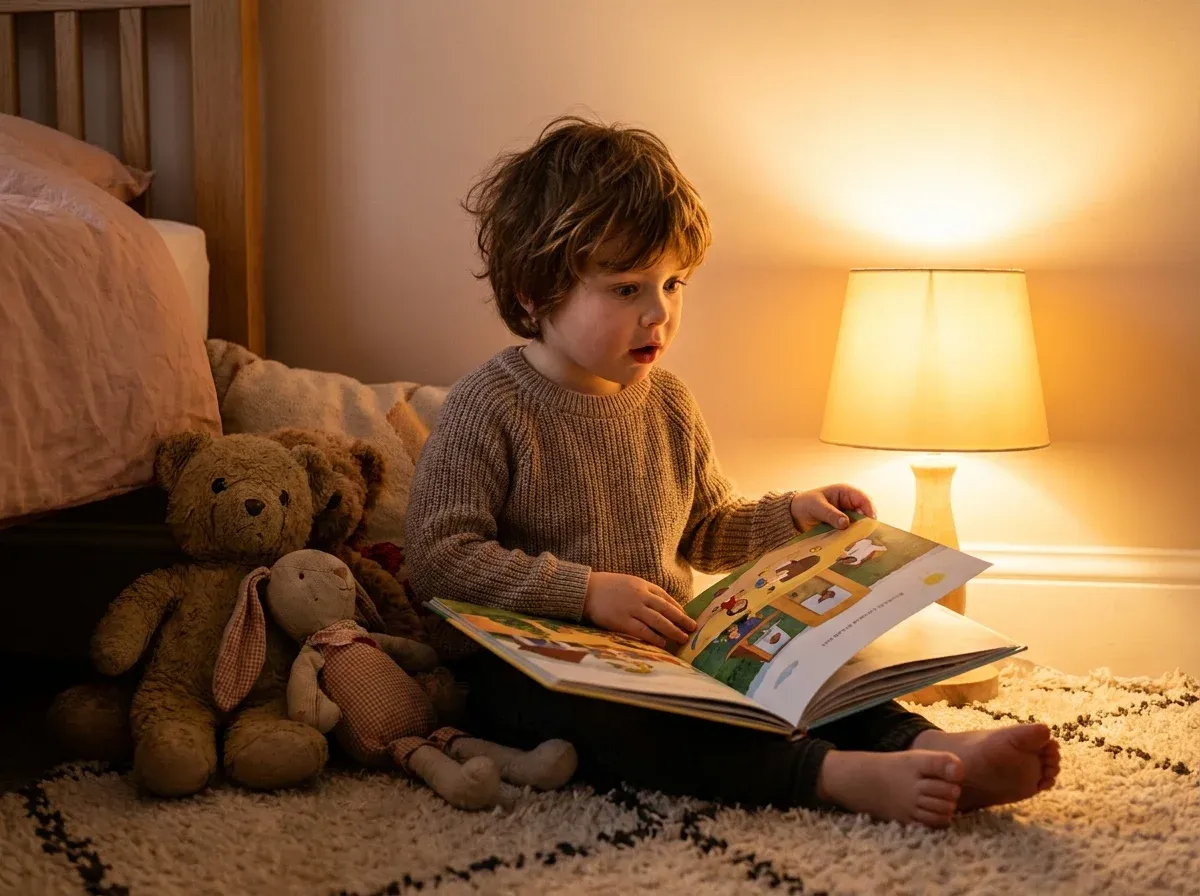
Why Do Some Kids Resist Reading?
Before you can fix the problem, it helps to understand what's actually happening. Reading resistance in young children usually falls into one of a few categories. Some kids are highly kinesthetic — they process the world through touch and movement, and sitting still with a flat object in their lap feels like a punishment. Others have had early experiences with books that felt like a test: phonics drills, being corrected mid-sentence, or pressure to "sound it out" before they were ready.
For toddlers and preschoolers (ages 2–4), the issue is often simply that books haven't yet competed successfully with the dopamine loop of action toys or screens. Their brains are wired for novelty and movement. A static page can feel slow compared to everything else vying for their attention. This doesn't mean they're damaged as future readers — it means the book needs to earn its place. Interestingly, books can also serve as powerful preparation tools for stressful real-world moments — if your toddler has an upcoming checkup, our guide on preparing a child who's afraid of the doctor shows how a pre-visit story routine can genuinely calm the fear. If you're starting from scratch with a very young child, our guide on screen-free tactics to get your toddler to love books is a practical companion for this exact age group.
For early school-age children (ages 5–7), a new factor appears: the gap between what they want to read and what they're able to decode. A six-year-old who loves dinosaurs may be deeply frustrated that the only books they can read independently are about cats on mats. That frustration, repeated often enough, becomes a label: "I don't like reading." In reality, they don't like feeling behind. Those are very different problems with very different solutions. If your child's reluctance also comes with a quieter, more withdrawn temperament, it's worth reading about how to help a shy child build confidence without pushing too hard — the same gentle, pressure-free principles apply beautifully at story time.
Tactics That Build Reading Desire (Without Pressure)
The research on early literacy consistently points to one upstream factor above all others: reading has to feel like a choice, not a chore. The moment a child associates books with obligation, you've lost significant ground. Here's what actually moves the needle, broken down by age:
- Ages 2–3: Follow obsessions relentlessly. If they love trucks, find every truck book in existence. Forget "balanced" reading — depth of engagement beats breadth at this age. Let them turn pages backward. Let them "read" by narrating from the pictures. It all counts.
- Ages 3–4: Make books physical. Lift-the-flap, touch-and-feel, books with sound buttons — anything that rewards interaction over passive sitting. Read the same book fifteen times if they ask. Repetition builds vocabulary and the comfort of mastery.
- Ages 4–5: Read slightly above their level — books they couldn't decode alone but can follow when you read aloud. This is the zone where imagination gets stretched without frustration. Ask open questions after: "What do you think happened after the last page?"
- Ages 5–7: Let them choose books that adults might consider "too easy" or "too silly." Captain Underpants, comics, joke books — all of it builds reading habit and stamina. Never shame a book choice. A child who reads a comic every day is building the same neural pathways as one reading a chapter book.
- All ages: Be seen reading yourself. Children model adult behavior with stunning precision. Ten minutes of visible adult reading — not on a screen — is worth more than a dozen instructions to "go read."
One tactic that consistently surprises parents: stop reading at the good part. Put the book down at a cliffhanger, stretch, and say you'll finish tomorrow. Children who've been squirming to escape will sometimes ask — genuinely ask — to keep going. Suspense is a more powerful motivator than obligation.
It's also worth separating read-aloud time from independent reading practice. When you read together, make it purely joyful — no quizzing, no pointing to words, no performance pressure. Save decoding practice for a different, shorter window. Conflating the two teaches children that books are work.
The Personalization Boost: Why Seeing Themselves in a Story Changes Everything
There's a body of research in reading motivation theory — particularly the work around "self-concept as a reader" — showing that children who believe stories are for them engage more deeply and sustain attention longer. For a hesitant child, the shortest path to that belief is a story that is, literally, about them.
This is different from the kind of name-personalization that's been around for decades ("A story starring... JAYDEN!"). Name-swapping is cute, but children see through it quickly — the character doesn't actually look like them, move like them, or feel like them. What creates genuine engagement is visual recognition: a child who opens a book and sees their own face in the illustration, their own hair, their own expression, looking back at them from inside the adventure.
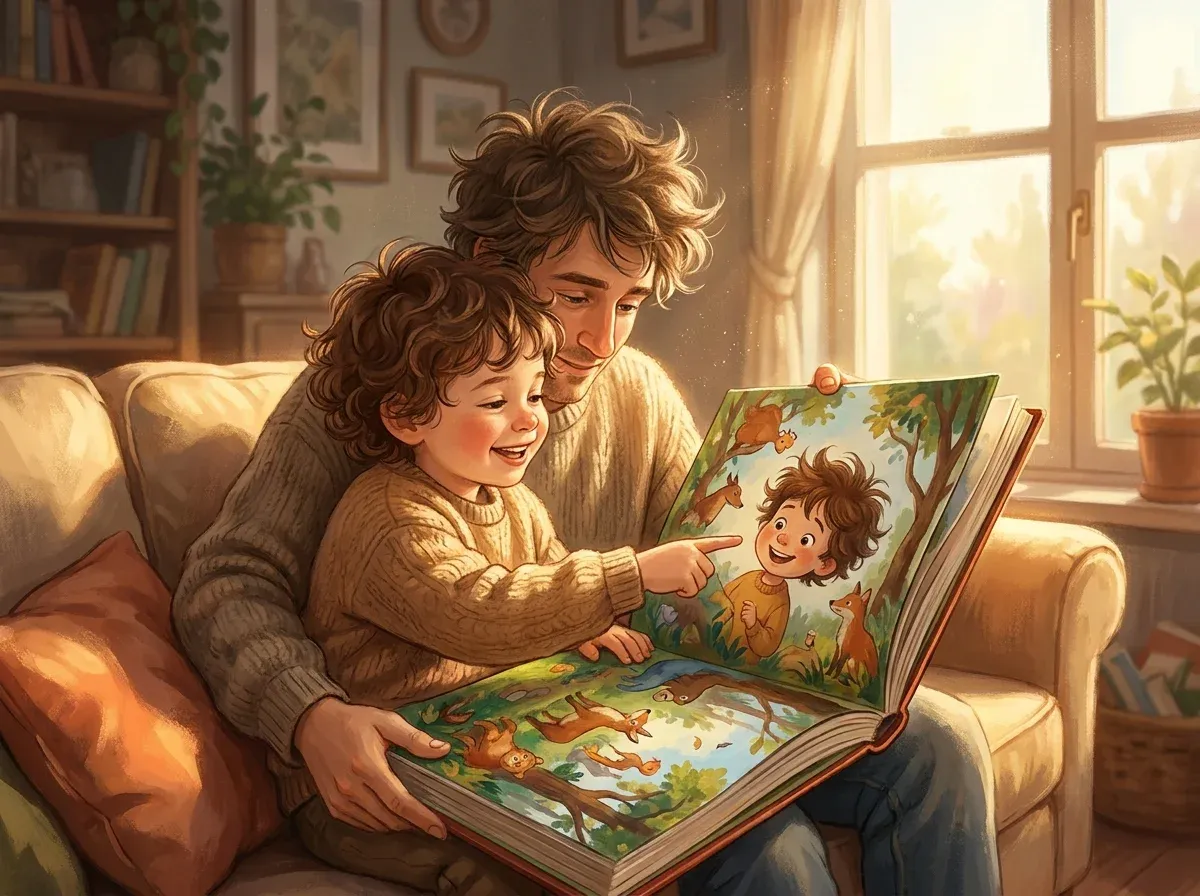
When a hesitant reader sees themselves as the protagonist — flying through space, befriending jungle animals, riding a dragon — something shifts. The book is no longer an external object asking something of them. It's a mirror. And children are biologically wired to be fascinated by mirrors. That intrinsic pull often does what no amount of encouragement can: it makes them lean into the page.
At Epic Little Hero, parents upload a few photos of their child, and our AI generates a fully illustrated storybook where the child's real face appears in every scene. Themes include Space, Fantasy, Jungle, Ocean, Dinosaurs, and Magic — you pick the one that matches what already lights your child up. The result isn't a novelty item; it's a book with a real story, real stakes, and a protagonist who genuinely looks like your kid. You can see how it works at the How It Works page, or browse story examples at Browse Examples. For more on why this type of deep personalization works differently from standard books, the post on personalized bedtime stories goes into the psychology in detail.
Frequently Asked Questions
At what age should I be worried that my child doesn't like books?
Most reluctant readers under age six are showing normal developmental variation, not a warning sign. True reading difficulties (like dyslexia) typically become visible around ages 6–7, when decoding is formally introduced. If your child is under five and avoids books, focus on joyful exposure rather than intervention. If your school-age child is actively struggling to decode words their peers find easy, a chat with their teacher or a reading specialist is worthwhile — early support makes a significant difference.
How do I encourage a reluctant reader without making reading feel like a punishment?
Remove all performance pressure from shared reading time. No quizzing, no corrections, no "you should know this word." Let your child choose the book, even if it seems too easy or too silly. Read together in a cozy, low-stakes setting — not at a desk, not before a test. The goal at this stage is associating books with safety and pleasure, not with assessment. That association, once built, is remarkably durable.
Do audiobooks count as reading for reluctant readers?
Yes — unambiguously. Audiobooks build exactly the same vocabulary, comprehension, and narrative understanding as print reading. For a reluctant reader, audiobooks can be a genuine gateway: a child who falls in love with a story through audio will often seek out the print version. Many children have discovered their favourite book series this way — first hearing a story, then reaching for it on the shelf. Don't gatekeep the format; celebrate the engagement.
What kinds of books work best for kids who say they hate reading?
Short chapters, high action, lots of humor, and subjects the child already cares about. Graphic novels and comic-format books are particularly effective because the visual storytelling reduces the decoding load while keeping engagement high. For very young children, interactive books (lift-the-flap, search-and-find) work well. And for a child who has never felt like the hero of a story, a book where they are literally the main character — face and all — can be the most compelling entry point of all.
Can a personalized book really help a child who avoids reading?
For many families, yes — particularly when the resistance is rooted in disengagement rather than a decoding difficulty. A child who doesn't see books as relevant to them, or who has never felt represented in a story, responds very differently to a book where they are the protagonist. The novelty alone creates an opening; the genuine visual likeness sustains it. Parents who use Epic Little Hero often report that their child asks to re-read their book repeatedly — which is exactly the repetition that builds reading habit and confidence. You can read about the experience of other families in our post on personalized children's book gift ideas, or see how the face-personalization compares to other services at our comparison post.
If your child has been avoiding books and you want to try something genuinely different, create their personalized Magic Book — upload a few photos, choose the theme that matches their biggest obsession, and have a fully illustrated story delivered as a digital PDF, ready to read tonight. From $29, no subscription, no shipping. Sometimes the best reading intervention is simply a book they desperately want to open.