How to Get Your Toddler to Love Books (Screen-Free Tactics That Work)
Your toddler would rather climb the furniture than sit for a story — and that's completely normal. Here are screen-free tactics that actually spark a love of books, including one that works even on the most restless kids.
You've bought the books. You've carved out the time. You've done the voices. And your toddler has responded by sliding off the couch, chewing a corner of the board book, and making a break for the toy basket. If storytime at your house feels less like a cozy ritual and more like a negotiation, you are not failing — you are parenting a completely normal 1–3 year old. Getting a toddler to love books is less about the right method and more about the right moment.
Quick answer: The most effective screen-free ways to get a toddler to love books are keeping sessions short, letting them choose the book, reading with physical energy, and giving them a book where they are the main character — with their real face in the illustrations. Toddlers who bolt from every story will stop and stare when they recognise themselves on the page.
None of what follows requires a curriculum, a reading log, or a new app. Just a few small shifts in how you approach books — and one bigger idea that changes the whole game.
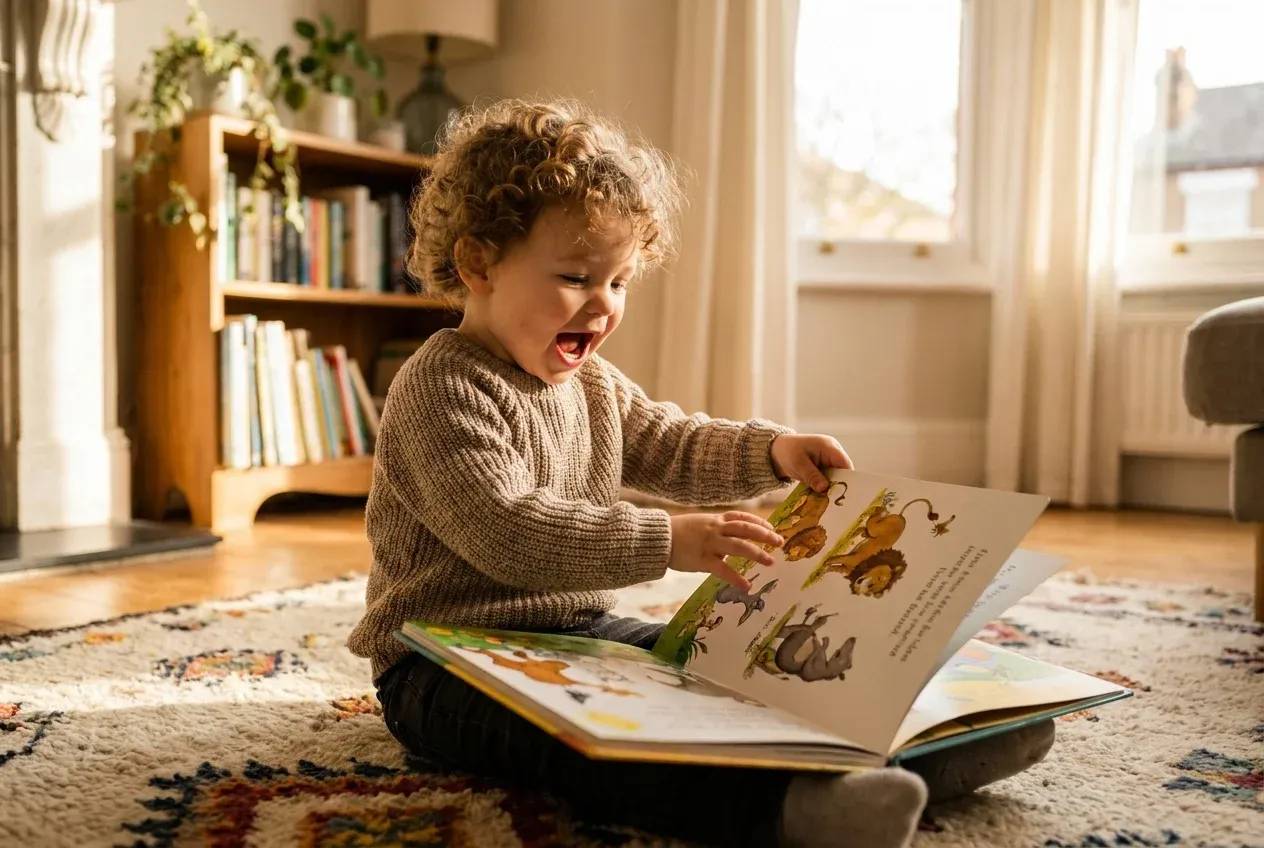
Why Toddlers Resist Books (And It's Completely Normal)
Between ages one and three, a child's brain is wired for movement, sensory exploration, and immediate cause-and-effect. Sitting still while an adult reads aloud is, neurologically speaking, a lot to ask. Toddlers naturally have very short attention spans — and a static book with no buttons, no motion, and no feedback competes directly with everything else in the room.
What looks like book-resistance is often just toddler brains doing their job. They're not deciding they hate reading any more than they're deciding they hate vegetables — they're simply responding to what feels most alive in the moment. The goal isn't to force stillness; it's to make the book feel more alive than the alternative.
It's also worth knowing: there's no magic age when toddlers suddenly "love" books on their own. Some kids are drawn to them early; others need more scaffolding. What we consistently see is that it's the environment and the emotional experience around reading — not the books themselves — that shapes whether a child becomes a reader. Which means you have more influence here than you might think.
Screen-Free Tricks That Genuinely Spark Interest in Books
The single biggest shift most parents can make is to stop treating storytime as a quiet-down activity and start treating it as a play activity. Toddlers engage with books when the experience is interactive, physical, and a little unpredictable — not when it signals sleep or sitting still.
- Keep it short. Five minutes of genuine engagement beats 20 minutes of squirming. End before they're done, not after.
- Let them choose. Even at 18 months, the act of picking a book from a low shelf creates ownership and investment.
- Read with your body. Point, tap, make animal sounds, pause dramatically — toddlers read your energy, not just the words.
- Ditch the rules. It's fine if they flip to the last page, hold the book upside-down, or walk away and come back. Pressure kills curiosity.
- Read at unexpected times. Storytime doesn't have to mean bedtime. A book after lunch or before bath hits differently when it's not part of a sleep sequence.
- Leave books accessible. A low basket of board books in the living room gets picked up far more than a tidy shelf in the bedroom.
- Follow their interests. A child who is obsessed with diggers, dogs, or dinosaurs will sit longer for a book about that thing — every single time.
If you're working with an older toddler who's already shown reluctance, you might also find useful strategies in this guide to encouraging a reluctant reader at every age — the principles translate surprisingly well even to the under-3 crowd.
One more thing worth noting: repetition is not boredom. If your toddler wants the same book read 10 nights in a row, that's a feature, not a bug. Familiarity builds comprehension, vocabulary, and — critically — positive emotional associations with books. Lean into it.
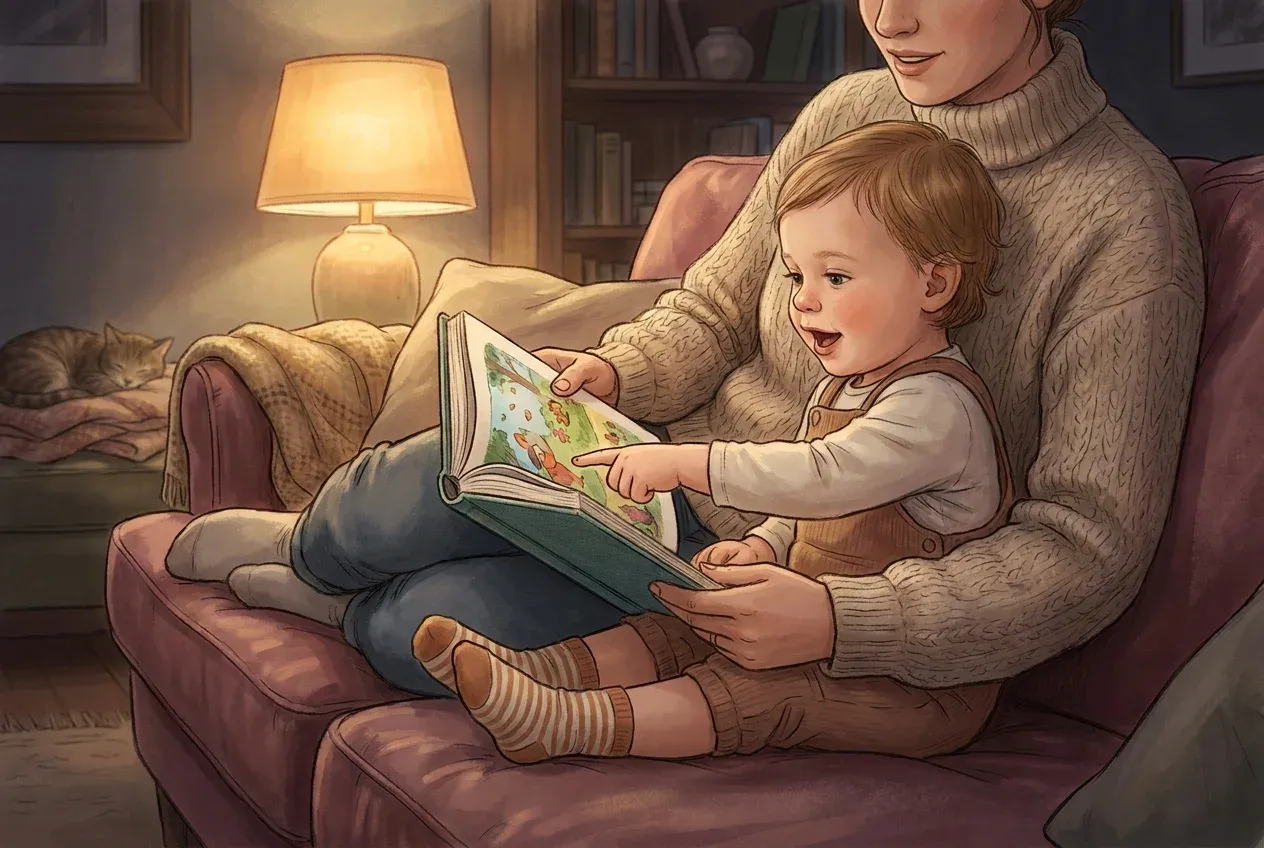
The 'That's Me!' Effect: Why Seeing Their Own Face Changes Everything
Here's the trick that tends to work even on the most determined book-avoiders: give a toddler a book where the hero looks exactly like them. Not just a character with their name — a character with their actual face in every illustration. The reaction is almost always the same: they freeze, point, and say some version of "me." And then they want to see it again.
This isn't a gimmick. There's solid developmental reasoning behind it. Toddlers are in the thick of building their sense of self — discovering who they are, what they look like, and how they fit into the world. Self-recognition is one of the most attention-grabbing stimuli a young child can encounter, which is why they'll stare at a mirror or a photo of themselves for far longer than most other things. A book that triggers that same self-recognition response is a book that commands their attention. If you're thinking about other ways to nurture that growing sense of self, our guide on how to make your child feel special without spoiling them offers some grounded ideas.
At Epic Little Hero, parents upload a few photos of their child, and our AI generates a full illustrated storybook where that specific child — with their real face — is the hero of a Space adventure, a Jungle quest, a Dinosaur world, and more. It's not a name printed on a generic illustration; it's genuinely your kid, starring in the story. For toddlers who've ignored every other book on the shelf, seeing themselves in the pages tends to rewrite the relationship with reading entirely. If you're curious about what sets real face personalisation apart from name-only books, this breakdown of personalized children's books with name and picture explains the difference well.
And if you're not sure which theme to pick for your particular toddler, this guide to choosing the right story theme for a personalized book walks through exactly how to match a theme to your child's personality and current obsessions.
Frequently Asked Questions
What do I do if my toddler just doesn't like books at all?
Start smaller than you think you need to. One page. One minute. No pressure to finish. Pair the book with something your toddler already loves — if they're obsessed with dogs, get every dog book at the library. Make sure the book is physically accessible to them, not stored away. And try reading alongside them rather than to them — sit next to them on the floor and narrate what you see, as if you're both discovering it together. Resistance usually isn't about books; it's about the feeling around books.
What age do toddlers start to enjoy books?
Many babies show interest in high-contrast picture books from as early as 3–4 months. But genuine engagement — pointing at pictures, anticipating a favourite page, asking for a book by name — typically blossoms between 18 months and 2.5 years. That said, there's wide variation, and a toddler who isn't book-obsessed at 2 can absolutely become a passionate reader at 4 or 5. The early years are about building positive associations, not hitting milestones.
What is the 3-3-3 rule for toddlers and reading?
The 3-3-3 rule (sometimes called the "rule of three" in early literacy) suggests reading at least 3 books a day, re-reading favourites at least 3 times, and spending at least 3 minutes actively talking about the pictures and story — not just reading the words aloud. It's a simple framework to shift reading from a passive activity to an interactive conversation, which is what actually builds vocabulary and comprehension.
Is it a red flag if my 2-year-old has no interest in books?
Not on its own. Many perfectly developing 2-year-olds are more interested in physical play than sitting for a story, and that's normal. The things worth paying attention to alongside low book interest are: limited vocabulary for their age, not pointing at objects or pictures when asked, and not engaging in pretend play. If you have concerns about language development specifically, a paediatric speech therapist is always a good first conversation — but a toddler who'd just rather run than read is, in most cases, simply a toddler.
Do personalized books really work for toddlers who resist reading?
Consistently, yes — especially when the personalisation goes beyond a name. Toddlers are developmentally primed to be interested in themselves, so a book that reflects their own face engages them at a level that generic books simply can't reach. Parents of resistant readers often describe it as the first book their toddler has ever asked to hear again. Self-referential learning is well-established in early childhood: information linked to the self is processed more deeply and remembered longer.
If your toddler has made peace with the toy basket and declared war on storytime, you haven't run out of options. The strategies above — short sessions, child-led choices, interactive reading — are usually enough to shift the dynamic. And if you want to bring out the biggest reaction you've ever seen at a storytime, try handing them a book where the adventure hero has their own face looking back at them. You can create your child's personalised book in just a few minutes, with instant digital delivery. Some books just have a way of making readers out of the most committed non-readers.