How to Make Your Child Feel Special (Without Spoiling Them)
There's a real difference between spoiling a child and making them feel truly valued. Here's how to do the second one — no toy pile required.
You don't want to raise a child who feels entitled. But you also desperately want your child to feel loved, valued, and genuinely seen — especially on the hard days when they come home quiet, or when the world has been a little too big for their small shoulders. That tension is real, and almost every thoughtful parent feels it.
Quick answer: Making your child feel special isn't about giving them more — it's about showing them that you see exactly who they are. That means undivided attention, rituals that belong only to them, and honest words that name what makes them uniquely themselves. None of that requires spending more money or saying yes more often.
The good news is that the things children actually remember — the moments that quietly shape their self-worth for decades — cost very little. They're almost never toys. Below, you'll find a practical and honest look at what truly makes a child feel valued, what crosses into spoiling territory, and a few approaches that thread that needle beautifully.

How to Make Your Child Feel Special Without Spoiling Them
Spoiling is giving a child things to avoid discomfort — yours or theirs. It's saying yes to the toy in the checkout line because you're tired, or loading up birthdays until the sheer volume of gifts makes each one meaningless. There's no judgment here; every parent has done it. But children who are spoiled don't actually feel more loved — too much stuff can create anxiety, a sense that things must be earned through performance, and a quiet suspicion that gifts are a substitute for presence.
Feeling seen is something entirely different. It's the moment you notice your child has been drawing the same character for three weeks and you say, 'I love how you keep making her braver in each picture.' It's remembering that they're nervous about Thursday's swim lesson and bringing it up first. It's treating their inner world as something real and worth paying attention to. That kind of attention doesn't spoil children — it anchors them.
The distinction matters because it means you don't have to choose between being a generous parent and a grounded one. You just have to shift where the generosity lands — from things toward attention, recognition, and experiences that say 'I notice you, specifically you, not just any kid.'
Small Ways to Say 'You Matter'
Being emotionally available for your child doesn't require grand gestures or cleared schedules. The most powerful deposits into a child's sense of worth are small and consistent. Here are some of the most effective ones, grounded in what child development research actually supports:
- Get on their level — literally. Kneeling down to meet a child's eyes tells them their conversation is worth your full body, not just a glance over your shoulder.
- Name what you notice. 'You were really patient with your little brother today' is more nourishing than 'good job' because it shows you were watching.
- Create a small ritual that belongs only to them. A secret handshake, a specific bedtime question ('what was the best weird thing that happened today?'), or a song that's just yours.
- Let them overhear you saying something kind about them. Telling a grandparent, within earshot, 'she worked so hard on that drawing' lands deeper than direct praise.
- Follow their lead in play. Even 10 minutes of letting a child direct the game — no corrections, no redirection — communicates profound respect for who they are.
- Use their name often and warmly. It sounds simple, but a child's name, spoken with affection, is one of the earliest signals that they are a distinct, valued individual.
You might notice that none of these involve purchases. That's not an accident. Children are extraordinarily good at detecting whether attention is genuine or performative — and genuine attention, even in small doses, outweighs elaborate gifts every time. If you're also navigating a child who struggles to feel confident in social situations, the ideas in our guide to helping a shy child build confidence without pushing too hard pair naturally with this approach. If your child is also navigating a new social environment, our guide on helping your child make friends at a new school offers practical strategies for building that confidence before day one.
The 3-3-3 rule — often cited in parenting circles — is a useful shorthand: three minutes of focused eye contact, three kind words, and three moments of physical affection each day. It's not a magic formula, but as a minimum baseline it's a helpful reminder that consistency beats intensity. You don't need a perfect Saturday — you need a Tuesday that felt like you were really there.
When a Story Becomes a Mirror
One of the oldest ways humans have said 'you matter' is through storytelling. When you tell a child a story in which someone like them overcomes something hard, finds courage, or is celebrated by the world around them, you are doing something profound — you are showing them a version of themselves worth believing in. This is why children ask for the same story again and again: they're not bored of it, they're finding something in it.
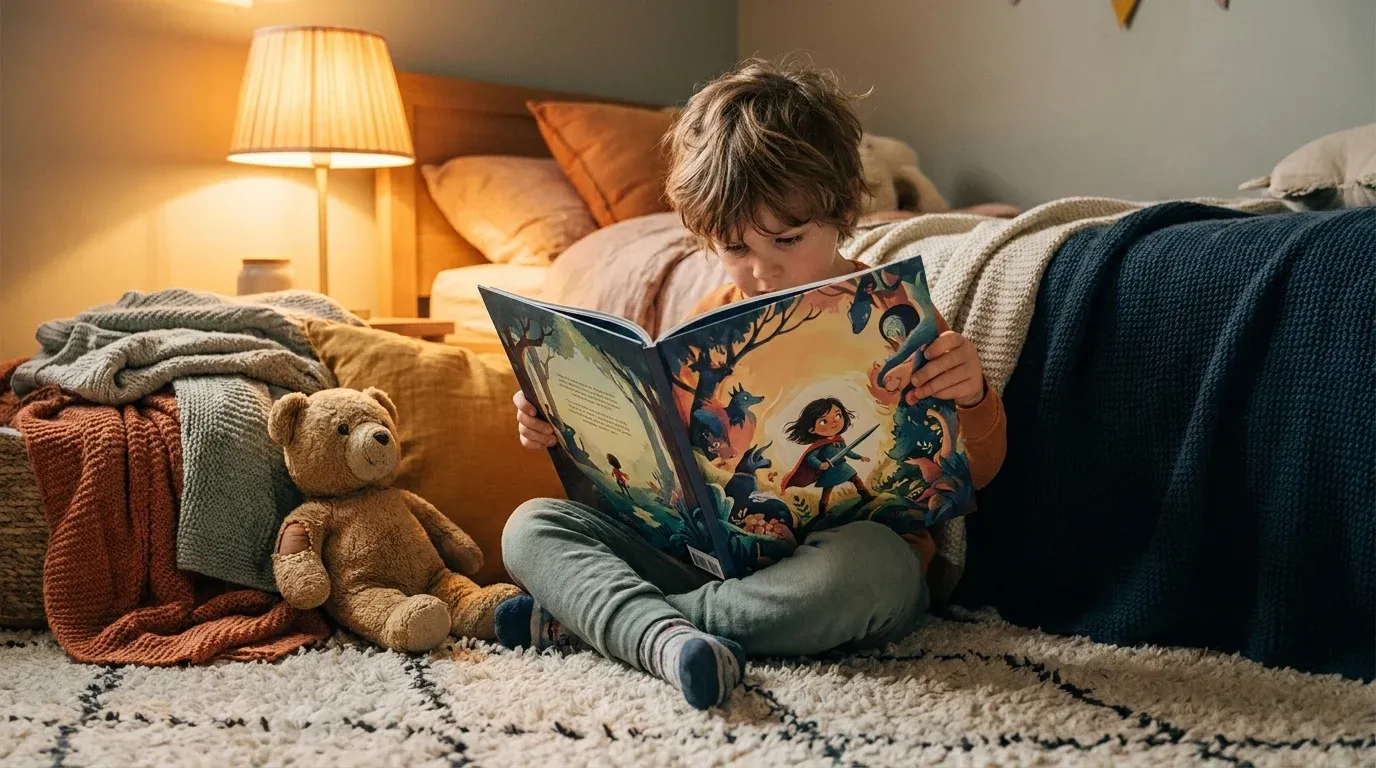
Many parents have shared that personalized storybooks — ones that reflect a child's own face, name, and personality — go far beyond entertainment. They become a form of emotional validation. Psychologists describe this as narrative identity: the idea that children develop their sense of self partly through the stories they hear about people like them. When the hero of the story is recognizably them, that message lands at a level that praise alone rarely reaches.
A book where your child's actual face appears in every illustration — not a generic character with their name swapped in, but genuinely their face, their expression, their likeness — takes that mirror quality to its fullest form. It's the difference between a child hearing 'brave kids can do hard things' and seeing themselves, specifically, being brave. That's a very different emotional experience. And because it's a book rather than a toy, it doesn't add to the clutter or fade by Tuesday. It's something they can return to during the moments when they need reminding most — a new school, a hard week, a big first. You can read more about how this kind of reflection quietly builds confidence in our piece on how stories build a child's self-esteem more than praise ever could.
The themes children respond to most — space explorers, jungle adventurers, ocean heroes — aren't random. They're the scenarios in which a child gets to be powerful, curious, and celebrated for exactly who they are. Choosing a theme that matches your child's current obsession makes the mirror even clearer. Our guide on choosing the perfect story theme for your child's personalized book can help you match the right adventure to the right child.
Frequently Asked Questions
How can I be more emotionally available for my child?
Emotional availability doesn't require more time — it requires more presence in the time you already have. Put the phone face-down during meals, respond to emotions before correcting behavior ('that sounds really frustrating' before 'but you should have…'), and make eye contact when your child is talking to you. Children don't need parents who are available every minute. They need parents who are genuinely there when it counts.
What is the 3-3-3 rule for children?
The 3-3-3 rule is an informal parenting guideline suggesting that children benefit from three minutes of focused eye contact, three sincere affirmations, and three moments of physical affection each day — at minimum. It's not a clinical prescription, but it's a useful baseline reminder that small, consistent acts of attention are more meaningful than occasional grand gestures.
How can I make my child feel loved and valued without spoiling them?
The key is to celebrate who they are rather than rewarding what they do or giving things as a substitute for presence. Notice their effort, name their specific qualities, create rituals that belong only to them, and choose experiences and gifts that reflect their individuality rather than just adding to a pile. A personalized book that stars your child — their face, their name, their adventure — is one example of a gift that says 'I see exactly who you are' without a single battery or shelf of clutter required.
How do I make my daughter feel special on an ordinary day?
Ordinary days are actually the best canvas. Leave a note in her lunch bag that names something specific you admire about her. Ask a question at dinner that only she could answer ('what's something you figured out today that was hard?'). Let her choose the bedtime story and ask her to predict what happens next. The goal isn't to manufacture a memorable moment — it's to make her feel that her presence in your daily life is noticed and cherished.
How can I tell if my child feels loved?
Children who feel genuinely loved tend to be willing to show you when they're upset — they cry around you, tell you about embarrassing things, and come to you when something goes wrong. They're not performing happiness; they're comfortable enough to be real. If your child hides distress or seems to need to earn your approval through achievement, it can be worth focusing less on praise for results and more on unconditional expressions of delight in who they simply are.
The Simplest Thing You Can Do Today
Every child deserves to know, in their bones, that they are seen — not for what they accomplish or how well they behave, but for who they are. Most of the time, that knowing is built in the quiet ordinary moments: the names you call them, the things you notice, the rituals that say 'this is ours.' But sometimes, a single object can carry that message in a way that lasts. A book that features your child's actual face on every page — as the hero of an adventure, celebrated by the story's world — is one of those rare things that says 'you matter' without a word of explanation needed.
If you're curious what that looks like, you can create your child's personalized book at Epic Little Hero — upload a photo, choose their adventure, and receive a beautifully illustrated story where their face truly stars. From $29, instant digital delivery, no subscription. It's not about adding to the toy pile. It's about handing your child a mirror and saying: look how remarkable you are.