How to Help a Child Who's Afraid of the Doctor (A Prep Playbook That Works)
If your toddler or preschooler melts down before every checkup, you're not alone — and it's not a behavior problem. Here's a pre-visit prep playbook that actually calms the fear, including a trick most parents haven't tried.
You've been dreading this appointment for a week. Not because of what the doctor will say — but because you already know what's coming the moment you pull into that parking lot. The wailing. The death grip on your arm. The look of pure betrayal on your child's face when the nurse calls their name. If you have a 2–6 year old who panics at doctor or dentist visits, you already know that "it's okay, it won't hurt" does absolutely nothing. Fear doesn't respond to logic — especially not in a preschooler.
Quick answer: To help a child afraid of the doctor, start preparation 2–3 days before the visit — not in the parking lot. Use honest, simple language about what will happen, play pretend doctor at home, read a story where they are the brave child getting a checkup, and validate their fear without amplifying it. Children this age fear the unknown and loss of control, not the actual pain.
The good news is that doctor fear in young children is almost entirely a fear of the unfamiliar — which means it's solvable. Below is a step-by-step prep playbook you can start using before the next appointment, including one strategy — a personalized brave-kid story — that most parents haven't tried yet but that works remarkably well for the 2–6 age group.

Why Children Afraid of the Doctor Feel That Way
Between ages 2 and 6, children are in the thick of what developmental psychologists call the "stranger danger" and "loss of control" phases. The doctor's office hits both at once: an unfamiliar adult, a cold room, strange equipment, and — worst of all — things that happen to their body without their permission. This isn't a parenting failure. It's developmentally normal fear.
Past experiences matter a lot, too. If a child received a shot at 18 months and associates that memory with the smell of the waiting room, their brain will trigger an alarm response before anything even happens. This is the same mechanism as any phobia — it's the anticipation, not the event, that causes the most distress. Toddlers also can't yet understand why something uncomfortable is happening "for their own good," so the betrayal they feel is completely genuine.
The key insight here is that most doctor fear in kids is really fear of the unknown. Children who know exactly what to expect — step by step, in language they understand — are dramatically calmer than those who walk in cold. That's not just anecdotal: pediatric anxiety researchers consistently find that procedural preparation reduces distress in children more than reassurance alone. This is why the playbook below focuses almost entirely on what happens before you leave the house.
How to Prep Before the Visit (Starting 2–3 Days Out)
The biggest mistake parents make is saving "the talk" for the car ride over. By then, anxiety has already hijacked your child's prefrontal cortex and nothing is getting through. Instead, build familiarity a few days ahead with these steps:
- Name it clearly and calmly: Say "On Thursday, we're going to see Dr. Chen. She's going to look in your ears and your throat, and check your heartbeat with a cool listening tool." Specific beats vague every time.
- Play doctor at home: Let your child be the doctor first. Use a toy stethoscope or just pretend. Kids process fear through play — when they're in control of the scenario, it loses its threat.
- Use the 3-3-3 grounding trick: Teach your child to name 3 things they can see, 3 they can hear, and 3 they can feel when they're scared. It's a simple sensory reset that works for ages 4 and up.
- Be honest about shots — but in context: Don't promise it won't hurt. Do say: "It might pinch for two seconds, and then it's done. You can squeeze my hand as hard as you want."
- Plan a low-key reward for after: Not a bribe, a plan. "After the appointment, we'll stop at the park." Having something to look forward to shifts focus from dread to anticipation.
- Arrive a few minutes early: A frantic rush to the waiting room spikes cortisol for both of you. A calm arrival gives your child time to adjust to the environment before anything starts.
A note on the 3-3-3 rule: you'll see this referenced in children's anxiety guides as a quick grounding exercise. It won't eliminate fear, but it gives anxious kids a concrete thing to do with their body when they feel overwhelmed. Practicing it at home before the visit — when they're completely calm — makes it much easier to use in the moment.
If your child's anxiety goes beyond typical nervousness — if they're inconsolable for hours before appointments, refusing to eat, or having night fears about it — it's worth mentioning to your pediatrician. Some children, particularly those who are shy or highly sensitive, need a bit more scaffolding. If that sounds familiar, the strategies in our guide to helping a shy child build confidence without pushing too hard pair well with this playbook.
Using a 'Brave at the Doctor' Story as Fear Rehearsal
Here's the strategy that most parent guides skip — and it's one of the most powerful tools in the box. Children ages 2–6 learn how to feel about new situations largely by watching and hearing stories. Their brains don't fully distinguish between "what happened in a story" and "what could happen to me" — which is exactly why fairy tales have shaped human behavior for centuries, and why nightmares feel so real.
When a child hears a story where a character just like them — same name, same age, same face — walks into a doctor's office, feels a little nervous, takes a breath, and comes out the other side feeling proud and brave, their brain files that away as a possible script for their own experience. This is called narrative rehearsal, and pediatric psychologists use a version of it in preparation for procedures ranging from blood draws to surgery. If you'd like to understand exactly why this technique is so effective — and how to make the stories you tell your child even more powerful — our deep dive into why stories help kids be brave explains the science behind it.
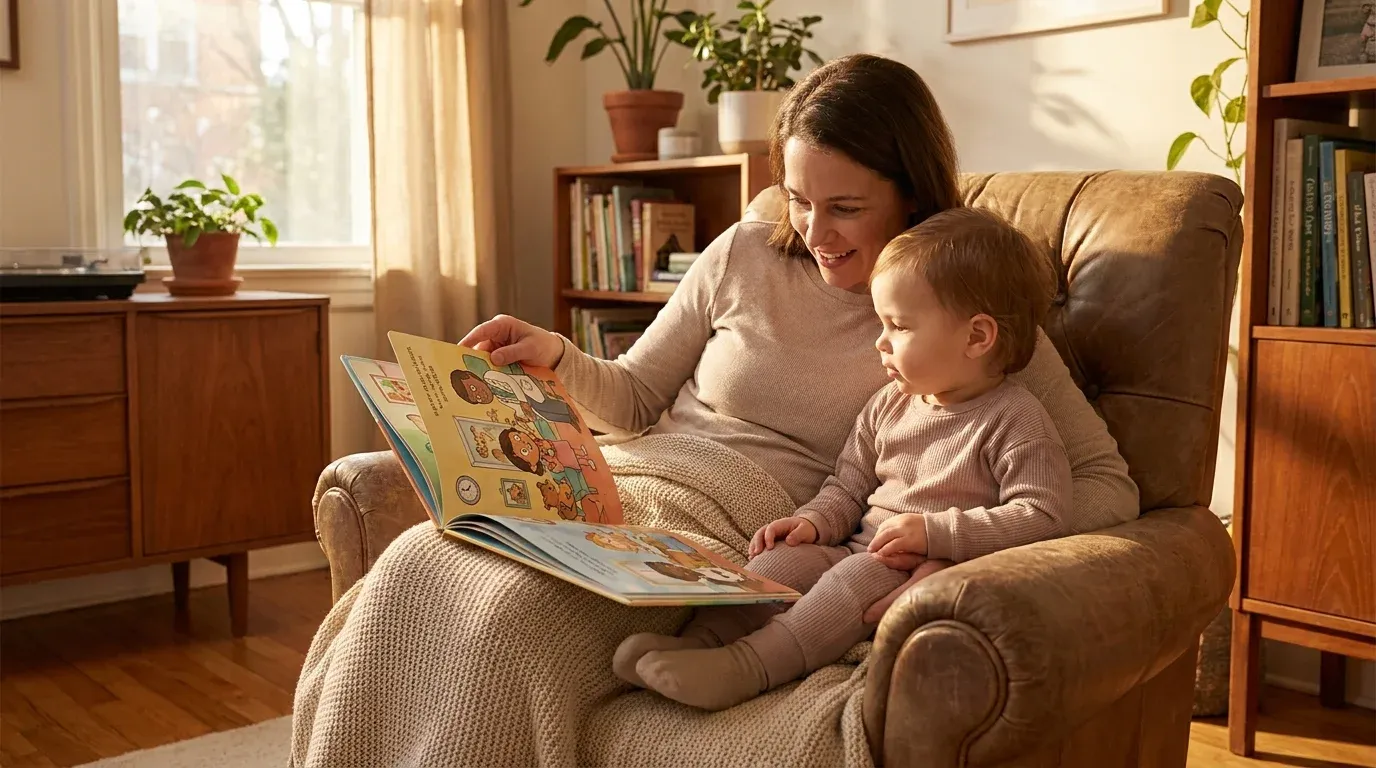
This is where a personalized book becomes something genuinely practical, not just a sweet gift. At Epic Little Hero, parents upload a few photos of their child, and our AI generates a full illustrated story where their child's actual face appears in every scene — including the moment they're sitting on the exam table, being brave. When your 4-year-old looks at that page and sees themselves calm and proud at the doctor, they're not just reading a story. They're rehearsing confidence. You can read it together the night before and the morning of the appointment, letting that image of their brave self become the one they carry in. Start building your child's brave story at Epic Little Hero — it takes about 10 minutes and delivers as an instant digital PDF. Not sure which story angle would resonate most with your child's personality? Our guide to choosing the perfect story theme for your child's personalized book can help you decide.
The reason this works especially well for the 2–6 age group is that abstract reassurance ("you'll be fine") has almost no impact on a toddler's amygdala. But a concrete image of themselves being fine? That lands. The more realistic and personal the story, the more the brain accepts it as a believable rehearsal rather than an empty promise.
Staying Calm as the Parent (It's Harder Than It Sounds)
Children are extraordinary co-regulators. They pick up on parental stress before you've said a single word — so if you're tense about how the appointment is going to go, they'll feel it. This doesn't mean you need to fake cheerfulness. It means staying steady rather than overreacting to their distress, because your nervous system is their anchor.
A few things that help: Take your own slow breath before you walk through the door. Avoid the phrase "don't cry" — it communicates that their feelings are a problem. Instead, try "I know this feels scary, and I'm right here the whole time." Give them an age-appropriate sense of control wherever possible: "Do you want to hop up yourself or do you want me to help you up?" Small choices matter enormously to kids who feel like things are being done to them.
Also worth knowing: bribing to prevent crying before the shot is different from planning a fun activity afterward. The first can accidentally teach a child that the shot is so terrible it requires a payoff. The second simply gives them something positive to look forward to. The difference in framing matters. Keep the reward neutral and matter-of-fact: "We're going to the park after" — not "If you don't cry, we'll get ice cream."
Frequently Asked Questions
What is the 3-3-3 rule for children?
The 3-3-3 rule is a simple grounding exercise for anxious children: name 3 things you can see, 3 things you can hear, and 3 things you can physically feel right now. It interrupts the anxiety spiral by pulling attention back to the present moment. It works best for children aged 4 and up, and it's most effective when you practice it at home before the stressful situation — not for the first time in the middle of a meltdown.
How do I keep my toddler calm at the doctor?
Start preparation 2–3 days before the visit, not in the car. Use specific language about what will happen step by step. Play doctor at home so the equipment feels familiar. Bring a comfort object. Arrive calmly and early. During the appointment, give small choices (which arm for the shot, do you want to sit up or lie down), narrate what's happening in real time, and stay physically close. Your calm, steady presence is the single most powerful tool in the room.
Can a 5-year-old be a hypochondriac?
True hypochondria (health anxiety disorder) is rare before age 8–10. What looks like hypochondria in a 5-year-old is usually either a bid for attention and comfort, a way of processing medical anxiety they've experienced, or typical developmental magical thinking. If your child constantly complains of illness but is otherwise healthy and thriving, speak with your pediatrician — but don't panic. It's almost certainly not a clinical anxiety disorder at this age.
How do you help a child overcome an extreme fear of doctors?
For children with severe medical anxiety — the kind that causes multi-day distress, physical symptoms before appointments, or complete refusal — a gradual desensitization approach works best. This means making low-stakes visits to the clinic just to say hi (no procedures), reading books about doctor visits repeatedly, and potentially working with a pediatric psychologist who specializes in medical anxiety. The narrative rehearsal approach (a story where your child sees themselves being brave) is a great complement to professional support.
What age do kids stop being afraid of the doctor?
Most children naturally grow out of intense doctor fear by age 6–8, once they have enough language and cognitive development to understand why checkups happen. However, kids who have repeated difficult experiences without emotional support can carry medical anxiety into adolescence and adulthood. The earlier you build positive associations and coping tools, the better the long-term outcome.
Doctor visits are hard — for your child and honestly for you too. But most of the fear lives in the anticipation, which means most of the solution lives there too. A few days of calm, consistent preparation can transform a meltdown into something your child handles with real pride. If you'd like to add a brave-story rehearsal to your prep toolkit, create your child's personalized book at Epic Little Hero — upload a photo, pick a theme, and get an instant PDF your child can hold in their hands before the appointment. It's one of those small things that genuinely changes the experience. For more ideas on using personalized stories to support your child through big moments, take a look at our post on building confidence in children who need a gentler approach.