How to Prepare Your Toddler for Their First Day of Daycare: A Gentle 2-Week Plan
That first daycare drop-off is one of parenting's hardest mornings. This gentle 2-week plan helps you prepare your toddler — emotionally, practically, and one brave story at a time.
The daycare start date is circled on the calendar — and if you're anything like most parents of one- and two-year-olds, there's a knot forming somewhere between your chest and your stomach. Not because you've made the wrong choice, but because handing your toddler to a stranger at a door they've never seen before is, objectively, a lot. For them and for you.
Quick answer: To prepare a toddler for their first day of daycare, start two weeks early. Visit the classroom in advance, practice short separations daily, build a predictable goodbye routine, and use books or play to help your child rehearse the experience in a safe, low-stakes way. Consistency and repetition matter most.
The good news? Toddlers are far more adaptable than they look in the middle of a drop-off meltdown. And a little intentional preparation — started now, in the weeks before that first morning — can make a meaningful difference. Here's the plan.
Why the First Drop-Off Is So Hard
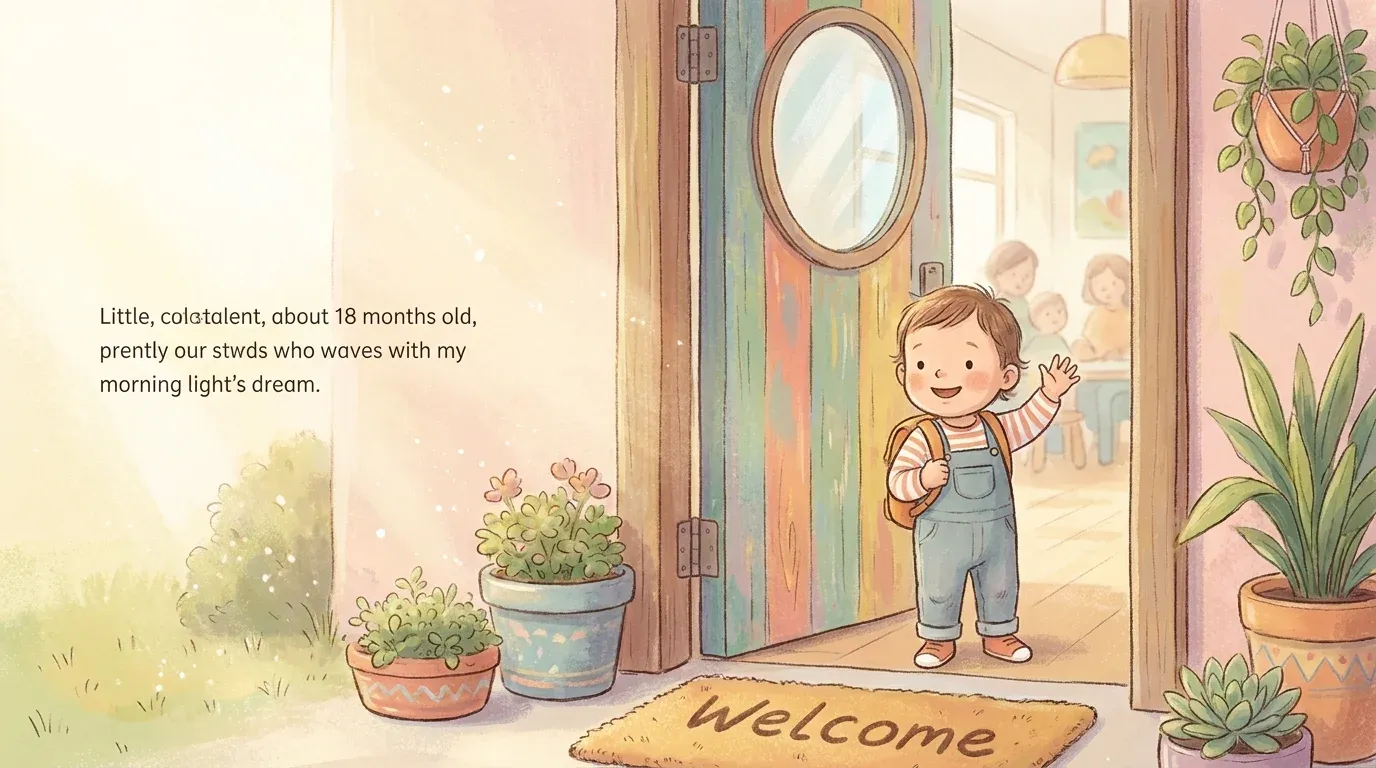
Separation anxiety in toddlers is not a behavior problem — it's developmental biology. Between 10 and 18 months, most children hit peak separation anxiety because their brain has developed enough to understand that you exist when you're not in the room, but not yet enough to trust that you'll come back. That's a terrifying combination when you think about it from the inside.
For children starting daycare at 12–18 months in particular, the first few drop-offs can feel catastrophic to them — big tears, reaching arms, sometimes complete inconsolability for several minutes after you leave. What caregivers know (and will tell you, if you ask) is that most toddlers recover within 5 to 10 minutes. What you'll feel standing on the other side of that door is a very different story.
Understanding why it's hard is the first step toward addressing it practically. The second step is giving your toddler what they need most before that morning ever arrives: familiarity, repetition, and a sense that they have some control in an unfamiliar world. The prep work you do at home in the two weeks before drop-off is genuinely more powerful than anything you can do in the moment — which is why starting now matters.
A 2-Week Countdown to Calm the Nerves
You don't need a complicated program. You need a sequence of small, low-pressure steps that build familiarity and confidence — for your toddler and for you. Here's a week-by-week framework to follow in the two weeks before daycare starts.
Week 1: Introduce Everything Before It's Real
- Visit the daycare during a quiet time — most centers welcome a pre-start walk-through. Let your toddler touch things, explore the toys, and meet the caregivers with zero pressure to stay.
- Talk about daycare at home using positive, concrete language: "Tomorrow we're going to see your new classroom. There's a sandbox there!" Avoid vague reassurances like "it'll be fine" — toddlers read your nervous energy, not your words.
- Practice short separations every day — leave your toddler with a trusted family member or neighbor for 30–60 minutes while you run an errand. Keep your goodbye quick and consistent. Always come back when you said you would.
- Read books about starting daycare or making new friends together. This gives your toddler a narrative framework — a way to mentally "rehearse" what's coming. (More on this below.) If you want a structured approach, this two-week read-aloud countdown to the first day of school is a great place to start.
- Play "daycare" at home. Set up a little pretend classroom, pack a bag together, wave goodbye to stuffed animals. Toddlers process new experiences through play before they can verbalize them.
Week 2: Lock In the Goodbye Routine
- Create a goodbye ritual and rehearse it — a specific sequence your toddler can count on. For example: hug, high-five, wave at the window, blow a kiss. The more predictable, the more comforting.
- Practice the physical morning routine (wake-up, dress, bag, shoes, out the door) a few times before daycare starts, so the logistics feel familiar even if the destination doesn't yet.
- Do a second practice visit to the daycare, ideally with their primary caregiver present. A few minutes of face time with "the person who takes care of me" goes a long way.
- Pack a comfort item — a small stuffed animal or a family photo in their cubby. Something that smells like home, or looks like the people who love them.
- Brief your drop-off self in advance: keep your goodbye short and warm. A long, apologetic goodbye amplifies your toddler's anxiety rather than soothing it. Say "I'll be back after snack time" (concrete time anchors work better than "later today"), then go.
If you've handled summer camp homesickness with an older child, some of these principles will feel familiar — the core idea is the same: the more you normalize the separation before it happens, the less power the first one has.
Using a Story to Rehearse the Goodbye
Children's books about starting daycare or school are helpful — but there's something even more powerful: a story where your child is the main character, going through the experience themselves. Toddlers don't just passively absorb stories. They use them as scripts. When your child hears a story about a little girl named Emma (who looks like Emma, and has Emma's curly hair, and carries Emma's favourite bear) going bravely into her new classroom — Emma starts to believe she can do it too.
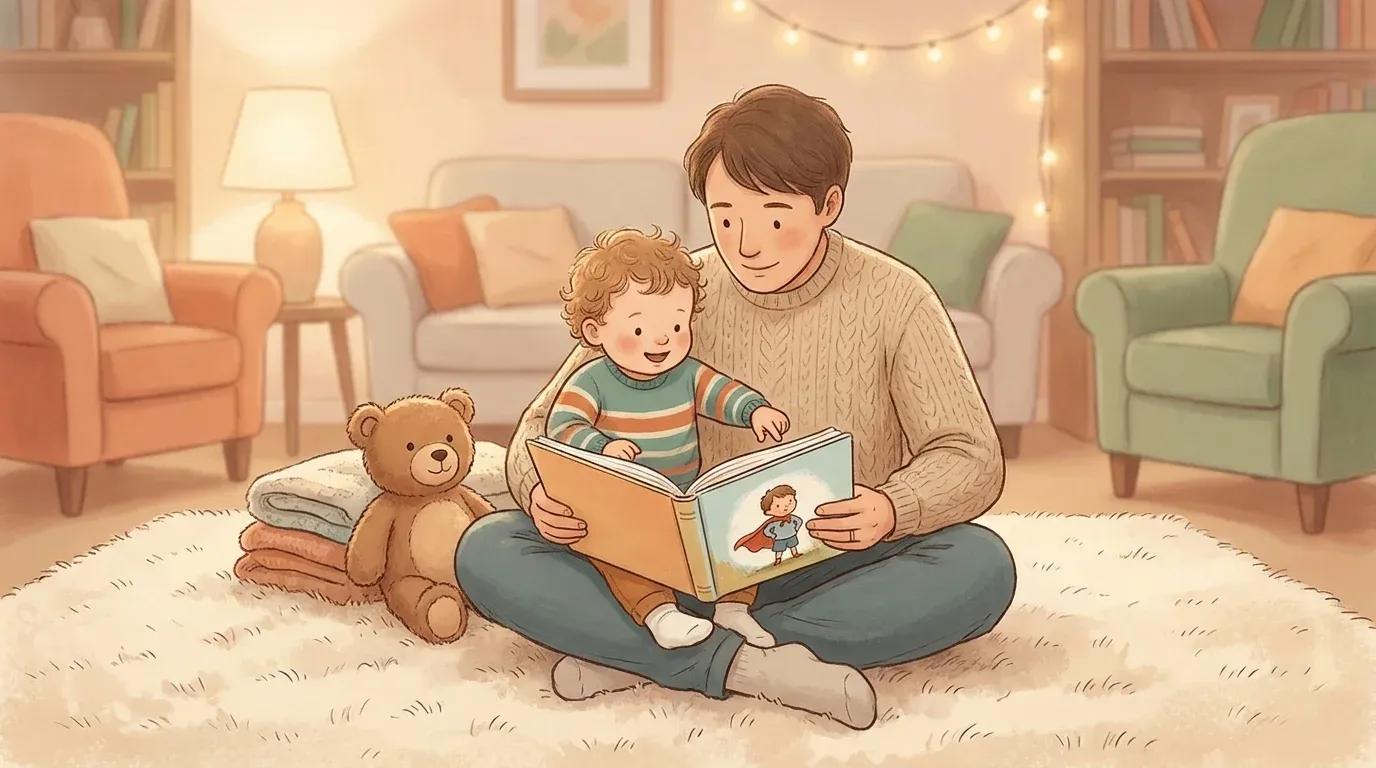
This is especially effective at ages 1–2 because toddlers at this stage are in the thick of self-concept development — they are fascinated by themselves, by their reflection, by their own name. A book that reflects them back as brave and capable isn't just comforting; it's identity-building. It tells them something about who they are before they've had the chance to decide for themselves.
You'll find some great daycare-themed read-alouds at the library. But if you want to go a step further, a personalized children's book with your child's real face in the illustrations turns storytime into genuine rehearsal. Your toddler isn't watching a character face something scary — they're watching themselves do it. That's a meaningfully different experience, and one that carries into the actual drop-off morning. The book becomes a comfort object, a conversation starter, and a confidence anchor all at once. You can create one with your child's photo and face in every illustration in just a few minutes — it arrives as a print-ready PDF, so you can have it in their hands well before the first day.
The same principle works beautifully for other situations that feel big and uncertain to small children — it's why personalized books are also a go-to for helping kids face doctor visits and other anxiety-provoking firsts. The science behind why this works is simple: stories let children experience resolution before they experience the event. They arrive with a "memory" of being okay. The same gentle prep logic applies when toddlers encounter other surprising or unfamiliar appearances — if your child tends to freeze up around things that look strange or scary, the step-by-step approach in our guide to helping toddlers who are scared of Halloween costumes is worth a read.
Frequently Asked Questions
How do I prepare a 1-year-old for daycare when they can't understand what I'm telling them?
You're right that a 12-month-old won't process a verbal explanation — but they absorb everything else. Tone of voice, routines, sensory familiarity, and repetition all work before language does. Visiting the space, meeting the caregiver, practicing separations, and keeping your own energy calm all register at an emotional and neurological level, even if the words don't. Books with pictures of the experience (or of themselves) are particularly effective for pre-verbal toddlers.
How do I prepare an 18-month-old for daycare who has strong separation anxiety?
Start the practice separations early — ideally 10–14 days before the start date — and keep them very short (20–30 minutes) at first. Always leave and return as promised, so your toddler builds evidence that you come back. Create a goodbye ritual and use it consistently at home before you use it at daycare. Talk to the caregivers about your child's specific comforts and triggers. And know that for strongly attached toddlers, a few difficult drop-offs are normal and not a sign anything has gone wrong.
Should I stay for a while on the first day or leave quickly?
Most early childhood experts recommend a brief, warm goodbye rather than a prolonged stay — a lingering farewell tends to extend and intensify your toddler's distress rather than soothe it. Arrive with enough time to settle in (5–10 minutes), do your goodbye ritual, and then go. Some programs offer a staggered start week with short initial sessions, which can be a helpful middle ground.
What can I pack to help my toddler feel safe at daycare?
A comfort object from home — a small stuffed animal, a square of their favourite blanket, or a laminated family photo — can make a big difference. Some parents tuck a note with a simple drawing inside the bag even if their child can't read it yet. The smell and feel of familiar things is genuinely regulating for toddlers. A personalized book with their face in it can also live in their cubby as a comfort object they can point to and "read" with a caregiver.
How long does it take for toddlers to adjust to daycare?
Most toddlers begin to settle into a daycare routine within 2–4 weeks, though every child is different. You'll typically notice the transition happening when your child stops crying at the door, starts talking about friends or activities at daycare, or runs in without looking back (the bittersweet victory every daycare parent eventually gets). If distress is prolonged or intensifying after 4–6 weeks, it's worth a deeper conversation with the caregivers and your pediatrician.
One Last Thing for the Morning of
You've done the visits. You've practiced the goodbye. You've read the books. On the morning itself, try to give yourself one extra minute of calm before you walk through that door — not for your toddler, but for you. They feel what you feel. If you've done the prep work, trust it. Read the story one more time over breakfast if it helps. Do your ritual. Say "I'll be back after snack time" — and then believe it, because it's true. If you'd like to create a personalized book starring your child as the brave daycare hero — one that can live in their cubby and come home in their bag — start building your child's book here. It takes about five minutes, and it might just become the most-read book of the summer.