Best Books to Read Before the First Day of School (A 2-Week Countdown)
A curated two-week read-aloud plan to ease your preschooler's or kindergartner's first-day nerves — ending with a story where they are the brave one walking through the school doors.
Somewhere around the second week of August, a quiet dread starts to settle in — and it's not always your child's. You know the first day is coming. You know there will be a moment at the classroom door when you have to let go, and you're quietly hoping they'll be okay. Your child, meanwhile, may be asking more questions than usual, clinging a little tighter at bedtime, or going unusually quiet when the word "school" comes up. That's not a problem to fix. That's a child doing the important work of preparing — and the right books to read before the first day of school can be a powerful part of that work.
One of the most powerful things you can do in the days before school starts costs nothing but twenty minutes and a stack of picture books. Stories let children rehearse experiences they haven't lived yet — safely, at their own pace, curled up next to someone they trust completely.
Quick answer: The best books to read before the first day of school name the feeling (nervous is normal), show a character survive and enjoy it, and feature something familiar your child can see themselves in. Read one or two per night over two weeks — starting with feelings books, ending with books set on the first day itself.
Why stories calm first-day nerves better than pep talks
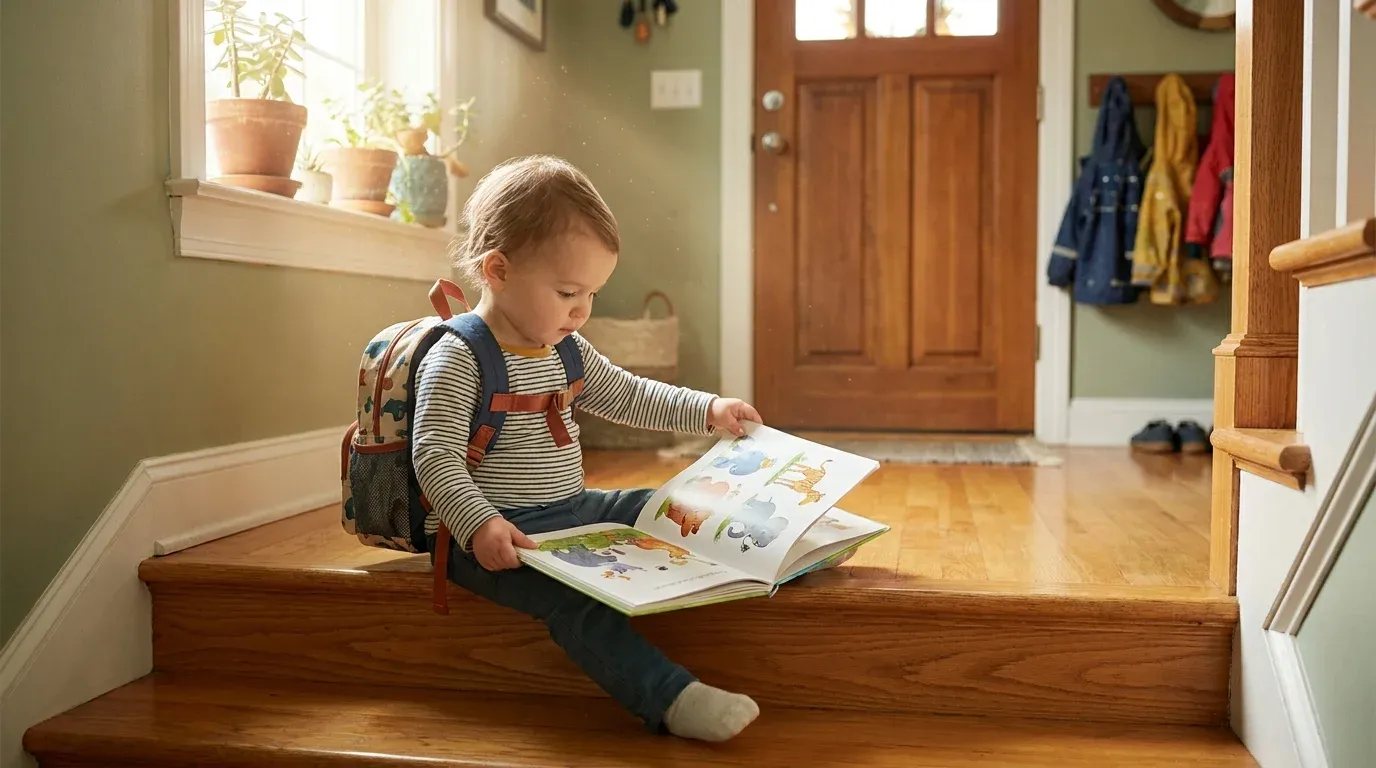
"You're going to love it" is said with the best intentions. So is "there's nothing to be scared of." But for a four- or five-year-old standing on the edge of the biggest unknown of their life, reassurance from a grown-up can feel a little hollow — because you're not the one who has to walk through that door. A story is different. A story shows a character who felt exactly what they're feeling, made it through, and came out the other side.
This is what researchers call narrative rehearsal. When children encounter a challenge in story form before they encounter it in life, their brains begin building a mental script for how to handle it. The fear doesn't disappear, but it becomes familiar, nameable, and survivable. If you're curious about the science behind this, the post on stories that help kids be brave and how narrative rehearsal works goes deep on the mechanism.
There's another reason books work better than pep talks: repetition. Your child may ask you to read the same book four nights in a row — and that's not a sign of boredom. As the post on why toddlers want the same book read over and over explains, repeated readings are how young children absorb and internalize a story's emotional message. By the fifth read, they're not just hearing "the little girl went to school and made a friend" — they're inhabiting it.
8 books to read before the first day of school
Think of this as a gentle countdown, not a strict curriculum. Start with books about feelings and new beginnings in week one. Move to books set specifically on the first day of school in the final four or five days. End the night before with whichever book made your child smile the most.
- The Kissing Hand by Audrey Penn (Week 1) — Chester the raccoon doesn't want to leave home for school. His mother shares a secret that he can carry with him all day. Perfect for the child who worries most about being away from you.
- First Day Jitters by Julie Danneberg (Week 1) — With a twist ending that reassures children that even grown-ups get nervous, this one is great for normalising anxiety without dramatising it.
- Wemberly Worried by Kevin Henkes (Week 1) — Wemberly worries about everything, including the first day of school. She finds a friend who worries too. Ideal for your more anxious child.
- The Night Before Kindergarten by Natasha Wing (Week 1–2) — A rhyming, calming walk through the evening before the big day. The familiar rhythm makes it a natural bedtime read.
- David Goes to School by David Shannon (Week 2) — Funny, a little chaotic, and deeply reassuring: even the kid who does everything wrong is still loved at the end of the day.
- Chrysanthemum by Kevin Henkes (Week 2) — About a child who worries that her name makes her different. A gentle entry point for conversations about fitting in.
- The Invisible String by Patrice Karst (Week 2) — Not strictly a school book, but deeply reassuring for children anxious about separation. The idea that love connects you even when apart is one worth planting early.
- Any school-set book of your child's choosing (Night before) — Let them pick. Agency matters, and the book they reach for tells you what they most need to hear.
A note on choosing books independently of this list: the best read-alouds for preschoolers and kindergartners are ones where your child can point to five things on every page that they recognise or understand. Familiarity breeds comfort, and comfort is exactly what you're building right now.
Making your child the hero of their own first-day story
Every book on the list above does something important: it puts a child in the main character role, so your child can borrow that character's courage. But there's a limit to how far that borrowing goes. Chester the raccoon is brave. Wemberly finds her friend. The child in your reader's mind knows: that's not me. That's a cartoon mouse.
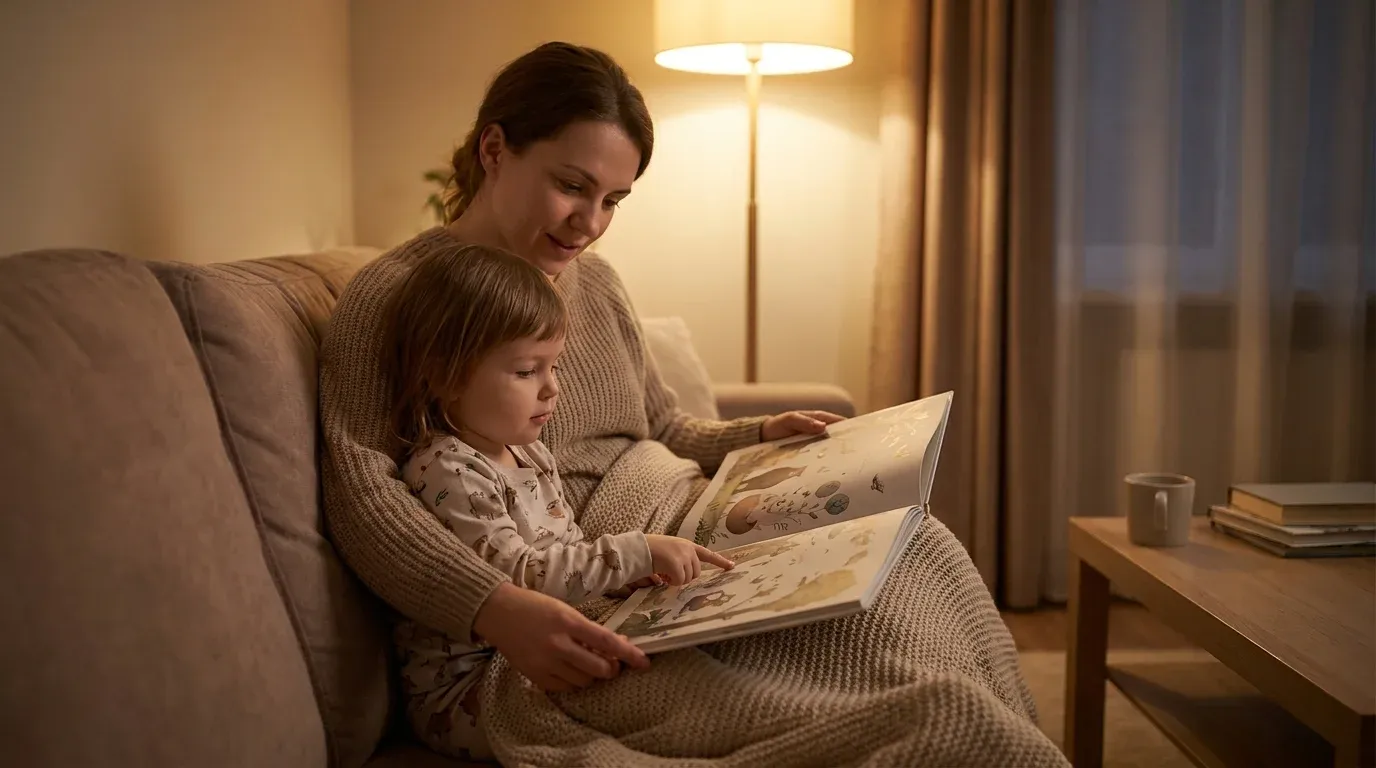
This is where a personalised book that stars your actual child — your child's real face, in every illustration — does something the rest of the shelf cannot. Instead of watching someone else walk through the school doors, your child sees themselves doing it. The backpack is theirs. The nervous smile is theirs. And so is the moment they realise they're going to be okay. Abstract reassurance becomes a story they can see themselves living.
Research consistently shows that children engage more deeply with stories when they see themselves in them — not just their name, but their actual face. There's a full breakdown of why this works in the post on whether personalised books help kids learn to read and build confidence. For a child heading into their first day of school, that deeper engagement is exactly the point: you're not just reading a book, you're rehearsing a confident version of themselves.
If you've already been using books to ease other big transitions — like the gentle two-week plan for preparing toddlers for their first daycare drop-off — this same principle applies here, just with higher stakes and a more specific story to tell.
Frequently Asked Questions
How many books should I read in the two weeks before school starts?
There's no magic number — but one book per night, read consistently at bedtime, is enough. Aim for variety in the first week (feelings, friendship, new places) and focus in the second week (books set specifically on the first day of school). If your child asks to re-read a favourite, let them. Repetition is how young children absorb a story's emotional message, not a sign they've outgrown it.
What is the five-finger rule for choosing books?
The five-finger rule is a simple way to gauge whether a book is a good fit for your child's level. As you read, ask your child to hold up a finger each time they encounter something they don't understand or can't recognise. Five fingers up early in the book means it may be too challenging for independent reading — but for a parent-led read-aloud, slightly harder books are fine, because you're there to explain and discuss. For bedtime reads before the first day of school, prioritise emotional resonance over reading level.
Should I read first-day-of-school books the night before, or earlier?
Both. Introduce school-themed books in the final week so they aren't a surprise right before bed on the night before. By the time the actual eve of the first day arrives, the best books will already feel familiar — like old friends. Familiar is calming. Surprising is not. Reading a well-loved school book the night before feels like revisiting something your child has already conquered in their imagination.
My child is refusing to talk about school at all. Should I still read these books?
Yes — and this is exactly the situation where books are most useful. A child who refuses to discuss school directly is often not ready for a conversation, but is absolutely ready to watch a character navigate it from a safe emotional distance. Don't narrate the parallel ("this is just like you!") — simply read the story warmly and let them absorb it. The processing happens quietly, and often shows up days later in play or in a single offhand question at bathtime.
What if my child is starting preschool, not kindergarten — do these books still apply?
Completely. The emotional experience of a first school drop-off is the same whether the child is three or five. The separation, the newness, the "will I make a friend" — all of it applies. For children on the younger end of the range, lean toward books with simpler text and bigger illustrations. The Kissing Hand and The Invisible String in particular translate beautifully to the preschool context. You might also find the end-of-summer activities for toddlers before school starts helpful for rounding out the final days with positive, low-pressure rituals.
One last book — the one where they're the hero
You've done the reading. You've named the feelings. You've watched Chester and Wemberly and David survive their first days a dozen times over. Now imagine one more book — this one with your child's actual face on every page, walking into a school that looks like an adventure, wearing the brave expression you already know they have in them. At Epic Little Hero, parents upload a few photos and we use AI to generate a personalised illustrated storybook where your child is genuinely, visually the hero — not just a name-swapped stand-in. It's the story they'll ask to read again and again, long after the first day is a memory. Create your child's personalised first-day book — starting from $29, delivered instantly as a print-ready PDF.