Do Personalized Books Help Kids Learn to Read? What the Research Says
Yes — and the mechanism goes deeper than engagement. When children see their own name and face in a book, self-relevance triggers stronger word recognition, longer attention, and a genuine desire to re-read. Here's what the evidence actually says.
You're standing in the bookshop — or scrolling at midnight — wondering whether a personalized book is a genuine learning tool or just a sweet novelty that wears off by Thursday. It's a fair question, and you're not the first parent to ask it. With so many literacy products competing for your attention (and your money), it matters that what you choose actually does something useful for your child's developing mind. If you're shopping for someone else's child, you might also find our honest guide to whether personalized books make good gifts a useful starting point.
The good news is that researchers have been studying exactly this — how self-relevance, name recognition, and emotional engagement intersect with early reading development in children ages 3–6. The findings are more interesting than a simple yes or no.
Quick answer: Yes, personalized books can meaningfully support early literacy — particularly for children aged 3–6. Seeing their own name and face in a story activates self-referential processing, which boosts attention, increases re-reading frequency, and strengthens name-word recognition. As a motivation and engagement tool, they have real, research-backed value — though they work best alongside, not instead of, phonics instruction.
What the research says about self-relevance and reading
Cognitive scientists use the term self-referential processing to describe what happens when the brain encounters information directly related to itself. Across multiple studies, self-referential material is processed more deeply, recalled more reliably, and held in attention longer than equivalent neutral material. This is sometimes called the self-reference effect, and it has been documented in adults and — crucially — in children as young as three.
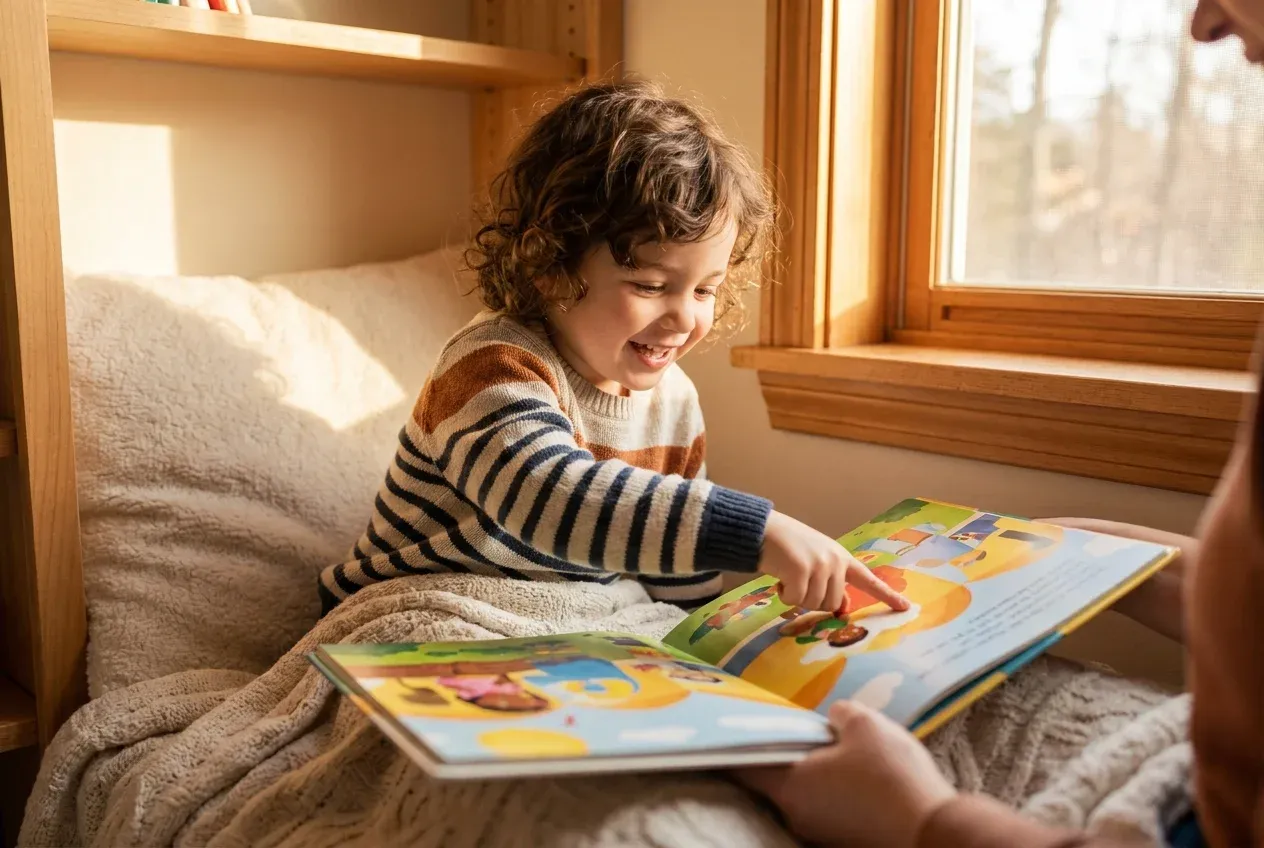
Applied to reading, this means a book that features a child's own name isn't just cute — it's triggering a neurological priority response. The child's brain flags that content as important. Research with preschoolers has found that children spend significantly more time attending to print and asking questions about text when they recognize their own name in the story versus an unfamiliar one. Attention is the first prerequisite for learning anything, and personalization delivers it without any effort from the parent.
The research also points to name recognition as a genuine early literacy milestone. Most children recognize their printed name before they can identify any other written word — it's typically the first sight word they acquire. A personalized book essentially plants that first foothold of print awareness and then builds on it across multiple pages and multiple re-reads. That's not a trivial thing.
How seeing yourself in a story boosts reading motivation
Motivation is the underrated engine of early literacy. A child who wants to read — who asks for the same book again and again — is accumulating print exposure at a rate that a reluctant reader simply isn't. Research on reading motivation in young children consistently identifies two key drivers: emotional connection to content, and a sense of personal relevance. Personalized books hit both at once. If you want to deepen that emotional connection further, choosing stories that also help children process their feelings is a powerful combination — see our guide to books that help toddlers understand and manage big emotions.
There's a well-documented phenomenon around re-reading in toddlers and preschoolers — the very behavior that looks like obsession is actually deep learning in disguise. There's a good reason why that repetition is beneficial, explored in detail in our post on why toddlers want the same book read over and over. What personalized books add to that dynamic is a reason to initiate the reading session in the first place. Children who see their own face in a book don't need to be encouraged to pick it up — they reach for it themselves.
This matters most for children who are shy, hesitant, or simply less naturally drawn to books. When a story is about someone who looks like them and shares their name, the usual psychological barrier — "this world isn't for me" — dissolves. If you're also navigating a child who holds back in social situations, the confidence-building effect of seeing themselves as a brave, capable hero in a story is worth considering — it connects directly to strategies for helping shy children build confidence.
Where personalized books fit in early literacy development
It's worth being honest about what personalized books are and aren't. They are not a phonics program. They won't replace systematic instruction in letter-sound relationships, and no one should position them as a substitute for structured reading practice. What they do exceptionally well is sit at the motivation and engagement end of the literacy spectrum — which is the end that determines whether any of the other tools get used consistently.
Think of early literacy as a triangle: skills (phonics, decoding), exposure (time spent with books and print), and motivation (the desire to engage with reading at all). Most educational interventions target skills. Personalized books directly address motivation and exposure — the two factors that are hardest to manufacture through formal instruction and easiest to nurture through enjoyment. A child who loves their personalized book and returns to it repeatedly is building print familiarity, vocabulary, narrative understanding, and left-to-right tracking every single time.
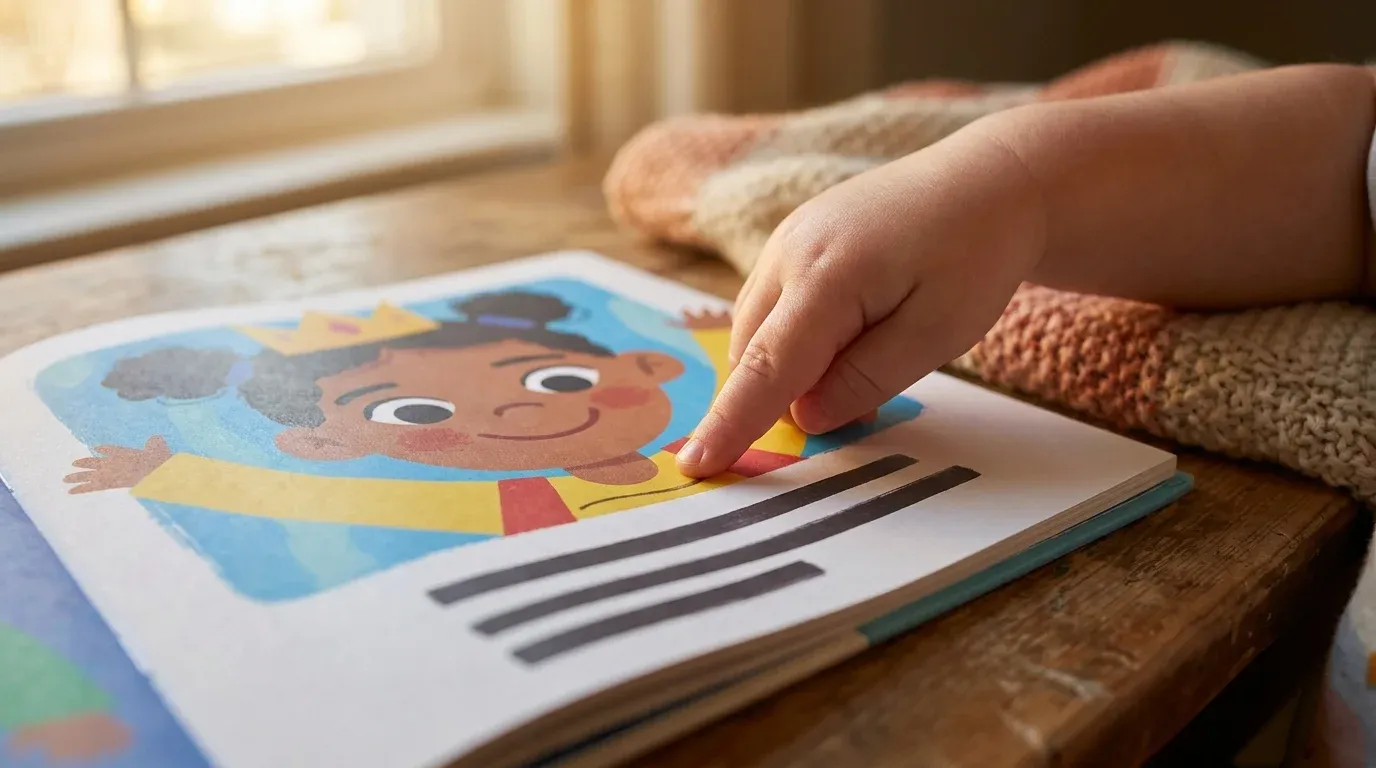
There's also a parent-child shared reading dimension that deserves mention. Research on dialogic reading — where a parent and child discuss a book together rather than simply reading through it — shows strong literacy gains. Personalized books naturally prompt more dialogue: "That's you! What are you doing on that page? Can you find your name?" These conversations are themselves literacy activities. If you're thinking about whether this kind of investment pays off, our honest breakdown of whether personalized books are worth it covers the value question from several angles.
Frequently Asked Questions
What are the benefits of personalized children's books?
Personalized children's books offer several documented benefits for early learners: stronger reading motivation (children initiate reading sessions themselves), improved name and word recognition (the child's name is often their first recognized sight word), longer attention during reading, higher re-reading frequency, and richer parent-child conversation during shared reading. Books that feature the child's actual face in every illustration add an additional self-recognition layer that deepens engagement even further.
Are personalized books better than regular picture books for learning to read?
Not necessarily better — different. High-quality picture books with rich vocabulary and strong narrative structure are irreplaceable in a child's reading diet. Personalized books excel at motivation and print engagement, particularly for children who are reluctant readers or just beginning to notice print. The ideal approach is both: a broad home library supplemented with a personalized book that the child has a special emotional stake in.
Are printed books better for learning than screens?
The current research generally favors print for deep comprehension and retention in young children, largely because print removes the distraction of interactive features and notifications. Physical books also support the tactile and ritualistic aspects of bedtime reading that build routine and positive associations with literacy. For children ages 3–6 especially, a physical book they can hold, point at, and carry around offers advantages that a screen-based version doesn't fully replicate.
Is reading at age 3 a sign my child is gifted?
Fluent independent reading at age 3 is uncommon and can be an early sign of advanced development — but the absence of it at 3 is entirely normal and says nothing about a child's long-term potential. Most children crack the reading code between ages 4 and 7. What matters at age 3 is print awareness, vocabulary, and a love of books — all of which personalized and shared reading experiences support beautifully.
What is the 3-book rule and does it apply here?
The 3-book rule is a parenting guideline suggesting you offer a child three book choices at bedtime — enough for agency, not so many that choosing becomes overwhelming. Personalized books fit naturally into this framework: having one book that is "theirs" in a special way alongside two regular picture books gives the child both familiarity and novelty. Many parents find the personalized book becomes the non-negotiable choice every single night, which is honestly not a bad problem to have.
The bottom line — and a gentle suggestion
If you're looking for a single tool that will teach your child to read on its own, this isn't it — and anyone who claims otherwise is overselling. But if you're looking for something that makes your child want to read, makes them feel seen in the world of stories, and gives you a natural springboard for all those rich conversations that quietly build a lifelong reader — that's exactly what a well-made personalized book does. The research supports it, and parents discover it every time a child climbs into their lap and says "read the one with me in it."
At Epic Little Hero, your child doesn't just get their name printed on the cover — their real face appears in every single illustration, AI-generated from photos you upload. It's the kind of self-recognition that makes a child stop, look, and look again. If you'd like to see what that looks like for your child specifically, create your book — themes include Space, Jungle, Fantasy, Ocean, Dinosaurs, and Magic, starting from $29 with instant digital delivery. And if you're still deciding, our guide to personalized books with your child's name and picture walks through exactly what to look for so you get something that genuinely resembles your kid — not just a generic character with a name swap.