Books to Help Toddlers With Emotions: A Parent's Guide
The right story can do what a hundred calm reminders can't — help a toddler name, understand, and move through a big feeling. Here's how to choose books that actually work.
It's 4:47 PM and your toddler is on the kitchen floor, sobbing, because their banana broke in half. You know, logically, that this isn't about the banana. They're tired and overstimulated and carrying feelings that their tiny vocabulary simply can't hold. You've tried calm voices, distractions, and snacks. Nothing lands. What they actually need — and what takes time to build — is the ability to recognize what's happening inside them and find a way through it.
That's where stories come in. Not as a quick fix during the meltdown itself, but as a gentle, consistent teacher between the hard moments. Books to help toddlers with emotions give children a language for their inner world — and that language, built page by page over weeks and months, quietly changes how they handle the next big feeling.
In short: The best books for toddlers learning emotional regulation name feelings simply, show a relatable character experiencing them, and model one clear coping strategy — like taking a deep breath or asking for a hug. Reading regularly outside of meltdown moments gives toddlers a mental script they can reach for when emotions spike. The most powerful variation: a story where the child who calms down looks exactly like yours.
Why Stories Help Kids Process Feelings
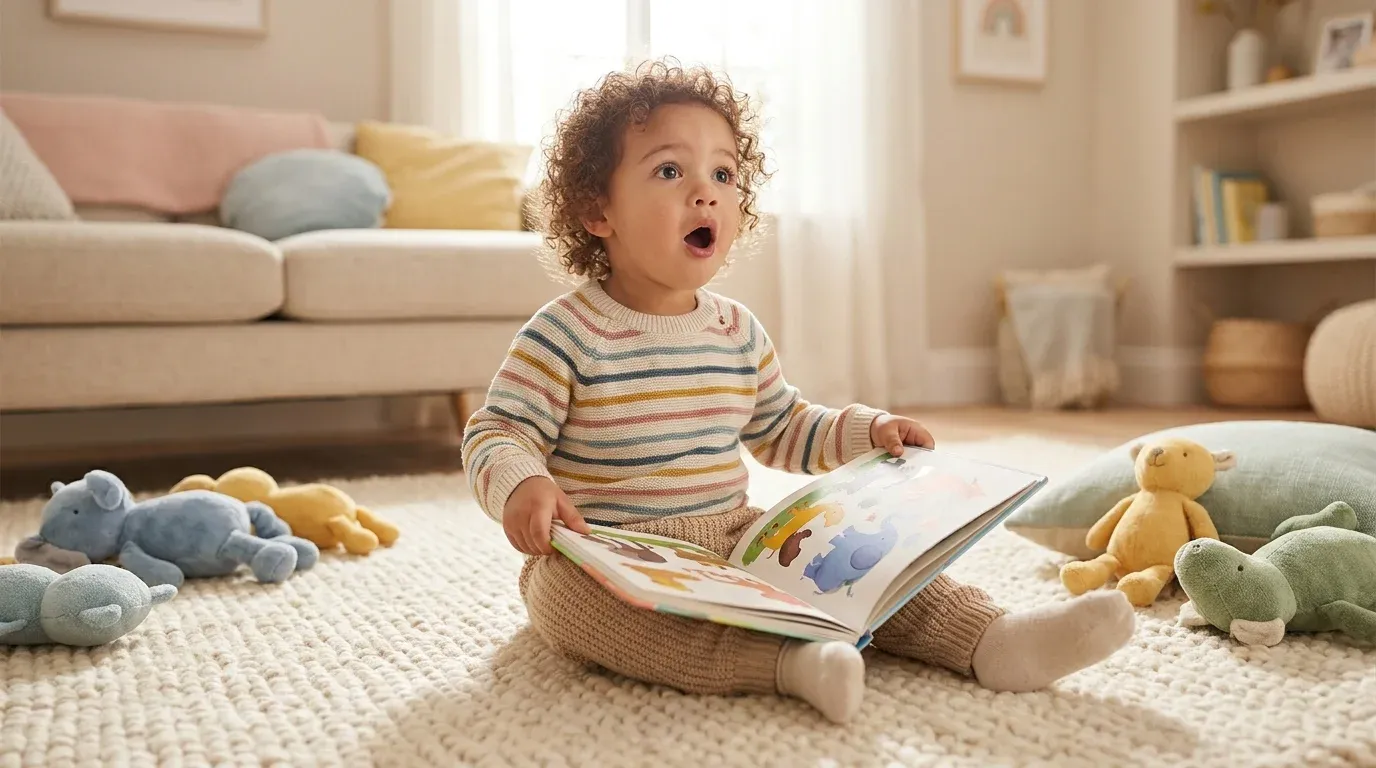
Toddlers between 2 and 4 are in the thick of what developmental psychologists call the "emotional explosion" — a period where the brain's feeling centers are rapidly developing but the regulatory systems that manage those feelings are still years from maturity. This is why your 2-year-old can go from giggling to screaming in under ten seconds. It's not defiance. It's neuroscience.
Stories work as an emotional regulation tool for a surprisingly simple reason: they create safe distance. When a character in a book feels furious because they can't have more juice, a toddler can watch that feeling unfold without being inside it. They get to observe, label, and see what happens next — all from the cozy safety of your lap. This is sometimes called "bibliotherapy," and early childhood educators have leaned on it for decades.
There's also a vocabulary effect. Most toddlers know "sad," "mad," and "happy" — and that's about it. Emotions books expand that vocabulary to include frustrated, disappointed, overwhelmed, nervous, and proud. Children with a richer emotional vocabulary tend to have fewer behavioral outbursts, because they can reach for a word before the feeling tips into action. If you're already working on getting your toddler to love books in general, emotions-themed stories are one of the best places to start — they're immediately relevant to your child's daily experience, which keeps engagement high.
What to Look for in an Emotions Book for Toddlers
Not every book with a feeling on the cover is equally useful. A few qualities separate the books that actually shift behavior from the ones that just sit on the shelf.
- Simple, concrete emotion labels — not "melancholy," but "really, really sad"
- A character who looks or acts like your child (same age, similar situations)
- Feelings shown in the body, not just the face — stomachs that hurt, hands that shake — so toddlers learn to read their own physical cues
- One clear coping strategy modeled per book — too many strategies at once overwhelm small brains
- Short enough for a toddler's attention span: 12–24 pages is the sweet spot for ages 2–4
- Illustrations that are expressive and easy to read at a glance — toddlers "read" pictures before words
- An ending that resolves — the character feels better, which shows children that big feelings pass
You'll also want to think about repetition. The books that do the most emotional work are the ones your toddler asks for again and again — which means the story has to be genuinely engaging, not just educational. If you've ever wondered why toddlers demand the same book dozens of times, it turns out that repetition is exactly how they internalize a new concept. Each re-read builds the neural pathway a little deeper. So when you find a feelings book your toddler loves, lean into the repetition rather than trying to vary things up.
The best books for toddlers to learn about emotional regulation also invite conversation rather than closing it down. Look for pauses built into the story — moments where you can say, "How do you think she's feeling right now?" or "Has that ever happened to you?" That back-and-forth between you and your child is where a lot of the real learning happens.
The Power of "The Hero Calms Down"
Here's a pattern worth looking for deliberately: stories where the main character experiences a big feeling and successfully moves through it. Not just acknowledges it, but uses a strategy — breathing, moving their body, asking for help, taking space — and comes out the other side. This narrative arc is doing a lot of developmental work.
When a child watches a character they like manage a feeling they recognize, something called "vicarious learning" kicks in. The child's brain essentially rehearses the same sequence: feel it, name it, use the strategy, feel better. Over many readings, that rehearsed sequence becomes available as a real-world option. It doesn't mean your toddler will suddenly take deep breaths mid-meltdown — but it means they'll have a mental model to grow into.
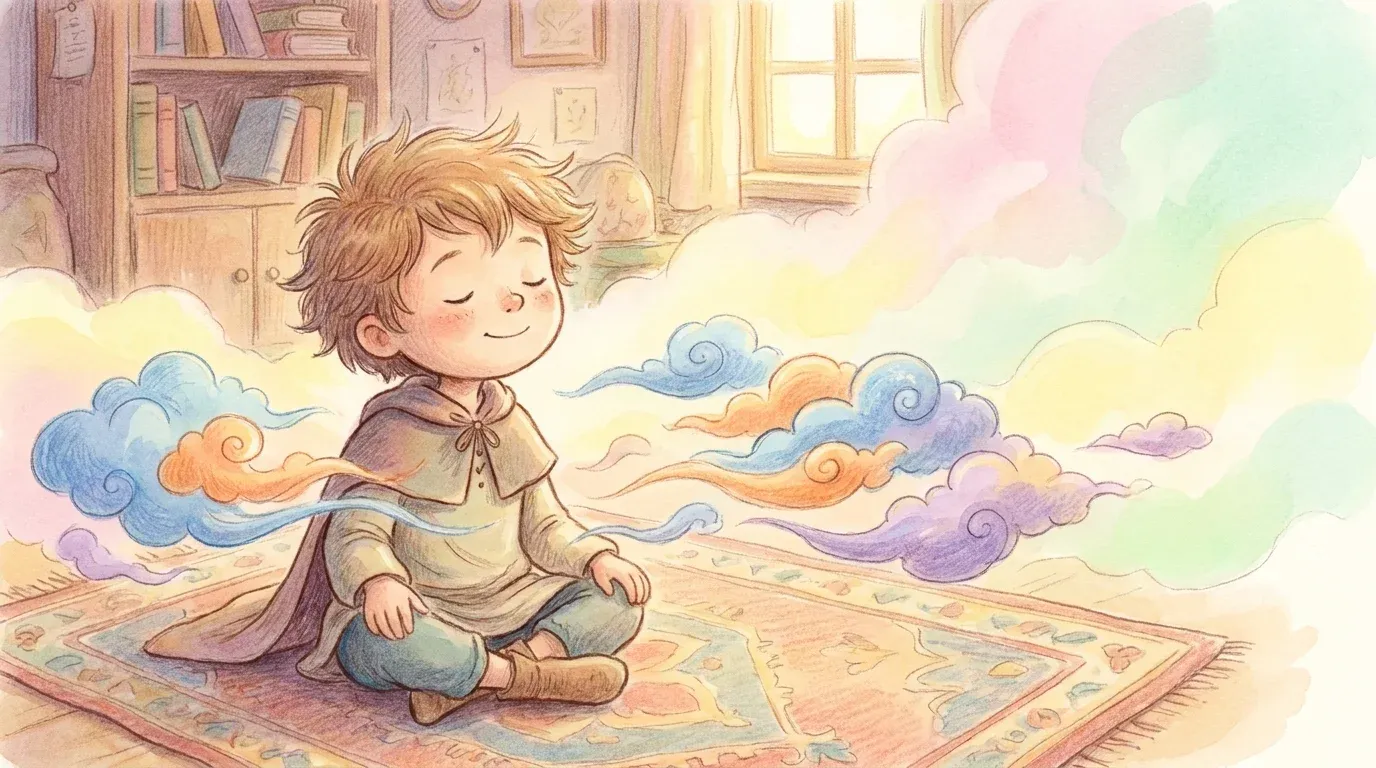
Now imagine that hero looks like your child. Not just shares a name — but has their face, their hair, their expression on every illustrated page. The identification becomes immediate and visceral. "That's me taking the deep breath. That's me asking for a hug. That's me feeling better." Research on personalized books and learning — including findings summarized in our deep dive into whether personalized books help kids learn to read — suggests that when children see themselves in stories, their engagement and retention both increase. For emotional learning especially, that self-identification may be the most powerful lever available. A book where your child is the hero who calms down isn't just a sweet idea — it's teaching the skill by example, with the most compelling teacher possible: themselves.
This same principle applies to other emotionally charged situations. We've seen it work well for helping children prepare for stressful experiences — for example, parents who use personalized stories to help a child who's afraid of the doctor often find that having the child's own face on the brave character makes the preparation feel personal and real, not abstract. If you want to understand why this works so reliably, the science behind using stories to help kids face scary situations explains the concept of narrative rehearsal and how to put it into practice.
Frequently Asked Questions
How do you help a toddler with emotions?
The most effective approach combines naming emotions in the moment ("You're frustrated because you can't reach it — that makes sense"), modeling your own emotional regulation out loud, and reading about emotions regularly outside of meltdown moments. Books give toddlers a script and vocabulary they can reach for when feelings surge. Consistency matters more than any single strategy — small exposures over weeks and months build the skill.
What is a good book about emotions for toddlers?
The best emotions books for toddlers name feelings simply, show a relatable character experiencing them in a recognizable situation, and model one clear coping strategy. Classic picks include titles that focus on a single emotion per book rather than trying to cover all feelings at once. But the most impactful option for many families is a personalized story where the child themselves is the main character — because the identification is instant and the learning sticks faster.
What are the best books for toddlers to learn about emotional regulation?
Look for books that: (1) show the feeling in the character's body, not just their face; (2) follow a clear arc from big feeling to calmer state; (3) model one strategy like deep breathing, counting, or asking for a hug; and (4) are short enough for a 2–4 year old's attention span (12–24 pages). Bonus points for books your toddler asks to read again — repetition is where the emotional learning actually lands.
Why is my 2-year-old so emotional?
Completely normal — and rooted in brain development. At 2, the limbic system (which generates emotions) is highly active, while the prefrontal cortex (which regulates them) won't be fully developed until their mid-twenties. Your toddler genuinely cannot control the intensity of their feelings yet. What they're learning — slowly, through experience and modeling — is what to do with those feelings. Stories are one of the gentlest, most effective teachers for that process.
When is the right time to read an emotions book — during or after a meltdown?
After — and ideally well after. During a meltdown, the brain's emotional centers have essentially flooded the logical brain, which means your toddler cannot process new information, follow a story, or absorb a coping strategy. The best time to read an emotions book is a calm, connected moment: after nap, at bedtime, or as part of a regular storytime. That's when the learning takes root. After many readings, your child can begin to retrieve the strategy during easier emotional moments — and that gradually generalizes to harder ones.
If you're building out a home reading routine that includes emotional learning, our guide to building a home library for toddlers has practical advice on how to structure a small shelf that actually gets used — including how to mix different book types so storytime stays fresh and your toddler stays engaged. Seasonal and holiday stories are a great way to add that variety — our Hanukkah read-aloud list for all eight nights is a lovely example of themed reading that works beautifully alongside your everyday emotion books. And if the holidays mean travel, a familiar and beloved book is one of the best tools in your bag — our holiday travel survival guide for toddlers covers exactly how to use books (and a few other tricks) to keep the peace on planes, in cars, and at Grandma's house.
Make Your Child the Hero Who Handles It
The banana will break again. The feelings will come back bigger, and smaller, and in new shapes you didn't anticipate. But every story you read together — every time your toddler watches a character feel something enormous and then find their way through — is quietly building the emotional vocabulary and mental models they'll carry for years. If you want to take that one meaningful step further, consider a personalized book where your child's own face appears on the hero who calms down. When they see themselves doing it in a story, they start to believe they can do it in real life. Before you choose, it's worth reading this breakdown of name personalization vs. face personalization to understand what truly sets a personalized book apart. Then start creating your child's story at Epic Little Hero — it takes just a few minutes, and the book they'll ask to read again and again might be the one that helps them most.