Holiday Travel With a Toddler: A Survival Guide for Planes, Cars, and Grandma's House
Holiday travel with a toddler is survivable — and sometimes even lovely — when you pack smart, set realistic expectations, and bring one secret weapon: a book they genuinely can't put down.
There's a moment most toddler-traveling parents know well: you're somewhere between the security line and the gate, your carry-on is splayed open on the floor, a sippy cup is rolling toward a stranger's feet, and your two-year-old has gone completely limp — a technique they've apparently been perfecting all week. And you still have four hours until you land.
Holiday travel with a toddler is genuinely hard. But it's also genuinely doable — and with the right preparation, it can even have sweet moments woven in between the chaos. The difference almost always comes down to what you packed, what you expected, and what you pulled out of your bag at the right moment.
Quick answer: The key to surviving holiday travel with a toddler is layering your strategy — a well-stocked bag with familiar snacks, comfort items, and a mix of simple activities, paired with realistic expectations about naps, noise, and detours. For flights especially, one deeply engaging, screen-free activity (more on that below) is worth more than an overstuffed toy bag.
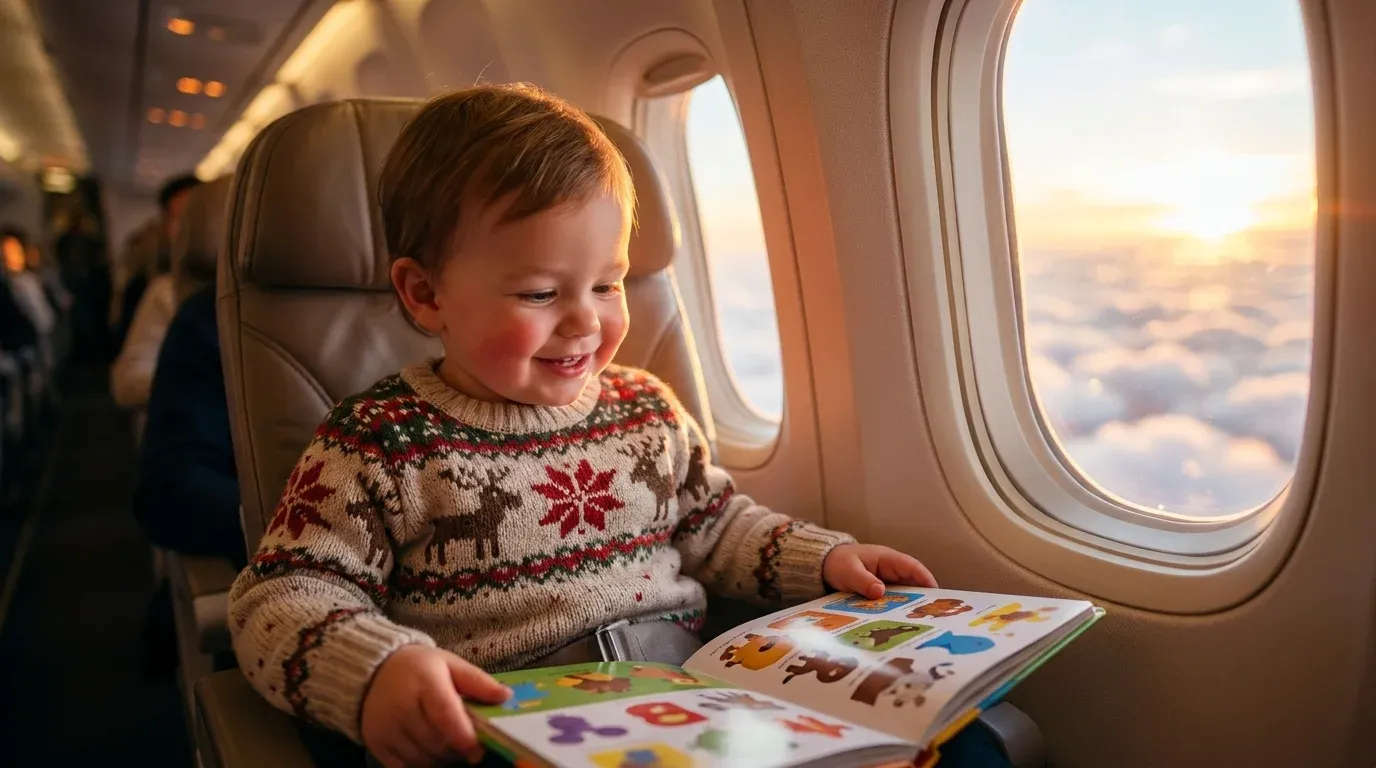
What to Pack for Holiday Toddler Travel (The Real List)
The mistake most parents make is packing too many things and not enough of the right things. A bag full of small toys sounds smart — until you've picked each one up off the airplane floor six times. Instead, think in terms of categories: comfort, food, and engagement. One or two excellent items per category beats ten mediocre ones.
For comfort: a familiar blanket or small lovey, a change of clothes (two, if it's a long flight), and their regular pacifier or comfort object if they have one. Don't introduce anything new in this category — familiarity is the point. For food: pack more than you think you'll need. Hunger is responsible for more toddler meltdowns than almost anything else, and airport or highway rest-stop food is rarely what a fussy two-year-old has in mind.
- 1–2 familiar comfort items (lovey, small blanket, pacifier)
- Extra change of clothes — at least two for long travel days
- Snacks in portion-sized bags: crackers, raisins, pouches, dry cereal
- Reusable sticker books or simple wipe-clean activity pads
- 1–2 small board books or a personalized storybook
- Headphones sized for toddlers (if you plan to use a device)
- A collapsible water bottle and their regular cup
- Small first-aid kit: children's pain reliever, bandages, wipes
- Garbage bags — at least two, for the inevitable
One packing note that experienced traveling parents swear by: wrap a few of the activity items like small gifts. The novelty of unwrapping something — even a simple reusable sticker book — buys you a disproportionate amount of engaged time. The unwrapping itself is half the entertainment.
Surviving the Journey: Planes, Cars, and Long Drives
The hardest age to travel with a toddler is widely considered to be the 18-month to 3-year window — old enough to have opinions and big feelings, not old enough to understand "we'll be there soon." If that's where your child is right now, know that you're in the thick of it, and that's okay. You're not failing; the developmental stage is just genuinely difficult for travel.
For plane travel: book the earliest flight you can manage. Tired toddlers sleep on planes more readily than wired ones. If your child still naps, try to time boarding with their usual nap window. Bring snacks you'd normally save for special occasions — this is that occasion. Walk the aisle when you need to. Don't white-knuckle it in your seat hoping they'll settle; sometimes a slow lap around the plane resets everyone.
For car trips: break the journey into chunks with a specific stop your toddler can anticipate — a park, a particular fast food playground, a gas station with a specific snack. Toddlers handle waiting much better when there's a concrete, imaginable thing coming next. "We're almost there" means nothing to a two-year-old. "Next stop, you can run around and get a juice box" is something they can hold onto.
Screen-Free Entertainment That Actually Works
Tablets and phones are completely valid tools and nobody here is judging you for using them. But they have a shelf life — most toddlers max out on screen time faster than parents expect, and you can quickly find yourself with a device-addicted, overstimulated child and four hours still to go. Having a strong screen-free option in reserve changes the math.
The screen-free activities that hold toddler attention longest tend to share a few traits: they're tactile, they're familiar, and they feature something (or someone) the child already loves. Reusable sticker scenes, simple puzzles with chunky pieces, and small figurines all work — but the single most reliable option for many parents is a book their child has already bonded with. Not a new book they've never seen; a beloved one. One they'll ask you to read three times in a row.
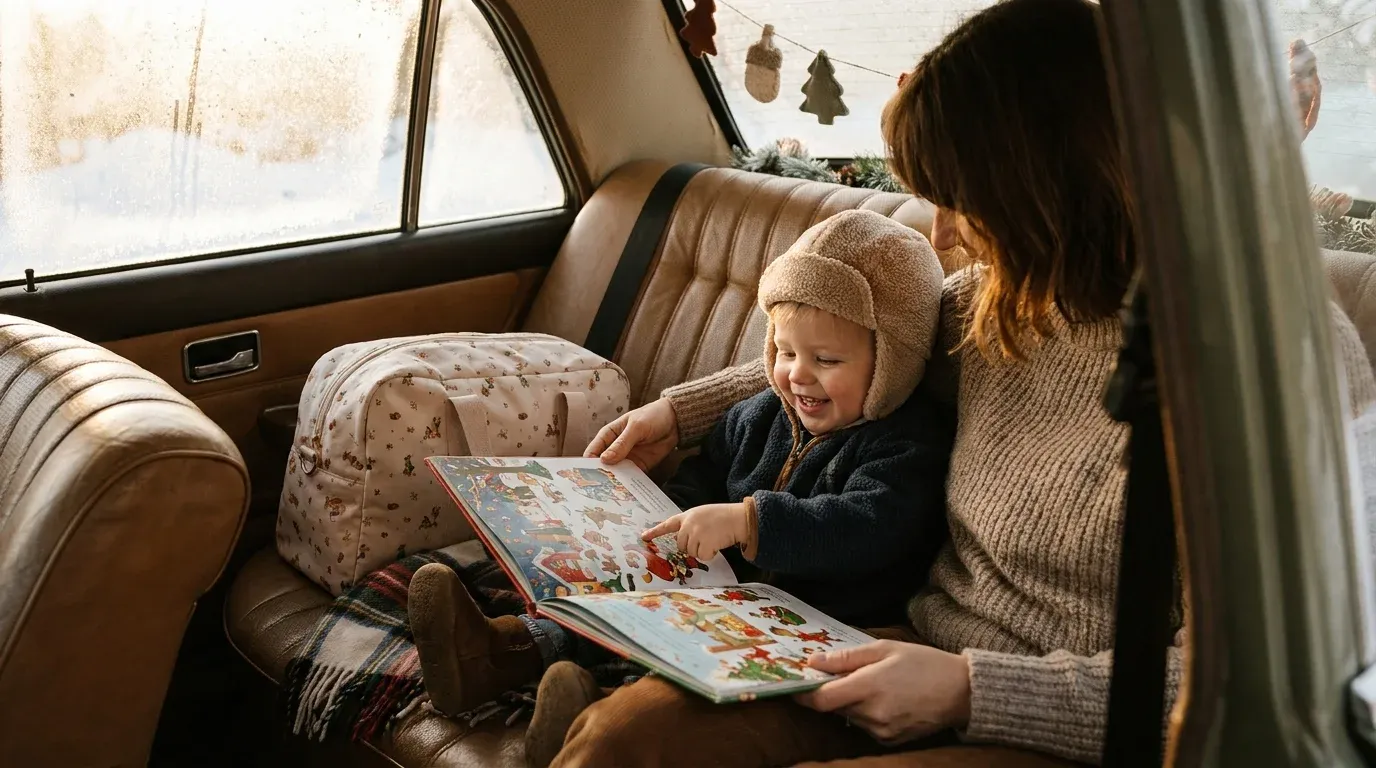
This is where a personalized book earns its place in the carry-on. At Epic Little Hero, parents upload a few photos and the AI generates a full illustrated storybook where their child's real face appears in every single illustration — not just their name swapped into the text, but their actual likeness as the hero of the adventure. Toddlers who might flip past a generic picture book will stop, point, and say "that's me!" — and then ask you to read it again. It's lightweight, no batteries required, and it travels well.
For families looking to add meaningful holiday reading to the mix — whether you're celebrating Hanukkah, Christmas, or both — a personalized storybook also makes a natural companion to a curated holiday reading routine. Grandma's house is the perfect place to debut a new book that makes your toddler the star. If you're navigating multiple December celebrations, our guide to celebrating Hanukkah and Christmas together with young kids has some lovely ideas for weaving reading into both traditions.
Frequently Asked Questions
What is the hardest age to travel with a toddler?
Most parents point to the 18-month to 3-year range as the most challenging window. Children this age are mobile, opinionated, and have strong feelings they can't yet regulate or articulate well. They don't have the verbal ability to express boredom or discomfort calmly, and they can't yet reason through "just a little longer." The good news: by age 4, most kids handle travel dramatically better.
How do you survive a 7-hour flight with a toddler?
Layer your strategy across three zones: the first hour (novelty items, snacks, excitement about the plane), the middle stretch (your best engagement tools — a beloved book, a tablet with downloaded shows, a new small activity), and the final stretch (whatever works, full stop — no rules). Book an early flight if possible, bring twice as many snacks as you think you need, wear comfortable clothes you don't mind getting messy, and release the expectation that it will be peaceful. Aim for manageable, not perfect.
What are the best screen-free activities for a toddler on a plane?
The most effective options are: a beloved board book or personalized storybook, reusable sticker scenes, a mess-free coloring pad, small figurines or a matchbox car, and simple finger games or songs you can do together. The key is familiarity — toddlers engage longer with things they already love than with novel items they haven't bonded with. If you're looking for more ideas, our list of screen-free activities for kids that buy you a quiet hour has options that also work beautifully in transit.
Where is it good to go on holiday with a 2-year-old?
For holiday-season travel specifically, the best destinations for toddlers are ones with a forgiving schedule, family nearby, or a home-base feel (rather than a packed sightseeing itinerary). If you're visiting grandparents, that's often ideal — familiar faces, a safe space to run, and adults who are genuinely delighted to entertain your child. Avoid destinations that hinge on long museum visits, strict mealtimes, or nap-skipping days. Toddlers thrive when the environment bends a little toward them.
How do I keep my toddler calm at Grandma's house when the routine is disrupted?
Bring as many pieces of home as you can fit: their sleep sack, a white noise machine or app, their regular cup, and two or three comfort items. Try to protect one anchor from your normal routine — even if bedtime is later, keep the bath-book-song sequence intact. A familiar book, especially one starring your child, can act as a powerful routine anchor in an unfamiliar room. If big emotions surface, the guide on books that help toddlers with emotions has tools you can use both before the trip and during it.
One More Thing to Pack Before You Go
You've got the snacks, the sticker book, the change of clothes. The last thing worth tucking in — before you zip the bag and head to the airport — is a book your toddler genuinely loves. Not loves the way they love everything for five minutes, but loves the way they ask for it by name at bedtime. The kind of love that only happens when they see themselves in it. At Epic Little Hero, you can create a personalized storybook with your child's real face in every illustration, delivered as a digital PDF and ready to print or read on any device. Have it ready before your next trip.