Screen-Free Activities for Kids Over Winter Break (That Buy You a Quiet Hour)
Winter break is long. Here are the screen-free activities for kids that actually hold attention — including one that buys you a full quiet hour while they sit there happily rereading it.
Day three of winter break. The living room looks like a toy store exploded, your child has already asked to watch "just one more episode" six times before 10am, and you're counting down the days until school resumes. If that sounds familiar, you're not alone — and you're not failing. Winter break is genuinely long, the weather keeps everyone indoors, and the usual bag of tricks runs dry fast.
The tricky part isn't finding a list of screen-free activities for kids — the internet has thousands of those. The tricky part is finding activities that actually hold a young child's attention long enough for you to drink a hot coffee while it's still hot.
Quick answer: The best screen-free activities for winter break feel like play but deliver real engagement — sensory bins, creative building, open-ended art, and books where a child is the main character. That last one is the rare option that genuinely holds independent attention for 30–60 minutes, repeatedly, with zero screen involved.
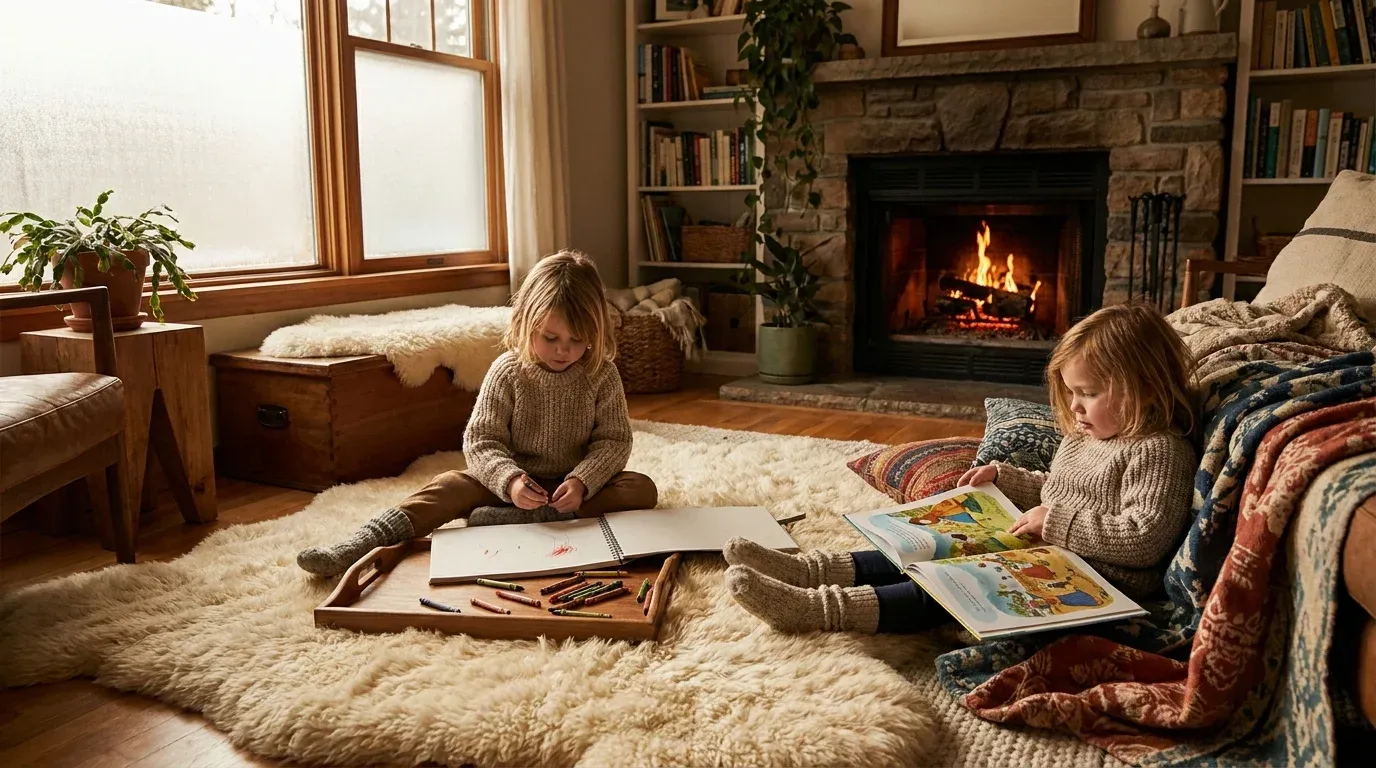
Why Winter Break Derails Screen Limits
Screens aren't the enemy — routine is what's actually missing. During the school year, your child's day has natural rhythm: wake up, get dressed, go somewhere, come home, wind down, sleep. Winter break strips that scaffolding away and leaves a wide-open expanse of unstructured time. Kids don't thrive in a vacuum; they fill it with whatever's most immediately stimulating. Screens win almost every time, because they're always there and always rewarding.
The other factor is weather. When it's too cold to go outside — or the sidewalks are icy, or you have a toddler who can't manage a long outdoor session — you're suddenly running an indoor activity center with a staff of one. That's genuinely hard. The goal isn't zero screens; it's having enough good alternatives that screens become one choice among many, not the only obvious option.
Research on children and screen time consistently points to one culprit: the absence of a compelling alternative, not parental weakness. When kids have access to something genuinely absorbing, they'll often choose it over a screen on their own. The secret, then, is stocking your break with activities that actually compete — and knowing which ones have the longest staying power.
Screen-Free Activities That Actually Hold Attention
Most screen-free activity lists are padded with ideas that work for about eight minutes before your child is back tugging your sleeve. What actually works for longer stretches? Here's an honest ranking, field-tested by the kinds of parents who've survived multiple school breaks.
- Sensory bins: Fill a plastic tub with dried pasta, rice, or kinetic sand and add small toys. Young kids will quietly excavate for surprisingly long stretches. Cheap, zero prep once you have the bin.
- Open-ended building: Magnatiles, LEGO Duplo, or even cardboard boxes and tape. The key word is open-ended — no kit with instructions, just materials and space.
- Playdough or air-dry clay: Making it together is half the fun; playing with it afterward buys you the quiet hour. Add cookie cutters and toy tools for longer engagement.
- Drawing with a mission: Give a specific prompt ("draw the craziest animal you can imagine" or "draw our house if it was made of food") rather than a blank page. Specific prompts outlast open invitations every time.
- Audiobooks and picture books: Underrated for independent play. A child curled up with a stack of books — especially ones they're emotionally connected to — can self-entertain for surprisingly long stretches.
- Indoor obstacle courses: Couch cushions, pillows, a tunnel of dining chairs with blankets draped over them. Takes five minutes to build and gets used for an hour.
- Water play at the sink: Measuring cups, funnels, and a few drops of dish soap. Messy? Yes. Worth it? Absolutely.
For more ideas on keeping young kids busy indoors without screens, the low-prep suggestions in our guide to indoor activities for toddlers this winter are worth bookmarking before break starts — many of them require nothing you don't already have at home.
The pattern across all the activities that last: they involve some element of control or mystery. The child is building something, discovering something, or making something. Passive watching — even of a beautiful nature documentary — doesn't scratch the same itch.
The Reread-Worthy Book Trick
Here's something that surprises a lot of parents: young children naturally reread books they love, sometimes so many times parents start hiding them. The reason is developmental — repetition is how children under six process and internalize story, language, and ideas. They're not being boring; they're doing real cognitive work. The question is what makes a book the one they return to obsessively rather than the one they flip through once and abandon.
The answer, almost every time, is emotional investment in the main character. Kids who feel like they are the hero don't just read the book — they live inside it. That's the reason personalized books, where a child's real face appears in every illustration (not just their name printed in the text), hit differently than any other book on the shelf. Your child isn't looking at a character they admire from a distance; they're looking at themselves going on an adventure through space, or a jungle, or an underwater kingdom. The compulsion to pick it up again is automatic.
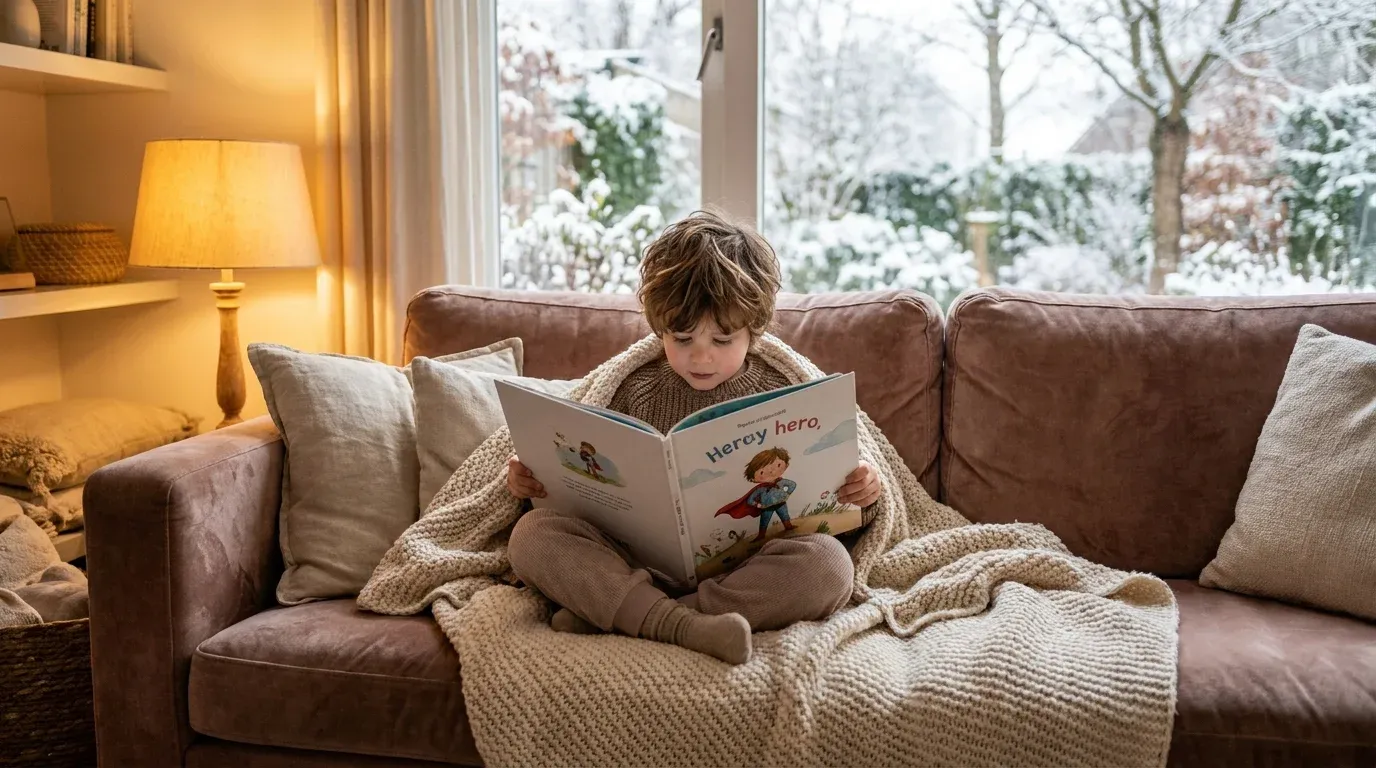
This is exactly why personalized storybooks — particularly ones that use actual AI-generated illustrations of your child's face — are one of the most effective screen-free tools parents have over a long break. Not because they're educational (though they are, genuinely), but because they buy you quiet time repeatedly. A child who rereads their book throughout winter break is getting long stretches of independent, screen-free engagement each session. That's not a small thing. If you're curious about the deeper mechanics of why children respond this way, the post on why kids light up when they're the main character in a story explains the psychology well.
For parents wondering how to make books a bigger part of their child's daily rhythm — especially if their toddler currently shows zero interest in sitting still for a story — the strategies in our guide to getting your toddler to love books are a good starting point. A personalized book often becomes the entry point that unlocks a genuine love of reading, because it removes the biggest obstacle: not seeing yourself in the story.
Frequently Asked Questions
What do you do with kids with no screen time?
The most sustainable approach is rotating through a small set of high-quality activities rather than offering a massive menu. Choose 4–5 activities your child genuinely enjoys — a sensory bin, a building toy, an art supply, an outdoor option (weather permitting), and at least one good book — and cycle through them. Novelty helps: swap out the sensory bin filler weekly, rotate which books are on the coffee table, introduce one new art prompt every few days. Boredom is also allowed; children who learn to tolerate unstructured moments develop better creativity and self-direction over time.
How do you engage kids without screens?
Engagement follows emotional investment. Kids engage deeply with activities where they have agency (they made it, they built it, they chose it) or strong personal connection (it's about them, their family, their interests). That's why a generic puzzle often gets tossed after two minutes while a puzzle with their photo on it gets completed repeatedly. The same principle applies to books, art projects, and imaginative play. When designing screen-free time, ask: does this activity make my child feel capable or seen? Those are the ones that last.
What are the best non-screen activities for toddlers indoors?
For toddlers specifically (ages 1–3), the winners are: water play at the kitchen sink, playdough, stacking and sorting toys, simple board books they can handle themselves, and large-format drawing with chunky crayons. Toddlers need physical engagement — their hands have to be doing something. Activities that are purely observational (watching someone else do a craft, for example) won't hold them. For a full low-prep list organized by age, see the indoor toddler winter activity guide.
What activities can I do to avoid screen time during winter break?
Think in time blocks rather than all-day alternatives. A realistic screen-free winter day might look like: morning outdoor play or active indoor play, a quiet activity like drawing or playdough after lunch, an independent reading stretch in the afternoon (this is your quiet hour), and a read-aloud together in the evening. You don't need to replace all screen time — you just need enough good alternatives that screens become one option rather than the default. Planning a dedicated reading time with a book your child is genuinely excited about makes the independent stretch much more likely to stick.
Do personalized books really keep kids entertained independently?
Yes — and the reason is specific: children reread books where they're the hero because the emotional reward of seeing themselves in the story doesn't diminish on the fifth read the way a regular story does. A book where your child's actual face appears in the illustrations (not just their name in the text) creates a level of recognition and delight that standard books can't replicate. It's common to see children return to their personalized book unprompted, again and again, across weeks. That's the rare screen-free activity that genuinely runs on its own.
If winter break has you thinking about setting up better reading habits that last beyond the holidays, Epic Little Hero lets you create a personalized storybook where your child's real face appears in every illustration — in themes like Space, Jungle, Ocean, Dinosaurs, and more. It arrives as an instant digital PDF, so there's no waiting for shipping. Parents consistently describe it as the one gift that earns quiet, independent time without any coaxing. Create your child's book here — from $29, with nothing else required.