Why Your Toddler Wants the Same Book Read 47 Times in a Row (and Why That's a Good Thing)
Your toddler wants the same book read again — and again and again. Here's the developmental science behind why repetition is secretly one of the best things for their brain.
You know the feeling. You're halfway through page three of the same book you've read every night this week — and the week before that — and your toddler is already watching your face, making sure you do the voice correctly, and ready to correct you the second you skip a line. You close it. They hand it right back. "Again."
It's one of those parenting moments that sits right at the intersection of deeply sweet and quietly maddening. You love them. You love that they love books. You have just genuinely run out of enthusiasm for this particular book about a very hungry caterpillar or a goodnight moon or whatever it may be.
Quick answer: Toddlers asking for the same book over and over is not a quirk or a phase to push through — it's their brain doing exactly what it's supposed to do. Repetition is one of the most powerful learning tools available to a child under four, and every re-read is quietly building vocabulary, emotional security, and cognitive confidence. You're not just humoring them. You're helping them grow.
The Science of Toddler Repetition
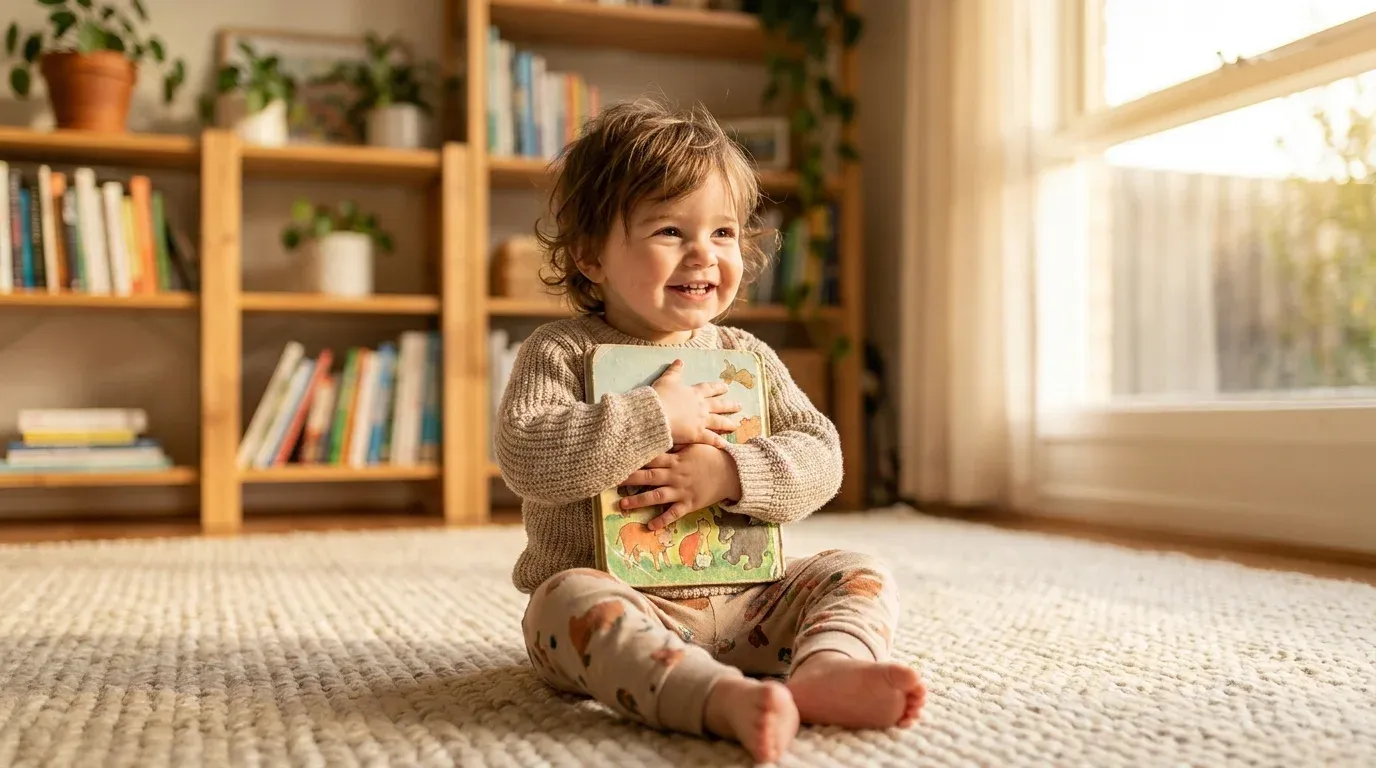
Young children's brains are wiring themselves at a pace that will never happen again in their lifetime. In the first few years of life, neural connections form at a remarkable rate — and repetition is the mechanism that strengthens those connections. Each time a toddler hears the same story, the same words, the same rhythm, their brain is laying down a thicker, faster neural pathway. Think of it like pressing a trail through tall grass: the first time is slow and uncertain, but walk it fifty times and it becomes a clear, confident path.
Early childhood literacy research consistently shows that toddlers learn new words significantly faster from repeated readings of the same book than from single readings of many different books. The repeated context gives them the clues they need to decode unfamiliar vocabulary — they hear "enormous" next to the same picture of a big bear time after time, and suddenly that word clicks and stays. Variability, while valuable later, is actually cognitively overwhelming for very young children who are still building their foundational map of language.
There's a social element to it too. When your toddler watches you read the same book, they're not just absorbing the words — they're absorbing your facial expressions, your intonation, and the emotional safety of a predictable, shared experience. The book becomes a ritual, and rituals are deeply regulating for a child's still-developing nervous system. The repetition isn't stubbornness. It's them saying, "I trust this. Show me again."
What Re-Reading Builds in Their Brain
Here's what's actually happening inside your toddler's head during that fifteenth consecutive read-through — and why it matters more than it looks:
- Vocabulary acquisition: Toddlers need to hear a new word many times in context before it sticks. Repeated stories naturally provide that exposure without any drilling.
- Story comprehension: Each re-read allows them to move from just tracking the plot to understanding cause and effect, character motivation, and emotional nuance. This deepening feel for how characters think and feel is also why stories are one of the most powerful tools for building empathy in children.
- Print awareness: With repetition, toddlers start noticing that words are read left to right, that letters correspond to sounds, and that the same marks on the page always say the same thing — a foundational pre-reading insight.
- Memory and prediction: When your child starts "reading along" or filling in the next word before you say it, they're exercising working memory and predictive thinking — skills that matter enormously in later academic learning.
- Emotional security: Knowing what comes next is profoundly comforting for toddlers, whose world is otherwise full of unpredictable new things. A familiar book is a safe harbor.
- Confidence: Finishing a story they "know" gives toddlers a genuine sense of mastery — a feeling that's rarer than we think for children who spend most of their day being new at everything.
This is why researchers like Dr. Maryanne Wolf, author of Proust and the Squid, emphasize that the bedtime read-aloud — even the hundredth identical one — is among the most cognitively rich experiences a toddler can have. It's not passive. It just looks that way from the outside.
And here's an interesting detail: your toddler's engagement actually deepens with each re-read, even as yours may be fading. On a first read, they're tracking the basic story. By the tenth, they're processing tone, subtext, and vocabulary nuance. By the thirtieth, they may be starting to recognize individual words on the page. You're bored at the surface; they're still going deeper.
How to Survive (and Enjoy) the Repeat Requests
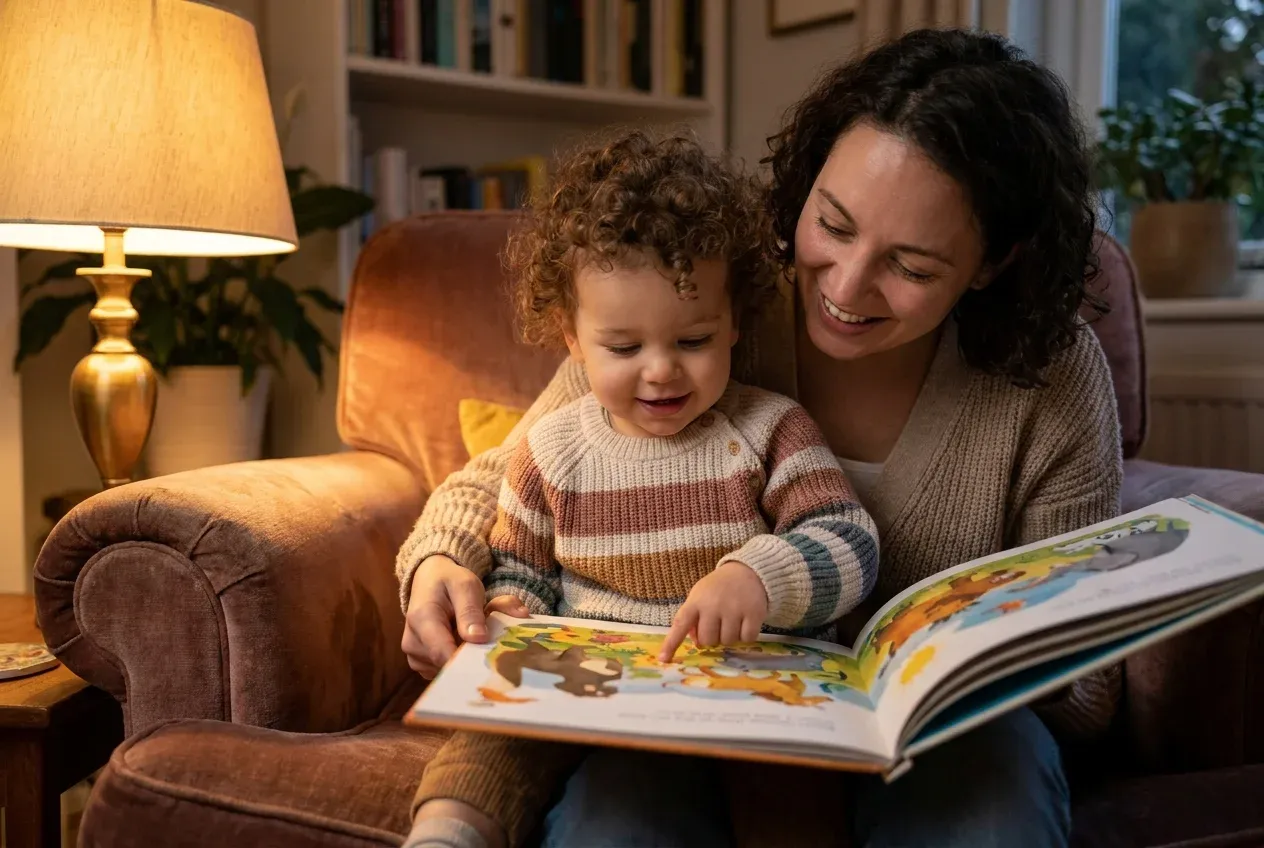
Knowing the science helps. But it doesn't always dissolve the very real tedium of reading the same twelve pages aloud for the forty-seventh night in a row. So here's some practical advice from parents who've been in the trenches — and from child literacy specialists who understand why the ritual matters.
- Change your own game: Try different voices, slow down an unexpected word, or pause dramatically before the page turn. You're adding novelty for yourself without disrupting the ritual for them.
- Ask questions mid-page: "Why do you think the bear does that?" keeps your brain engaged and — bonus — deepens their comprehension at the same time.
- Let them lead: When they start filling in words, go quiet and let them say it. They'll beam. You'll be genuinely surprised how much they've absorbed.
- Give the book a "rest day": It's okay to occasionally say "let's try something new tonight and come back to our favorite tomorrow." Toddlers can handle gentle novelty if the ritual itself is preserved.
- Choose books you can actually stand: This one sounds obvious, but it's worth saying — if you're going to read something 50 times, it should at minimum not make you want to throw it out a window. Rhythmic text, humor, or beautiful illustrations make a real difference.
- Make the book about them: When a child sees their own face in the story — when the hero of the adventure looks back at them from the page — the book becomes something different entirely. Not just a story, but their story. That changes how much you both want to return to it. There's fascinating science behind this too — why children light up when they're the main character in a story goes deeper than simple flattery.
That last point is where things get genuinely interesting. If your toddler is going to demand a book be re-read every night regardless — and they will, because that's what toddlers do — then the book that stars them is the one you'll actually want to pick up. When you're reading about a child who has their eyes, their hair, their face going on an adventure through a jungle or floating through space, the repetition stops feeling like a chore and starts feeling like something you're both inside together. It's also worth noting that this kind of book makes an especially meaningful gift — if you have grandparents looking for something that will truly last, our guide to personalized children's books from grandparents explains why a book with the grandchild as the hero is the gift that gets read again and again for years.
At Epic Little Hero, parents upload a few photos of their child and our AI weaves their actual face into every illustration — not just their name on the cover, but their real, recognizable likeness throughout the whole story. It's a different kind of personalized book. If you're shopping around, it's worth knowing that most personalized books don't actually use your child's real face — our buyer's guide to personalized children's books with a name and picture explains exactly what to look for before you buy. You can see what that looks like and how it works at our How It Works page, or browse example themes like Space, Jungle, Ocean, and Fantasy. If you're going to read this one 47 times, you might as well love it — and for most parents, seeing their child's face on every page makes that very easy.
If you're curious how a personalized book fits into a broader reading routine, our post on building a toddler bedtime routine that actually works is a good companion read. And if you're thinking about the bigger picture of raising a reader, we've written about how to encourage a reluctant reader with tactics that work at every age.
Frequently Asked Questions
Why do toddlers want the same book read over and over again?
Toddlers request the same book repeatedly because repetition is how their brains learn and how they regulate emotion. Hearing the same words in the same context helps them acquire vocabulary, build predictive memory, and experience the comfort of a reliable routine. It's a developmental feature, not a quirk.
Is it bad to read the same book to a toddler every night?
No — it's actually beneficial. Research consistently shows that repeated readings of the same book lead to better vocabulary retention than rotating new books constantly. Toddlers process more deeply on each re-read, and the ritual itself supports emotional security. The only risk is parental burnout, which is very real but also manageable.
When will my toddler stop asking for the same book?
Most toddlers naturally move on from a "favorite book phase" within a few weeks to a few months, especially as they're introduced to new books that capture their imagination. You can gently introduce variety by offering one new book alongside their favorite rather than replacing it outright.
How many times should I read the same book to my toddler?
As many times as they ask, within reason. There's no developmental ceiling on the benefit of re-reading — research shows gains in vocabulary and comprehension across many repeated exposures. If you're burned out, it's okay to take a one-night break; just come back to it. The consistency matters more than the exact count.
What kind of books are best for toddlers who love to re-read?
Books with strong rhythmic or rhyming text, clear repetition within the story itself ("Brown Bear, Brown Bear"-style), and rich illustrations are ideal — they reward re-reading naturally. Books where the child is personally invested in the main character, including personalized books that feature their own face, tend to have particularly high "re-read value" for toddlers and parents alike. You can explore how that works at our guide to personalized bedtime stories or in the honest breakdown of whether personalized books are worth it.
Is wanting the same book a sign of autism or anxiety in toddlers?
Requesting the same book repeatedly is completely typical toddler behavior and is not, on its own, a sign of autism or anxiety. It becomes worth discussing with a pediatrician only if the insistence is extreme and inflexible across many areas of daily life, not just books. In the vast majority of cases, it simply means your child has found something they love — and that's a wonderful thing.
If your toddler has already found their favorite book and claimed it as their own, imagine how they'd respond to one where the adventurer on every single page looks exactly like them. At Epic Little Hero, you upload a few photos and we create a fully illustrated storybook featuring your child's real face — delivered instantly as a print-ready PDF. Ready to make the book they'll want read 47 times (and that you'll actually enjoy reading)? Create your child's book here.