Toddler Bedtime Routine That Actually Ends in Sleep (Not a Standoff)
Bedtime battles don't have to be the norm. Here's a step-by-step toddler bedtime routine — anchored by the same calming story every night — that tells a tired brain it's finally safe to sleep.
It's 7:45 PM. You've asked for the sixth time. The cup of water has been refilled twice. The stuffed elephant was in the bed, then out of the bed, then absolutely crucial to survival. And somewhere between the second request for "one more hug" and the first sob, you have stopped being a parent and started being a hostage negotiator. If bedtime in your house feels less like a gentle wind-down and more like a battle of wills you didn't sign up for — you are not alone, and you are not failing.
Quick answer: A consistent toddler bedtime routine works not because it's strict, but because it removes uncertainty. Toddlers aged 1–4 aren't fighting sleep to frustrate you — their brains genuinely need predictable cues to shift from the high-alert state of daytime play into the calm state required for sleep. A structured wind-down sequence does that neurological work for them. And the single most powerful cue in the whole sequence? The same story, read the same way, every single night.
This guide walks you through exactly why routine beats willpower at bedtime, gives you a realistic wind-down sequence you can start tonight, and explains how to choose the right anchor story — the one your toddler will actually beg for, night after night.
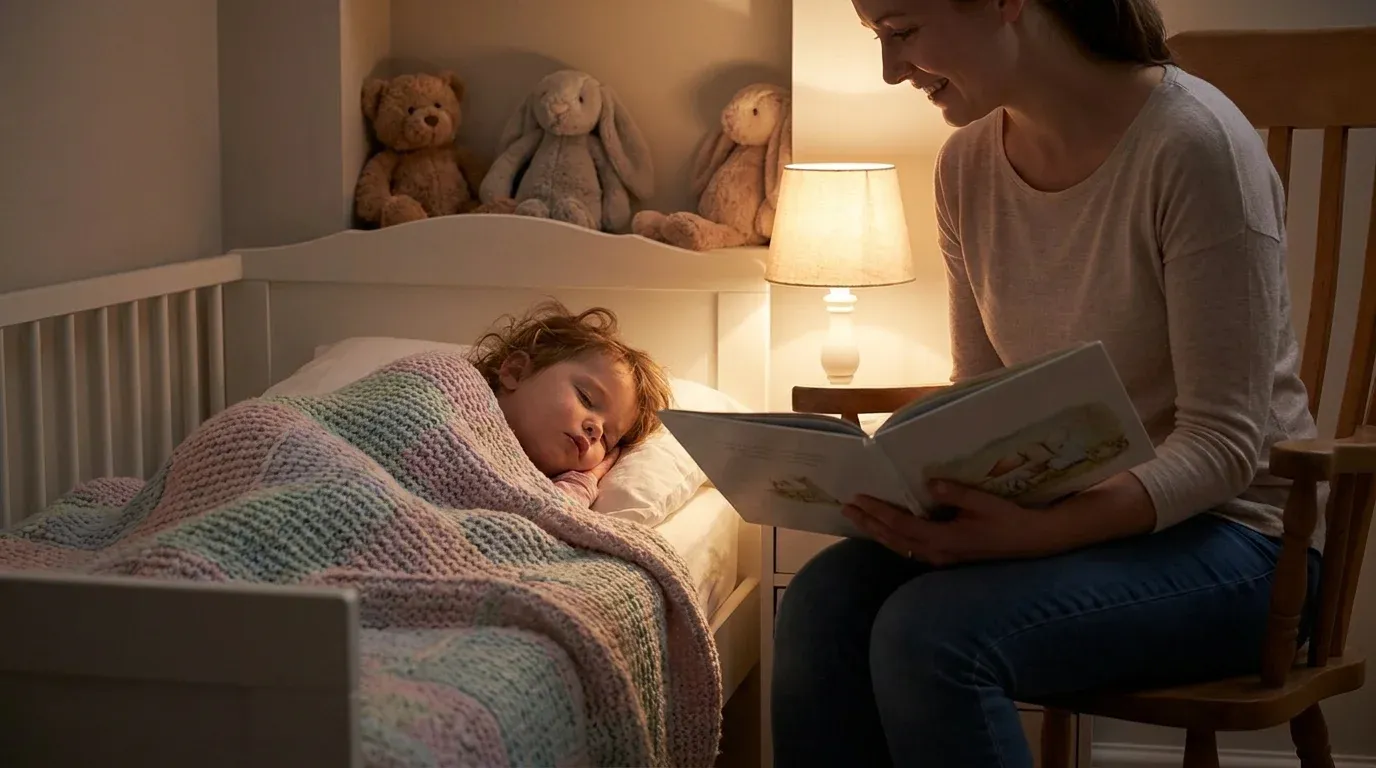
Why Routine Beats Willpower at Bedtime
Here's the hard truth no parenting app will tell you: you cannot out-stubborn a toddler. Their prefrontal cortex — the part of the brain responsible for logic, reason, and understanding "it's late" — won't be fully developed for another two decades. Willpower is a grown-up tool. What toddlers respond to is pattern. Their brains are prediction machines, and when they can predict what comes next, their nervous systems relax.
Bedtime resistance is almost always driven by one of three things: overstimulation (their brain is still buzzing from the day), anxiety about separation, or the simple fact that daytime is exciting and sleep feels like missing out. A reliable bedtime routine addresses all three at once. It dials down stimulation step by step, creates physical closeness and warmth before the separation of sleep, and signals — unmistakably — that the day is over and rest is next. No negotiation required.
Research consistently shows that toddlers in households with a consistent bedtime routine fall asleep faster, wake less often overnight, and have better mood the next day. More importantly for exhausted parents: the routine does the heavy lifting so you don't have to. Once the sequence is established, your toddler's body begins responding to cues automatically — the bath triggers drowsiness, the pajamas signal wind-down, and the first line of the bedtime story is practically a lullaby on its own.
A Sample Wind-Down Sequence (That Actually Works)
You don't need a 14-step routine. You need a short, consistent one. The goal is a sequence that takes 20–35 minutes, progressively lowers stimulation, and ends with the child horizontal and drowsy before you leave the room. Here's a sequence that works well for most 1–4 year olds:
- Dim the lights (15–20 minutes before the routine starts) — bright light suppresses melatonin. Dimming signals the whole house that the day is winding down.
- Warm bath or wash-up (5–7 minutes) — the drop in body temperature after a warm bath naturally promotes sleepiness. It doesn't have to be a full bath every night; even a warm face and hands wash counts.
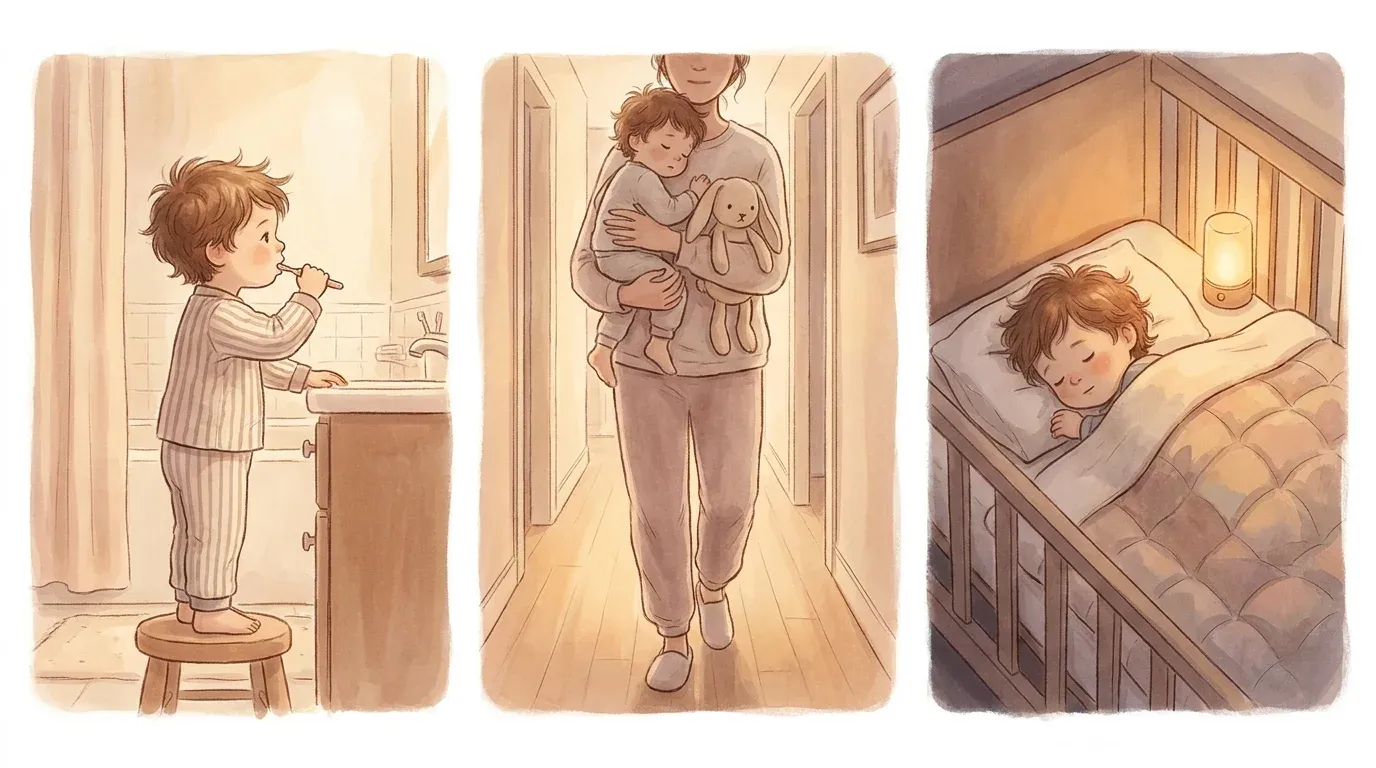
- Pajamas and teeth (3–5 minutes) — keep this calm and predictable. Let your toddler choose between two pairs of pajamas to give a sense of control without opening a negotiation.
- One last drink of water — get it now, before the routine ends, so it can't be used as a delay tactic later.
- Into bed with comfort object — same stuffed animal, same position, every night.
- The anchor story (8–10 minutes) — the non-negotiable heart of the routine. Same book, same voice, same level of calm. This is your sleep trigger.
- One short song or back rub (optional, 1–2 minutes) — for children who need a final transition. Keep it consistent if you add it.
- Goodnight phrase — the same words, every night. "Sleep tight, I love you, see you in the morning." Simple. Unchanging. Powerful.
The key is not perfection — it's consistency. You won't always have time for the bath. Some nights dinner runs late. That's fine. What matters is that the final three steps (anchor story, comfort, goodnight phrase) happen in the same order every night. Those last steps carry the most neurological weight because they're the closest to sleep onset.
Choosing the Right Anchor Story
Not every book is the right bedtime book — and that distinction matters more than most parents realize. A good anchor story is calm in pace, gentle in stakes (no monsters winning, no big emotions unresolved by the last page), and short enough that it ends before your toddler's attention wanders back to stalling. Most importantly, it needs to be a book your child genuinely loves. Not tolerates. Loves. Because the magic only works when they're engaged enough to be absorbed — and relaxed enough to drift.
There's a reason toddlers want the same book read over and over — and it's not lack of imagination. Repetition is how their brains build security. A familiar story removes the cognitive effort of following a new plot. There are no surprises, no suspense, no alertness required. The brain can settle. This is also why switching up the bedtime book every night — though well-intentioned — can actually delay sleep. Novelty is stimulating. Familiarity is soothing.
Here's the secret to finding a book that holds anchor status for months or even years: it has to feel personal to the child. Generic characters are fine, but a child who sees themselves in the story — truly sees themselves, not just their name on the cover — brings a different quality of attention to every reading. They're not just listening to a story. They're watching themselves be brave, be kind, go on an adventure, and come safely home. That emotional investment is exactly what makes the anchor so powerful. You can learn more about how this works in our post on personalized bedtime stories and why they create magical nights.
When evaluating any book for anchor status, ask: Does my child ask for it unprompted? Do they slow down and focus when we read it? Do they seem calmer by the last page? If yes to all three, you've found your anchor. Protect it. Read it at the same volume, the same pace, with the same inflections. The ritual is the point.
Frequently Asked Questions
What time should a toddler bedtime routine start?
For most 1–4 year olds, the ideal sleep onset is between 7:00 and 8:30 PM, with biological alertness naturally dipping in that window. Start your wind-down routine 30–40 minutes before your target sleep time. So if you want your toddler asleep by 7:30 PM, begin dimming lights and moving toward the bath by 6:50 PM. The earlier you start, the more gradual — and effective — the transition.
How long does it take for a toddler bedtime routine to work?
Most families notice a meaningful difference within 1–2 weeks of consistent practice. The first few nights may feel harder — toddlers test new structures before accepting them. Hold the line gently and consistently. By night 10–14, many parents report that their toddler begins anticipating the routine and moving through it with less resistance. Full results typically show within 3–4 weeks.
Is it okay to read the same bedtime book every night?
Not only is it okay — for toddlers, it's often ideal. Repetition is a feature, not a bug, of toddler development. Familiar stories reduce cognitive stimulation at exactly the moment you want their brain quieting down. If your toddler is asking for the same book for the 47th time in a row, let them. It's doing exactly what you need it to do. For a deeper look at the science behind this, see our post on encouraging reluctant readers — the same principles about comfort and engagement apply.
My toddler keeps stalling at bedtime — what do I do?
Stalling is almost always a sign that one of two things is missing: either the routine isn't consistent enough yet to signal sleep clearly, or there's a genuine separation anxiety that needs addressing during the day, not at bedtime. For stalling, try a "bedtime pass" — a physical card your toddler can hand you for one free request after lights-out (water, hug, etc.). Once the card is used, it's gone until tomorrow. This simple tool can reduce curtain calls significantly, because it gives toddlers a sense of control without opening infinite negotiation.
What makes a good bedtime book for toddlers?
The best bedtime books are short (under 15 minutes to read aloud), calm in tone, and emotionally reassuring — the child or character ends safe, loved, and ready for sleep. Bright colors and exciting cliffhangers work against you at 7:30 PM. Gentle illustrations, rhythmic language, and a protagonist who looks and feels like your child work strongly in your favor. Toddlers who see their own face in a story — not just their name, but their actual likeness — tend to engage more deeply and settle more quickly. That's the difference between a generic personalized book and one where the child's real face appears in every illustration.
The One Thing Worth Adding to Your Routine Tonight
You've got the sequence. You've got the science. Now you just need the right anchor. If you've been reading the same two board books on rotation and feeling the magic wear thin, it might be time for a story that your toddler truly owns — one where they are the hero, with their own face on every illustrated page, going on adventures through space, a jungle, a fantasy kingdom, or under the ocean.
At Epic Little Hero, parents upload a few photos and we use AI to place their child's real face inside a beautifully illustrated story. The result is a book that stops the pre-bedtime wriggling the moment you open the cover — because no toddler can resist watching themselves be the main character. It's been called "the book they actually ask for" by parents who were one more bedtime standoff away from losing their minds. From $29, instant digital delivery, and it might just become the anchor story that makes bedtime something you both look forward to.
See how it works and browse the story themes at magicbooks.co.il/create. Your toddler's bedtime story is waiting — and so, probably, is a little more sleep for you. Still on the fence? Read our honest breakdown of whether a personalized book is worth it — written for skeptical parents like you.