When Your Child Is Scared of Halloween Costumes: A Gentle Prep Plan
If your toddler bursts into tears at the sight of a Halloween mask, you're not doing anything wrong. Here's a gentle, step-by-step plan to help them feel safe — and even brave — before October 31st.
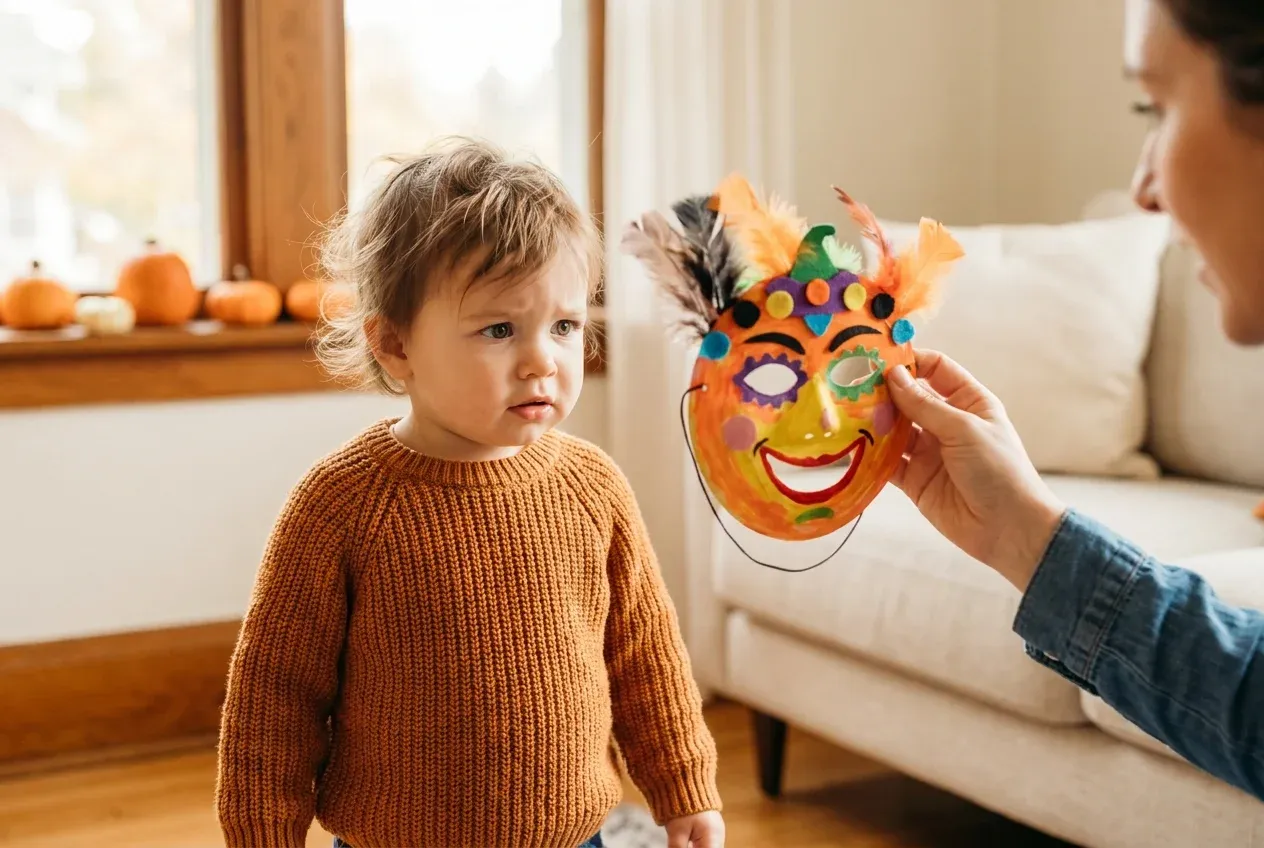
You've been looking forward to Halloween for weeks — the little lion costume hanging on the closet door, the candy bucket with their name on it. Then a neighbor walks by in a skull mask and your two-year-old loses it completely. If your child is scared of Halloween costumes, you are not alone. Not a little whimper — full meltdown, arms up, face buried in your neck, inconsolable for twenty minutes. Sound familiar?
Quick answer: It is completely normal for children aged 2–4 to be scared of Halloween costumes and masks. Their brains aren't developmentally ready to understand that a monster mask is just plastic hiding a familiar face. A gentle, gradual desensitization plan started two to three weeks before Halloween can make a real difference, and a personalized 'brave hero' story can do some of the heaviest emotional lifting.
This isn't about pushing your child through their fear on a deadline. It's about giving them the tools — and the story — to feel safe in a world that gets a little weird every October. Here's what actually works, and how to make the next few weeks genuinely manageable.
Why Masks Terrify Young Children (It's Not Drama)
Toddlers rely on faces more than adults realize. From birth, a human face is the primary source of safety information — does the person looking at me seem calm? Safe? Friendly? By age 2, a child has spent thousands of hours reading subtle facial cues: a smile, a furrowed brow, the softness around a parent's eyes. A mask erases all of that in an instant and replaces it with something fixed, staring, and unreadable. For a toddler's brain, that registers as a genuine threat.
There's also a developmental concept called object permanence that's still solidifying at this age. Younger toddlers may genuinely not understand that the person beneath the mask is still the same person — which is why a well-meaning relative putting on a funny costume can trigger real distress even when the child knows them well. It isn't a failure of parenting or a sign of an anxious child. It's a normal response to a genuinely confusing sensory experience.
Fear of costumes and masks tends to peak between ages 2 and 4, then gradually eases as children develop stronger object permanence and the cognitive ability to understand 'pretend.' The clinical term sometimes used for an intense, persistent fear of Halloween-related imagery is samhainophobia, but for most toddlers this is a developmental phase, not a phobia. The distinction matters: phase-based fear responds beautifully to calm, gradual exposure and narrative tools.
Step-by-Step Plan for a Child Scared of Halloween Costumes
The core principle of desensitization is simple: you move toward the scary thing in tiny, comfortable steps, always staying within the child's window of tolerance. Think of it less like exposure therapy and more like earning trust, incrementally. Two to three weeks before Halloween gives you exactly enough time to do this gently.
- Week 1 — Look from a distance: Browse Halloween decorations online or in a book together. Point to costumes and masks on the screen. Name what you see in a calm, curious voice: "Oh, look — that's a dragon costume. What color is it?" Distance and your relaxed tone are the two safety signals.
- Week 1 — Introduce a friendly costume first: A fuzzy animal onesie, a princess dress, a simple superhero cape — something soft, colorful, and face-revealing. Let your child touch it, try it on, take it off at will. Never force it.
- Week 2 — Bring a mask into the room: Hold a simple, non-scary mask (a cat face, a smiling sun) at the far end of a room while you sit with your child. Don't move toward them with it. Let curiosity do the work.
- Week 2 — You wear it first: Put on the mask yourself, then take it off immediately and say 'It's still me!' Repeat until your child starts to laugh. This is the single most effective step for children who fear the 'disappearing face.'
- Week 3 — Child-led touching and trying: Invite them to hold the mask, put it on a stuffed animal, or try it themselves in front of a mirror. Follow their lead entirely.
- October 31 — Lower expectations and have an exit plan: For a 2- or 3-year-old, fifteen minutes of trick-or-treating near home is a success. Bring a comfort item. It's fine to stay on the porch.
One thing many parents underestimate: their own body language. If you stiffen slightly when a masked neighbor approaches, your toddler will feel it before they see the mask. Practice staying loose and smiling. Your nervous system is their weather forecast.
How a 'Brave Hero' Story Rehearses Courage
Here's something child psychologists call narrative rehearsal: when a child hears a story in which a character faces something scary and comes through it calmly, they're essentially practicing the emotional experience in a safe, low-stakes setting. The story gives them a script — an inner picture of what it looks like to be brave — that they can draw on when the real moment arrives. This is why stories to help kids be brave work so reliably, even with children who can't yet articulate their fears.
Now imagine the brave hero in that story isn't a generic character — it's your child. Same face, same name, same curly hair or round cheeks or gap-toothed smile. The psychological effect deepens considerably. When a child sees themselves as the hero who felt nervous but stayed calm, who looked at the scary mask and realized it was just a costume, they're not admiring a role model from a distance. They're rehearsing their own future behavior.
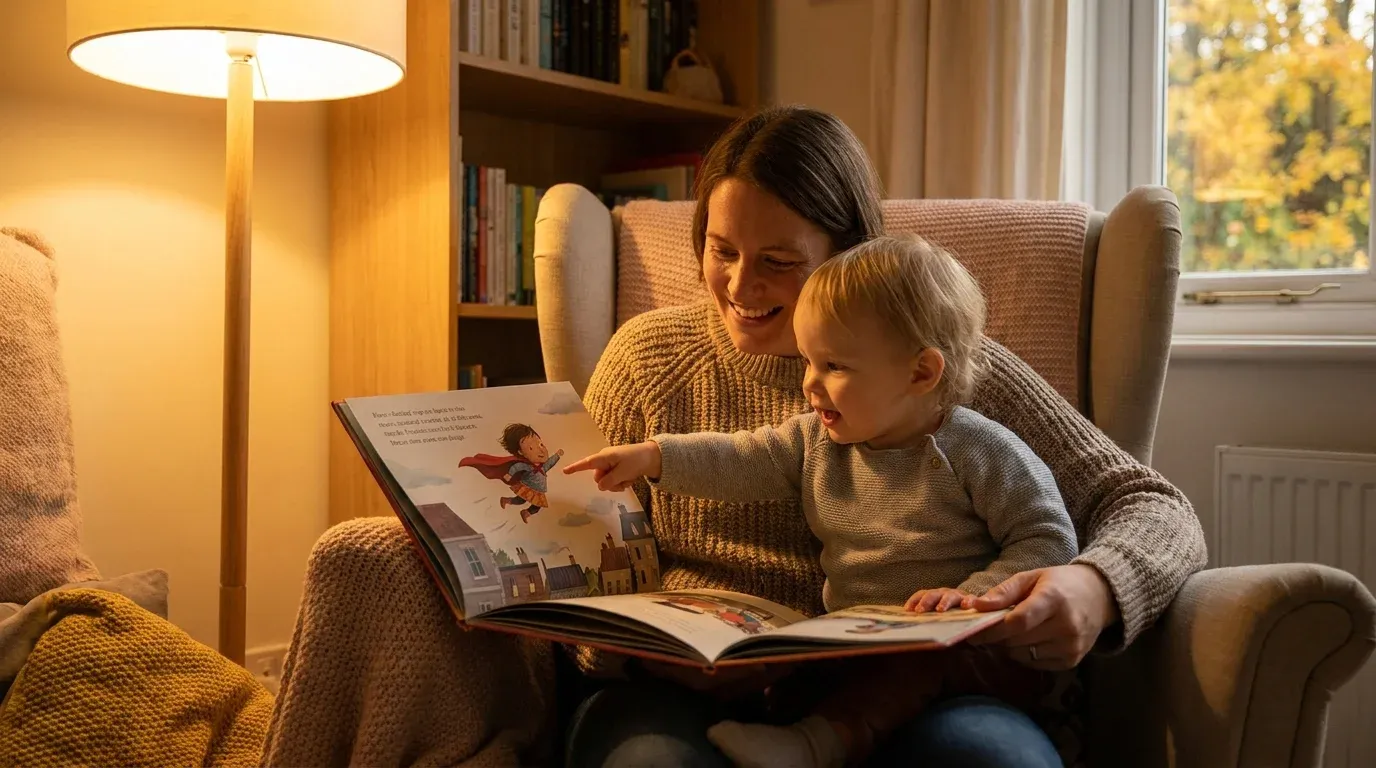
This is exactly the same principle behind the approach described in our guide to helping a child who's afraid of the doctor — and it works for the same reason: the child rehearses the scary scenario through story first, so the real experience has a familiar shape. At Epic Little Hero, parents upload a photo of their child, and our AI generates a fully illustrated storybook where their child's real face appears on every page as the hero. You choose the theme — and for a Halloween-nervous toddler, a 'brave adventurer' theme can function as a beautifully illustrated rehearsal script read nightly for weeks before October 31st. Starting at $29, with instant digital delivery so you can begin tonight.
There's also a lovely side effect: toddlers who want the same book read again and again are actually deepening the rehearsal with each reading. If you're wondering why toddlers want the same book read 47 times in a row, it turns out repetition is how they internalize the story's emotional arc — which means your child asking for 'the brave one again' is a very good sign.
Frequently Asked Questions
Is it normal for kids to be scared of Halloween?
Yes, especially for children aged 2–4. Masks and costumes remove the facial cues toddlers rely on to feel safe, and their brains aren't yet able to fully process the concept of 'pretend.' Fear of Halloween costumes is one of the most common toddler fears in October. It typically eases by ages 5–6 as cognitive development catches up.
What phobia is the fear of Halloween?
An extreme, persistent fear of Halloween and its associated imagery is sometimes called samhainophobia (from Samhain, the Celtic festival Halloween evolved from). However, most toddlers who cry at masks don't have a phobia — they have a developmentally normal fear that responds well to gentle, gradual exposure. If a fear is severe, persistent well beyond age 5, or significantly disrupting daily life, a pediatric therapist can help.
How do I help my toddler stop being scared of Halloween masks?
Start two to three weeks early. Begin with images at a distance, then bring masks into the room without forcing proximity. The most effective single step: wear the mask yourself and immediately remove it, saying 'It's still me!' Repeat until your child laughs. Stay calm yourself — your body language is their primary safety signal. Pairing this gradual exposure with a brave-hero story your child hears nightly dramatically accelerates the process.
Are Halloween costumes supposed to be scary?
Historically, yes — costumes were meant to disguise wearers from spirits. Today, Halloween costumes range from terrifying to adorable, but many store-bought options are designed to look dramatic and can be overwhelming for toddlers even when not intentionally 'scary.' For this age group, opting for friendly, face-revealing costumes — animals, superheroes, food — is a simple way to reduce overwhelm on the night.
What if my child cries at Halloween even after all this prep?
That's okay. Some 2-year-olds are simply not ready for trick-or-treating yet, and that isn't a failure. Celebrate what they did do — maybe they touched a mask, or made it to the porch, or stayed in costume for five whole minutes. Acknowledge the bravery without dismissing the fear. There will be many more Halloweens, and each one typically gets easier as they grow.
Start the Story Before October 31st
Preparing a toddler for Halloween doesn't require strict schedules or perfect execution — it requires patience, warmth, and the right tools. The steps above work. And if you want to give your child a head start with their own brave-hero rehearsal story, you can create a personalized book starring your child in just a few minutes tonight. Upload their photo, choose an adventure theme, and get a beautiful illustrated PDF they can carry into October — and into every scary moment — as the hero of their own story.
The same gentle approach that works for Halloween works for many of life's first scary moments. If your child has other big transitions coming up — a new classroom, unfamiliar places — our guide on preparing a toddler for the first day of daycare walks through a similarly structured two-week plan that pairs beautifully with story-based preparation.