Can ChatGPT Create a Children's Book? What AI Can and Can't Do
ChatGPT can draft a charming story in minutes — but can it put your child's real face in every illustration? An honest breakdown of what DIY AI tools deliver, where they fall short, and what a finished personalized book actually looks like.
You've probably had the thought: "I could just use ChatGPT to write a book about my kid." It's a completely reasonable idea. AI tools have gotten remarkably good, and the appeal of a custom story — one where your child is the hero, exploring space or befriending dragons — is real. So you open a tab, type a prompt, and a few seconds later you have three pages of surprisingly decent prose. It feels like magic.
But then comes the harder question: how do you turn those words into an actual book that looks like your child, reads like a story they'll beg for at bedtime, and holds up as something worth keeping? That's where the honest answer gets more complicated.
Quick answer: Yes, ChatGPT can draft a children's story — useful for plot ideas, rhyming text, and pacing. But it cannot produce consistent illustrations, put your child's real face into artwork, or deliver a print-ready layout. Those gaps are the difference between a text file and a book your child will truly recognize themselves in.
What ChatGPT Does Well for Children's Stories
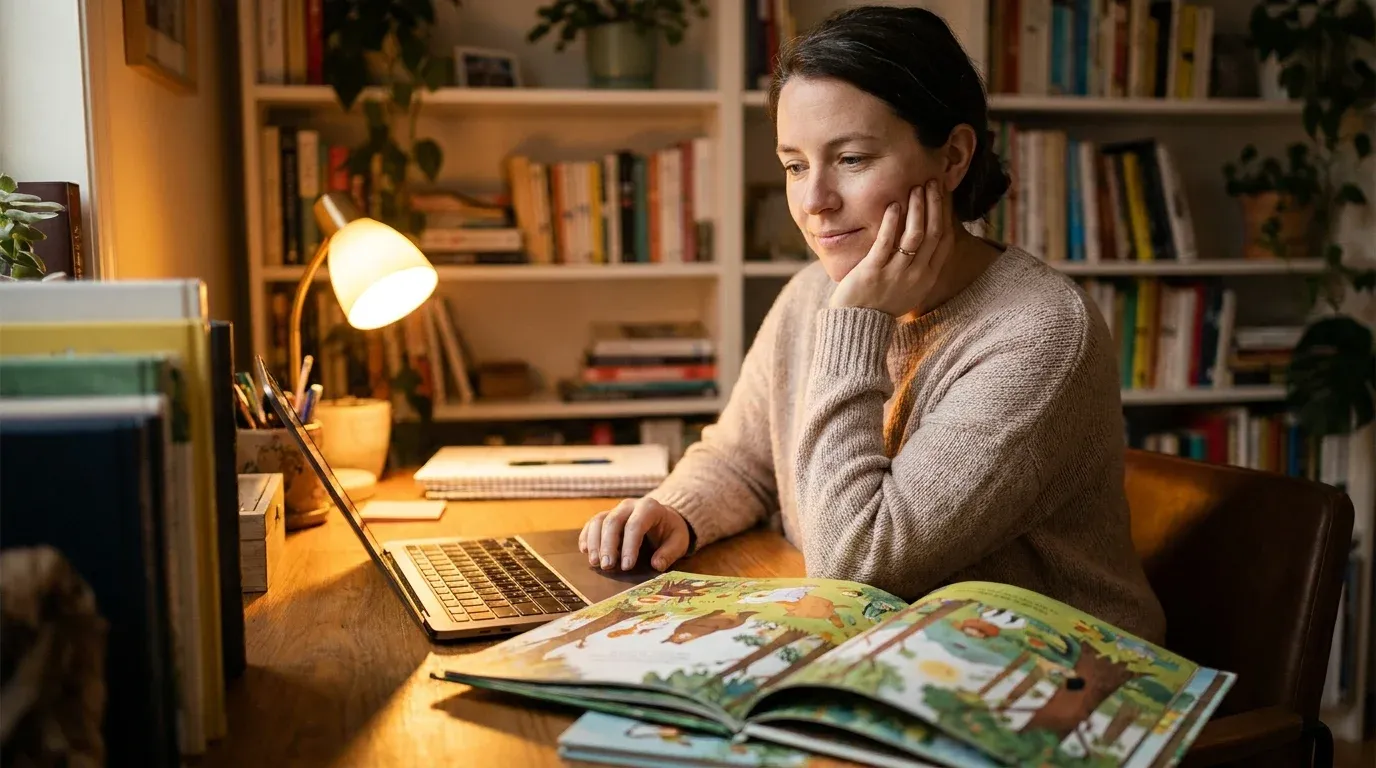
Let's give credit where it's due. ChatGPT is a genuinely strong brainstorming partner for children's book text. Ask it to write a rhyming adventure about a five-year-old who loves dinosaurs, and it will produce something surprisingly structured — with a beginning, a problem, and a resolution — in under a minute. That's not nothing.
It's also good at adjusting reading level on demand. Ask for "simple sentences a three-year-old could follow" and it'll shorten them. Ask for "slightly more complex vocabulary for a six-year-old who reads early" and it'll shift. For parents who want to write a story but don't know where to start, it genuinely lowers the barrier.
Where it particularly shines: iterating quickly on themes. You can ask it to rewrite the same adventure set in a jungle, then in space, then underwater — and compare which feels right for your child. Think of it as a very fast first-draft partner. The raw material it produces is useful. What you do with that material is the harder part.
Where DIY AI Books Fall Apart
Here's where most DIY AI projects hit a wall. Text is just the first layer of a picture book — and for young children, it's arguably not even the most important one. Kids ages two to seven process stories primarily through pictures. The illustrations are the book. And this is exactly where the DIY AI pipeline breaks down in three separate, frustrating ways.
First, consistency. AI image generators (Midjourney, DALL·E, Stable Diffusion) are impressive in isolation, but generate the same character across ten pages and you'll get ten slightly different children. The hair changes. The eye shape shifts. The skin tone drifts. There's no internal memory between images, which means your "consistent hero" looks like a different kid on every spread. For adults, it's a quirk. For a four-year-old who is supposed to recognize themselves, it's deeply confusing.
Second — and this is the biggest gap — none of these tools can reliably put your child's actual face into illustrated artwork. You can upload a reference photo and prompt around it, but the result ranges from vaguely similar to completely unrecognizable. The whole emotional power of a personalized book — the reason a child's eyes go wide — is seeing themselves in the story. A character who's "inspired by" your kid isn't the same thing at all. And third: layout. Even if you somehow solved text and images, formatting a children's book with correct bleed lines, font sizing for early readers, and print-ready resolution is a separate design project that takes real tools and real time. Reading specialists (explored further in our post on how personalized books help kids learn to read) consistently find that a child's engagement skyrockets when they see themselves — not a stand-in — as the hero.
What a Finished Personalized Book Actually Adds
The gap between "AI-assisted text document" and "book your child will ask for every night" is where a finished service earns its place. What's actually being solved isn't the story — it's everything that has to happen after the story exists.
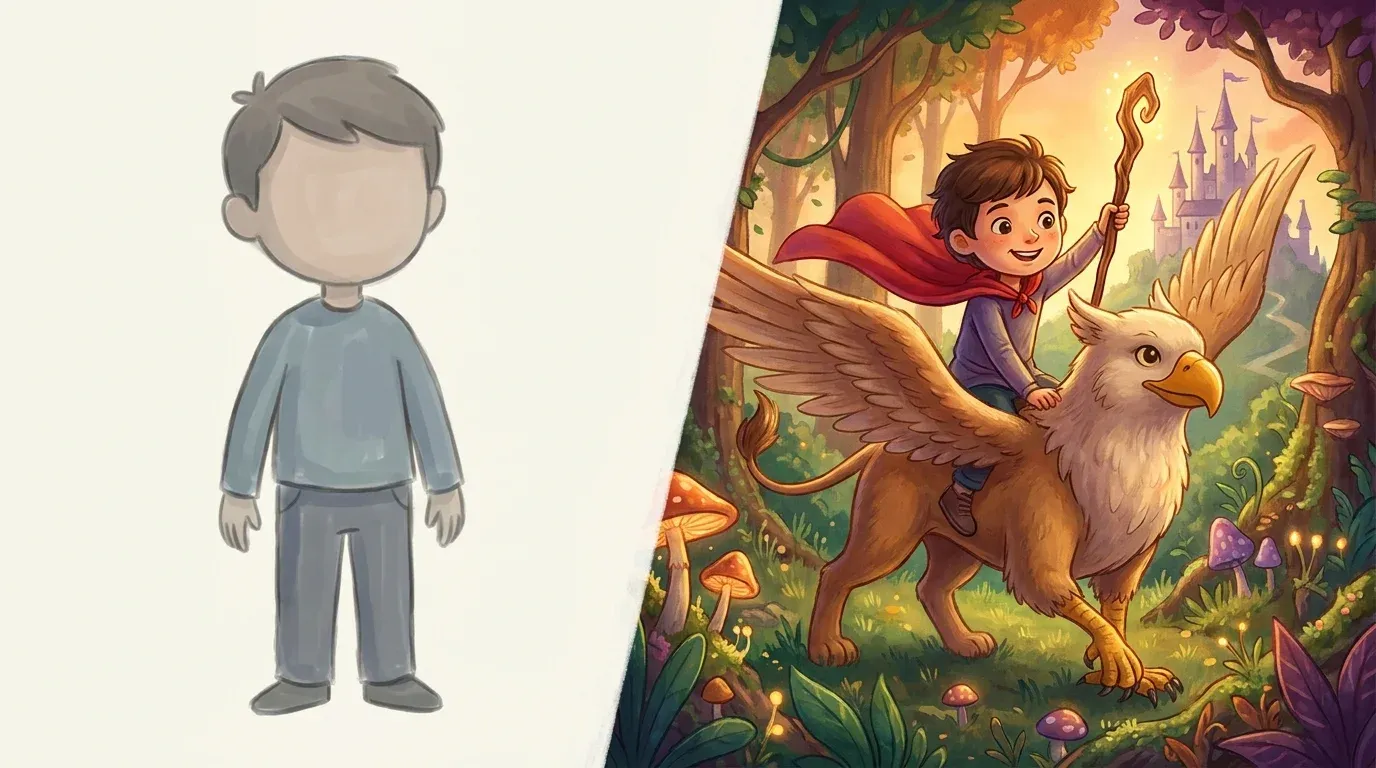
At Epic Little Hero, parents upload a few photos of their child, choose a theme (Space, Fantasy, Jungle, Ocean, Dinosaurs, or Magic), and the AI generates illustrations where the child's real face appears in every single spread — consistently, beautifully, across the whole book. Not a vaguely similar cartoon. Not a character with the same hair color. Their actual child, illustrated as the hero. The layout is already print-ready: correct dimensions, proper bleed, font sizing designed for early readers. The digital PDF arrives almost instantly and can be printed at home or at any local print shop.
The difference shows up in the moment a child first opens the book. There's a specific kind of recognition that happens — the small gasp, the pointing, the "that's ME!" — that no generic character can produce. It's the same reason a personalized book with your child and their pet lands so differently than a book about a generic dog: specificity is the whole point. And when you compare it to other keepsake options, as we did in our breakdown of personalized books vs. stuffed animals as long-lasting gifts, it's hard to argue against something that grows with a child's memory of themselves.
- Your child's real face illustrated consistently across every page — not a generic stand-in
- Six themes to choose from: Space, Fantasy, Jungle, Ocean, Dinosaurs, Magic
- Instant digital PDF delivery — print at home or any print shop
- Print-ready layout with correct bleed, sizing, and early-reader fonts
- From $29, no subscription required
- No design skills, no AI prompting, no layout tools needed
Frequently Asked Questions
Can I use ChatGPT to create a children's book?
Yes — ChatGPT can write the text of a children's story quickly and competently. It handles plot structure, rhyme, and age-appropriate language well. What it can't do is illustrate the book, maintain a consistent character across pages, or produce a print-ready file. For a finished, illustrated book starring your specific child, you'll need a dedicated tool built for that purpose.
Can I legally create a children's book using AI illustrations?
This is an evolving area. For personal use — printing a book for your own child or as a gift — AI-generated content is broadly unproblematic. Copyright law in the US currently does not protect purely AI-generated images without human authorship, which matters more if you plan to sell. For a one-of-a-kind gift book, the legal landscape is clear: you're fine.
How can a kid publish their own book?
For a child who has written or dictated a story, simple self-publishing options include KDP (Kindle Direct Publishing) for print-on-demand, or services like Blurb and Lulu that handle print formatting. For younger children who want to star in a story rather than write one, a personalized book service is a much simpler path — upload photos, choose a theme, download the PDF.
What does a good personalized children's book actually need?
Five things matter most: (1) the child's real likeness in the illustrations, not just their name; (2) consistent character appearance across every page; (3) age-appropriate text length and vocabulary; (4) a story arc with a clear beginning, challenge, and resolution; (5) print-ready file quality if you plan to produce a physical copy. Most DIY AI attempts hit on one or two of these — rarely all five.
Is ChatGPT good for writing children's books compared to hiring a writer?
For a first draft and idea generation, ChatGPT is remarkably fast and cost-free. A professional children's book author brings craft, intuition about what young readers respond to, and revision judgment that AI currently lacks. For a personal gift book — not a commercially published title — ChatGPT's output is more than good enough as a starting point. The bottleneck is never the words; it's always the pictures.
If you've been poking around AI tools trying to build something special for your child, you already know what you want: a book where they're unmistakably the hero, in a world that feels made just for them. That's exactly what Epic Little Hero was built to create. Upload a few photos, pick an adventure, and your child's personalized storybook — illustrated with their real face — is ready almost instantly, from $29.