Personalized Book vs. Stuffed Animal: Which Keepsake Gift for a Child Actually Lasts?
Torn between a cute plush and something more lasting? Here's an honest head-to-head on which keepsake gift a child will actually hold onto — and which one ends up in a donation box.
You're standing in the gift aisle — or scrolling at midnight — trying to decide between the undeniably adorable stuffed animal and something a little more… permanent. It's a familiar tension for anyone who wants to give a child something meaningful, not just something that gets a big reaction on the day and quietly disappears by next month.
The stuffed animal is safe. It's soft, it's immediate, and kids genuinely love them — at first. But if you've given a few over the years, you know how the story usually ends: a couple of months of devoted snuggling, then a gentle demotion to the toy chest, then a bin bag before the next birthday.
Quick answer: The best keepsake gift for a child is one that grows in meaning as the child grows. A personalized book starring the child's actual face holds sentimental value at age 3, again at age 7, and still at age 12 when they rediscover it on a shelf. Most stuffed animals, however beloved at first, are donated or boxed up by early primary school.
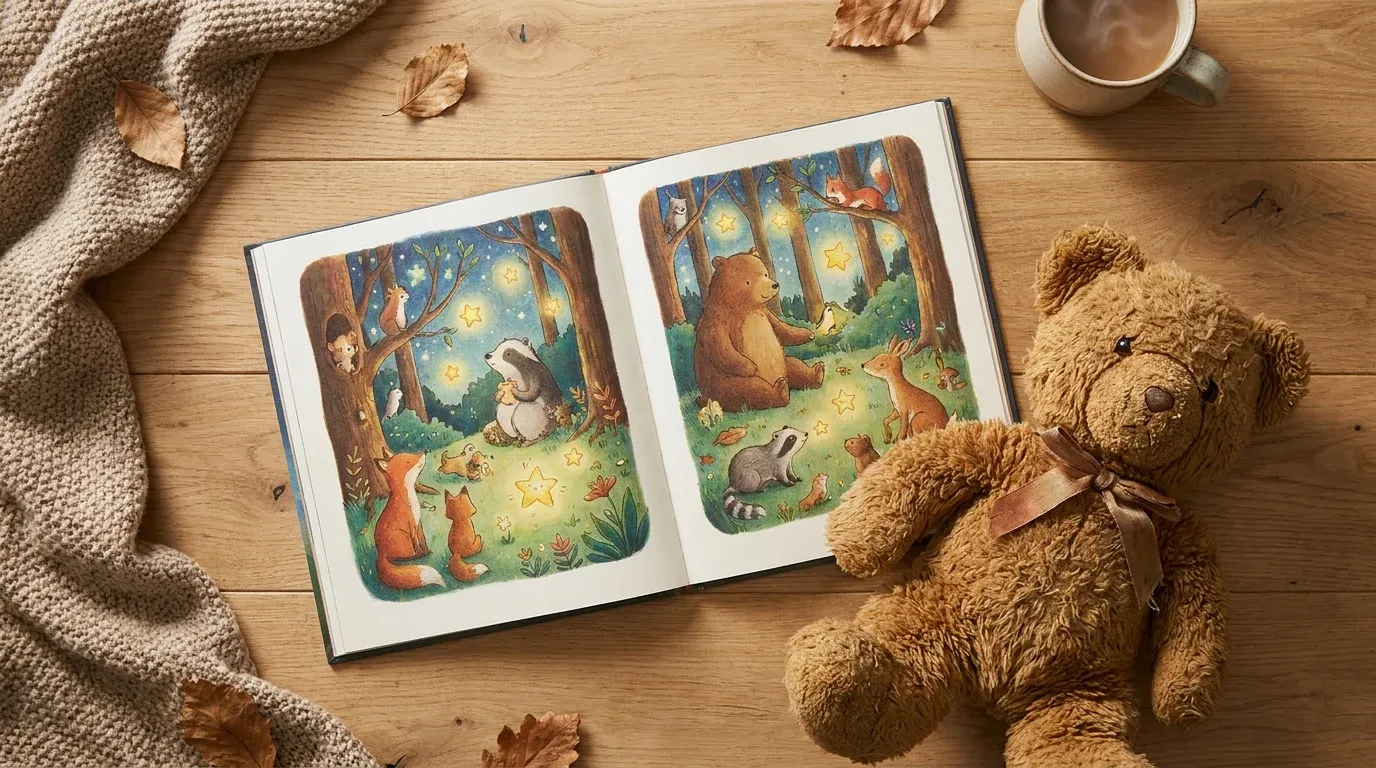
What Makes a Gift a True Keepsake?
A keepsake isn't just something that survives. It's something that carries meaning — that a child (or grown adult) picks up years later and feels something. Most gifts don't clear that bar. They delight in the moment, serve a purpose for a season, and then move on. That's fine. But if your goal is a gift that endures, you need to think about emotional durability, not just physical durability.
What makes a gift emotionally durable? Three things: it's about the child specifically (not generic), it tells a story they can revisit, and it connects to who they are — not just who they were at the moment of receiving it. A monogrammed mug passes the first test but fails the other two. A photo album passes the first and second but doesn't tell a story. Something that combines identity, narrative, and the child's own likeness? That's rare — and that's what makes certain gifts genuinely keepsake-worthy.
It's worth noting that "keepsake" and "popular" are not the same thing. Some of the most-given gifts for children — playsets, building kits, craft supplies — are wonderful in the moment but nobody keeps them. When you're shopping for a keepsake specifically, you have to filter out the noise and ask: will a 25-year-old still have this? Would they want to? The same longevity question applies even to seasonal treats — as this ranking of non-candy Halloween treats by how long kids actually keep them makes clear, most small novelty gifts don't survive the week.
Where Stuffed Animals Fall Short
Let's be fair: stuffed animals are genuinely good gifts. A well-chosen plush can be a child's constant companion through toddlerhood — dragged to appointments, tucked in at nap time, catastrophically lost at the supermarket and tearfully reunited with. That attachment is real and it matters. The issue isn't that stuffed animals are bad. The issue is that their keepsake power is almost entirely front-loaded.
The relationship a child has with a stuffed animal depends almost entirely on the age at which they receive it and a certain kind of luck — whether that particular one becomes the beloved toy. Most don't. Even the ones that do tend to fade as children move into school age and their world expands. By age six or seven, the plush that was once non-negotiable at bedtime is just another item on a crowded shelf. By ten, it's often gone. That's not a failure of the gift — it's just the natural arc of how children relate to soft toys.
There's also the generic problem. Unless a stuffed animal has a very specific story attached to it — "this was given to you by your great-grandmother the year she visited" — it carries no unique meaning. It's a bear. It's a bunny. It's sweet, but it's not irreplaceable. Thirty years from now, the child (now an adult) would have no way of distinguishing it from any other childhood toy, because there's nothing about it that says them.
Why a Personalized Book Endures
A book that stars the child is a different kind of object. It doesn't just say the child's name on the cover (plenty of books do that — it's table stakes). The version that truly endures is one where the child's actual face appears in every illustration, where they can look at the pictures and see themselves as the hero of the story. That specificity is what gives it staying power.
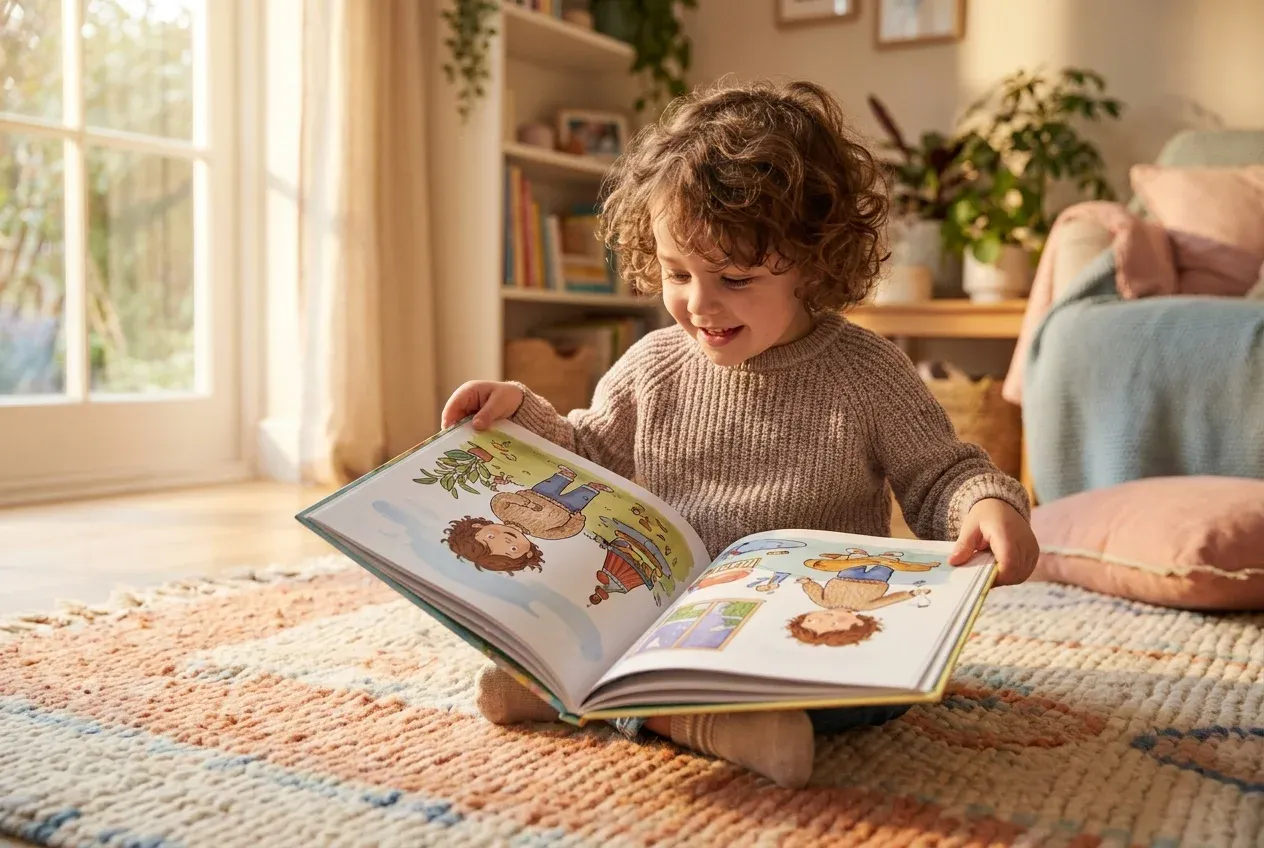
Think about how a child's relationship with their own personalized book changes over time. At three, they love seeing their face in the pictures and hearing their name in every sentence — it's pure magic. At six, they're proud to read it themselves and show friends. At twelve, they rediscover it and feel a warm nostalgia — a record of who they were. At twenty-five, moving out of their childhood home, it's the kind of thing they put in the "keep" box without a second thought. A stuffed animal rarely makes that journey intact.
There's also something worth saying about the difference between name personalization and true face personalization. Most personalized books simply swap a name into a pre-written template — the illustrations show a generic child who happens to share the recipient's name. That's a step up from nothing, but it's not the same as a book where the AI has generated illustrations that actually look like your child. If you're curious about that distinction, the breakdown in what "personalized" really means in a children's book is worth reading before you buy. And if you're thinking about long-lasting gift ideas specifically for a grandson or granddaughter, personalized gifts for a grandson that go beyond a name on a mug covers similar ground with some useful comparisons.
The other underrated factor is educational durability. A personalized book isn't just sentimental — it's a reading tool the child is intrinsically motivated to engage with, because the main character is them. That engagement has real value beyond the gift moment, which is something a plush toy simply can't offer.
How to Decide: A Simple Framework
If you're still weighing the options, here's a quick way to think through it. Ask yourself which of these describes your goal:
- I want something that will delight them right now, on the day → A stuffed animal is a solid choice, especially for toddlers under 2.
- I want something that will still matter to them at age 10 → Go with the personalized book.
- I want something that tells a story about who they are → Personalized book, hands down.
- I'm buying for a child I don't see often and want the gift to feel personal → A book with their real face in every illustration communicates care that a plush simply can't.
- I want a gift that doubles as something meaningful to read together → Personalized book.
- I'm buying a secondary gift alongside something bigger → A stuffed animal works well here — it doesn't need to carry all the emotional weight.
Most gift-givers reading this are trying to land on something that says I thought specifically about you — not just I bought you something nice. That's what separates a keepsake from a gift. And on that measure, a book that features the child's own face in a story written around them is about as specific as it gets. If you're not sure which child in your life this would suit, what to get the kid who already has everything offers a broader list of ideas along the same lines.
Frequently Asked Questions
What is a good keepsake gift for a child?
A good keepsake gift is one that's specific to the child, tells a story, and holds meaning beyond the moment it was given. The best options tend to be things that carry the child's identity: a personalized book featuring their actual face, a custom piece of art, or a handwritten letter with photographs. Of these, a personalized storybook has the practical advantage of being something they can actively engage with at every stage of childhood — not just look at.
What is the greatest gift you can give your child?
In terms of material gifts, the ones that tend to matter most are those that reinforce a child's sense of identity and self-worth — and stories are near the top of that list. A book that positions the child as a capable, brave, curious hero does quiet, lasting work on how they see themselves. That's a different kind of value than a toy. As a gift object, something that a child will return to again and again — and that will mean something different to them each time — is hard to beat.
What do you get a child who has everything?
When a child already has every toy imaginable, the gifts that land are the ones that can't be replicated. Something mass-produced — however good — blends into what they already have. A personalized book starring the child's actual face is, by definition, one-of-a-kind. There's no version of it on a shelf at a toy store. That uniqueness is its value. See also: what to get the kid who already has everything for a broader list of ideas along the same lines.
What is the 5 gift rule for kids, and where does a keepsake fit?
The 5 gift rule is a popular framework for thoughtful gifting: something they want, something they need, something to wear, something to read, and something to experience. A personalized storybook fits naturally into "something to read" — but it also fulfills something to experience (the magic of seeing yourself in a story) in a way a standard book doesn't. It's one of the few gifts that can quietly tick two categories at once. If you're shopping for the holiday season and want to build a reading tradition around your gift, this eight-night Hanukkah read-aloud list for kids ages 1–7 is a lovely companion to a personalized book.
Are personalized children's books actually worth the price?
Compared to a stuffed animal in the same price range, a personalized book that features the child's real face holds its value far longer. A plush may be loved for six months. A personalized book can sit on a shelf for twenty years. When you measure cost against how long something is genuinely kept and valued, the book wins on almost every metric. There's a fuller breakdown of the value question in are personalized children's books actually worth it if you want to dig into the specifics.
If you've read this far, chances are you already know which direction you're leaning — and it's probably not the stuffed animal. When you're ready to make the child the hero of their own story, you can create their personalized book at Epic Little Hero in just a few minutes. Upload a photo, pick a theme, and get a book that will still be sitting on their shelf long after every toy from this year has been forgotten.