Books for Kids Afraid of the Dark (When Fall Makes Nights Feel Longer)
When fall arrives and evenings get dark by 5pm, many toddlers' bedtime fears intensify. Here's how the right books — especially ones where your child is the brave hero — can genuinely help.
It was fine in July. Bedtime came when the sky was still pink, the birds were still going, and the dark felt like something that happened to other people's evenings. But October arrived — and suddenly it's pitch black by 5:30pm, and your three-year-old, who was doing so well, is gripping your sleeve at the doorway of their room again. For many families, the search for the best books for kids afraid of the dark begins right here, in autumn. Fall's early darkness doesn't just shorten the day — for a lot of toddlers and preschoolers, it quietly resets their fear of the dark back to its factory settings.
You're not imagining it, and they're not being dramatic. This is one of the most common patterns pediatric sleep experts and child therapists observe every autumn: a child who managed summer bedtimes fine suddenly needs the hall light, the door left open wider, the extra check-in. The shift is real, and it's tied to how abruptly the world around them changes.
Quick answer: The most effective books for kids afraid of the dark reframe darkness as something manageable — not through logic, but through story. Look for picture books where a child character moves through fear and comes out brave on the other side. Read them at bedtime, repeatedly — a child who has rehearsed bravery through story is more likely to find that courage when the lights go out.
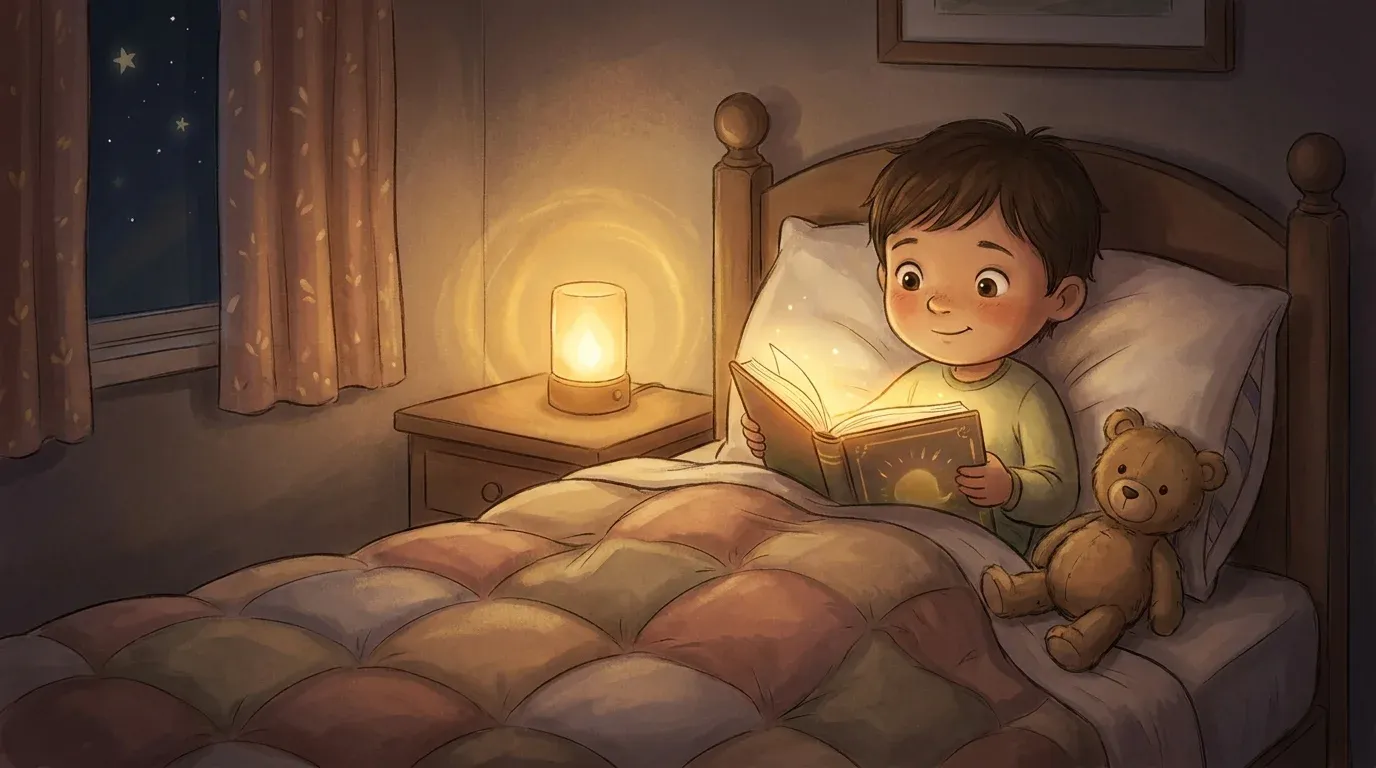
Why Fear of the Dark Spikes in Fall and Winter
Fear of the dark is developmentally normal from roughly age 2 through age 8 — it peaks in the toddler and preschool years because this is exactly when a child's imagination becomes vivid enough to people the darkness with threats, but not yet mature enough to consistently talk itself down. What's less often discussed is the seasonal spike. When daylight saving ends and the clocks fall back, darkness starts arriving hours earlier than a child's body clock expects. Bedtime, which once happened in a partially lit world, now happens in full night.
This seasonal shift matters because young children anchor their sense of safety to cues they can see. A child who falls asleep at 7:30pm in late August does so in the lingering light of a long summer evening. That same child at the same clock-time in November is going to bed in what feels, to their nervous system, like the middle of the night. The darkness is objectively the same; the contrast with their recent experience is not.
The good news: this kind of fear responds very well to narrative. Children this age process the world through story — it's not a consolation, it's a cognitive fact. A book read tonight becomes a mental model your child can reach for when the room goes dark. That's exactly why choosing the right books now, in October, can genuinely help bedtime go more smoothly by November.
Books for Kids Afraid of the Dark That Actually Help
The best books for toddlers afraid of the dark do something very specific: they take the fear seriously, then walk the child character (and your child, by proxy) through it. They don't say "there's nothing to be scared of" — which children correctly recognize as unhelpful — but instead say "it's okay to be scared, and here's what brave looks like anyway."
A few titles that do this well for the 2–6 age range: Can't You Sleep, Little Bear? by Martin Waddell (a classic for good reason — Little Bear's fear is met with warmth and presence, not dismissal); The Dark by Lemony Snicket and Jon Klassen (unusual and gently funny — the dark is a character that turns out to be shy, not menacing); Nighttime Ninja by Barbara DaCosta (darkness as adventure, not threat); and In the Night Kitchen by Maurice Sendak for children who are ready for something a little wilder.
What these books share: a child or child-like character moves through the dark and emerges fine. The emotional arc isn't "fear is silly" — it's "fear is real, bravery is possible." That arc is the active ingredient. If you want to go deeper on how stories specifically build emotional resilience, the post on books to help toddlers with emotions covers the research behind why narrative works where reassurance often doesn't.
Why a Personalized Brave Story Works Differently
Here's the thing about every picture book on that list: the brave child in the story isn't your child. They know that. A three-year-old listening to Can't You Sleep, Little Bear? is moved and comforted — but Little Bear is still Little Bear, not them. The emotional bridge is real, but there is a bridge. Narrative rehearsal — the psychological technique of using stories to mentally practice being in a situation before you face it — works best when the child can fully identify with the protagonist.
That's the specific power of a personalized book where your child is the hero — with their actual face in the illustrations, their name in the text, and their adventure to take on. When a child sees themselves bravely walking through a moonlit jungle, or navigating a starry-night space mission, or exploring an ocean cave without fear, that image doesn't need translating. It goes straight in. "That's me. I was brave. I can be brave."
This is what child psychologists call a "hero version" — an idealized but believable self-image the child can borrow from in a stressful moment. It's the same reason we tell children stories about courage before a doctor's appointment or a first day of school (there's more on that mechanism in our piece on stories to help kids be brave). The dark is one of those moments. A personalized book doesn't just entertain — it gives your child a reference point: "Remember when you weren't scared? That was you."
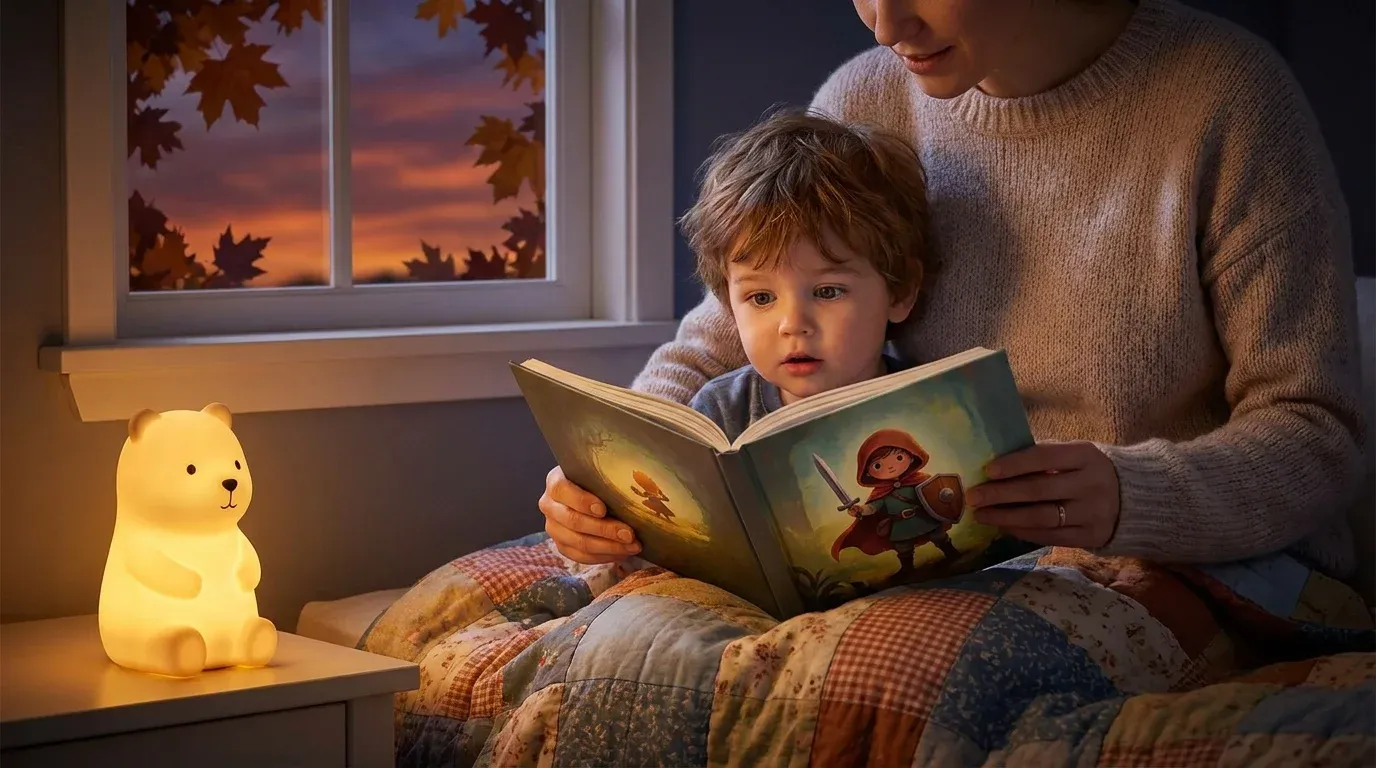
At Epic Little Hero, parents upload a few photos of their child, and our AI generates a fully illustrated storybook where their child's real face appears in every scene — not as a name swap, but woven into the art itself. You can choose the theme that feels right: a space adventure, a jungle quest, a magical kingdom. And at bedtime, your child isn't meeting a fictional brave hero. They're meeting themselves. That small difference turns out to be a large one. If you're curious what this actually looks like, you can create your child's book here — digital delivery is instant, so there's no waiting for a package.
Frequently Asked Questions
What helps kids who are scared of the dark?
The most effective approaches combine environmental comfort (a nightlight, a door left ajar, a familiar soft toy) with narrative tools. Reading books where a child character faces the dark and feels okay on the other side gives young children a mental model to borrow from. Avoid dismissing the fear — validating it first ("I know it feels scary") and then offering a story-based response works far better than logic or reassurance alone. Consistency matters too: the same bedtime story, read repeatedly, builds a sense of predictability that itself reduces anxiety.
Should a 7-year-old be afraid of the dark?
Yes — it's well within the normal developmental range. Fear of the dark typically peaks between ages 2 and 6 but can persist into early school age, especially around transitions (a new bedroom, a new school year, the seasonal shift to darker evenings). It usually resolves on its own as children develop stronger self-regulation and a more concrete understanding of their environment. If fear is significantly disrupting sleep or daytime functioning beyond age 8, it's worth a conversation with your child's pediatrician.
Why does my 5-year-old suddenly seem more scared at bedtime?
Fall is one of the most common triggers for a resurgence of bedtime fear, even in children who had been doing well. The sudden shift in daylight — especially around the end of daylight saving time — means bedtime now coincides with full darkness rather than the dim evenings of summer. This is disorienting for young children, whose bodies and brains are still calibrating their relationship to light and dark. It's not regression; it's a response to a real environmental change. Extra story time and a warm nightlight go a long way.
How many times should I read the same bedtime book?
As many times as they ask for it. Repetition is how young children internalize story. The tenth reading of a brave-at-bedtime book is actually more powerful than the first — by that point, the child knows the arc, they know the hero makes it through, and they can "run" the story in their head when the room goes dark. Our post on how personalized books help children engage with reading shows that emotional investment in a story deepens both comprehension and retention. A story about themselves tends to get requested a lot.
What age is right for books about being scared of the dark?
Most picture books on this theme are written for ages 2–6, which aligns neatly with when fear of the dark is most common and most responsive to story-based interventions. Simpler, warmer books (like Can't You Sleep, Little Bear?) work well from around age 2. Books with more complex emotional narratives (like The Dark by Lemony Snicket) tend to land better from age 4 up. Personalized brave-hero books work across this entire range — because seeing yourself in a book is compelling at almost any age.
The Story That Has Their Face In It
Fall evenings are long, and some nights the hall light and the extra hug still aren't quite enough. If you're looking for something that goes a little deeper — a story your child will ask for again and again, one that shows them a version of themselves who isn't afraid — a personalized book where they're the brave hero is worth trying. It takes about five minutes to create, arrives instantly as a print-ready PDF, and costs less than most picture book bundles. Start your child's brave story here, and see which adventure theme fits them best. You can also explore how personalized bedtime stories work if you'd like to understand what makes them different before you start.