Jewish Children's Books for the High Holidays: A Reading List from Rosh Hashanah to Sukkot
A curated holiday reading list for Jewish families — organized by Rosh Hashanah, Yom Kippur, and Sukkot — plus one way to put your own child right inside the story.
The weeks between Rosh Hashanah and Sukkot move fast — the honey cake appears, the shofar blows, the lulav gets shaken — and somewhere in the middle of it all, you realize your four-year-old has no idea what any of it means. Not really. They see the candles and smell the brisket, but the bigger ideas — fresh starts, forgiveness, gratitude for shelter — float above their heads like something just out of reach. That's where books come in. The right story doesn't lecture. It hands a child a small window into a big idea and lets them look through it at their own pace.
Quick answer: The best Jewish children's books for the High Holidays match each holiday's core theme — renewal for Rosh Hashanah, saying sorry for Yom Kippur, and gratitude for Sukkot. Top picks include "The Hardest Word" by Jacqueline Jules and "Lori's Sukkah" by Fran Manushkin. Personalized books go further by placing your own child inside the story.
Below you'll find a curated reading list organized holiday by holiday, written for Jewish parents and grandparents who want the season to land — not just look nice on the table. We've also included a few questions families ask every year about the High Holidays, and one idea at the end that takes the reading experience from memorable to unforgettable.
Jewish Children's Books for Rosh Hashanah
Rosh Hashanah asks even adults to sit with big questions: Who have I been this year? Who do I want to be? For a toddler or preschooler, the entry point is gentler — apples, honey, a shofar blast, and the sense that something new is beginning. The best Rosh Hashanah books for young children meet them exactly there, then quietly plant the seed of the deeper meaning.
"Rosh Hashanah Is Coming!" by Ceil Szabo is a warm board-book introduction that walks through the holiday's symbols one by one — honey, apples, round challah — without overwhelming a short attention span. It's the kind of book you read before the holiday so your two-year-old has something to point at during dinner. For slightly older readers (ages 3–6), "Happy New Year, Biscuit!" threads Rosh Hashanah traditions through a beloved dog character, which is never a bad strategy with preschoolers.
"It's a New Year, Little Matzoh!" takes a playful approach with a matzoh ball hero navigating new beginnings — it's sillier than some alternatives, but that's part of what makes it work for fidgety listeners. If you want one Rosh Hashanah book that bridges toddler and early-reader ages, "Apples and Honey" by Joan Holub does the job with enough warmth to survive many re-readings. And for grandparents looking for something with more cultural weight, Lesléa Newman's work on Jewish holidays offers depth without talking down to children. For a deeper look at how to explain the holiday itself in child-friendly language, our guide on explaining Rosh Hashanah to kids ages 2–6 pairs well with any of these picks.
Books for Yom Kippur and Saying Sorry
Yom Kippur is the trickiest holiday to translate for young children. Fasting, atonement, the weight of the Book of Life — these are adult concepts. But the emotional core of the day, the act of saying sorry and meaning it, is something a three-year-old understands completely. That's the door. A good Yom Kippur book for kids doesn't try to explain the liturgy. It tells a story about a character who made a mistake, felt bad about it, and found the courage to make it right.
"The Hardest Word" by Jacqueline Jules is the most recommended Yom Kippur picture book for young children — and for good reason. A Ziz (a mythical Jewish bird) travels the world looking for "the hardest word" and discovers that "I'm sorry" is harder to say than almost anything. It lands every time. "Even Higher" by Eric Kimmel, based on a classic Chelm tale, is better suited for ages five and up — the story is longer and more layered, but it rewards patient readers with a genuinely moving ending.
"Day of Forgiveness" by Molly Cone approaches Yom Kippur through a family lens, which helps children connect the synagogue experience to home. For families building a broader Judaica shelf — not just for the holidays — this is a strong addition. Books that explore forgiveness and "starting over" also do quiet, lasting work on emotional literacy, which is why pairing a Yom Kippur book with one from our guide to books that help toddlers with big emotions can make bedtime reading that week feel especially intentional.
Books for Sukkot
Sukkot is, in some ways, the most child-friendly holiday of the bunch — you build a hut, decorate it with fruit, eat inside it, and sleep under the stars if you're ambitious enough. Young children love it for the same reason they love forts: it is, essentially, a sanctioned outdoor fort that the grown-ups are also excited about. Books about Sukkot can lean into that delight while gently introducing the themes of gratitude and impermanence that the holiday carries.
"Lori's Sukkah" by Fran Manushkin is a gentle, community-centered story about a child who builds a sukkah with her neighbors — it's especially good for children in urban settings who might not have much outdoor space. "The Sukkot Wedding" by Linda Elovitz Marshall weaves together celebration and tradition in a way that older preschoolers (4–6) find genuinely engaging. For a book that covers the full arc of the season — from Rosh Hashanah through Sukkot — "All About Sukkot" from the All About Jewish Holidays series offers a reliable, age-appropriate overview.
One underrated strategy: use Sukkot as the moment to talk about what your family is grateful for this year. Reading a Sukkot book together and then asking, "What's one thing you're really happy about?" gives even a three-year-old a way into the holiday's spiritual meaning. If you're looking to build a broader seasonal shelf beyond the High Holidays, our list of ideas for building a home library for toddlers without the overwhelm is a good place to start. And if your family is heading to grandparents' for the holidays, our holiday travel with a toddler survival guide has practical advice on keeping little ones happy on the way there — books included.
One More Idea: Put Your Child Inside the Story
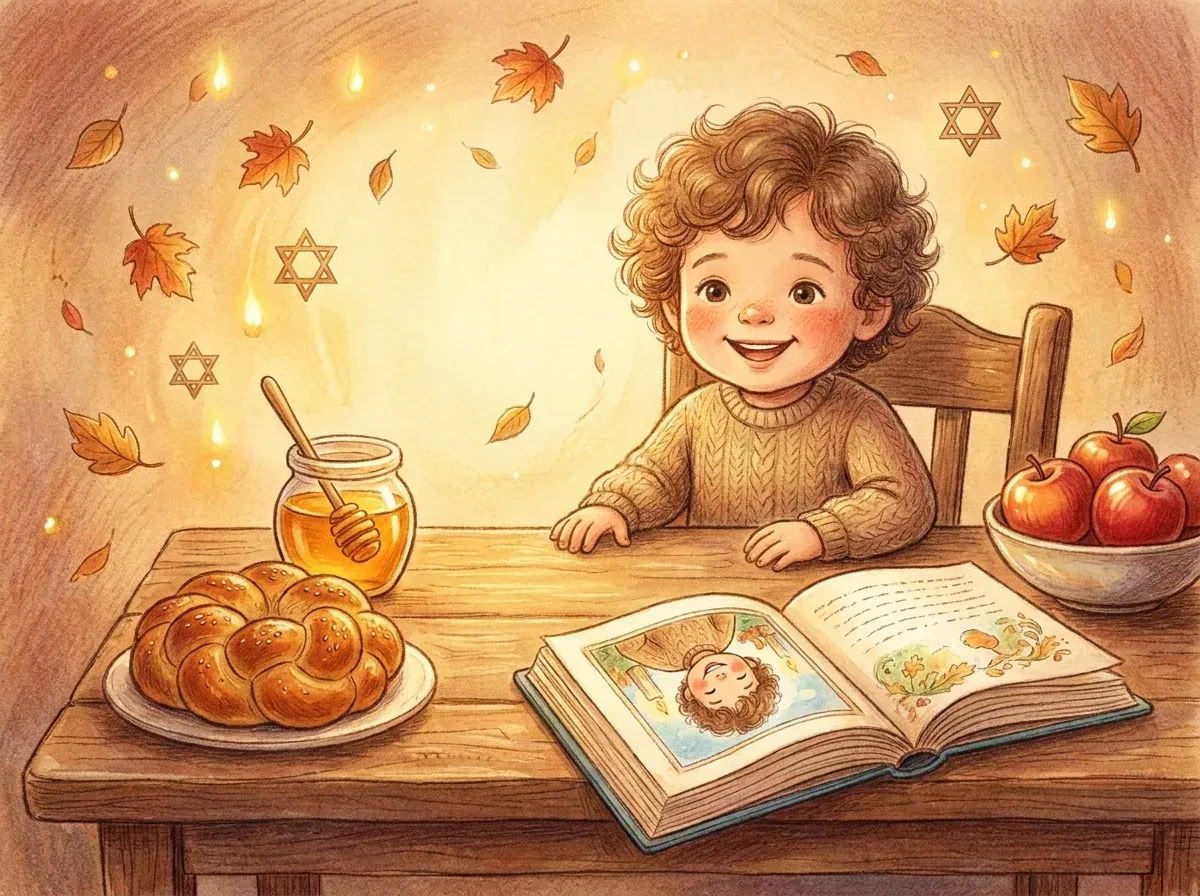
Every book on this list will do something good for your child. But there's a layer of magic that no off-the-shelf book can offer, no matter how beautifully written: a story where your specific child — your Eliana, your Noam, your Maya — is the one dipping the apple in honey. A personalized Rosh Hashanah story lets a child experience apples, honey, and a fresh start as the main character, not a bystander watching someone else's adventure.
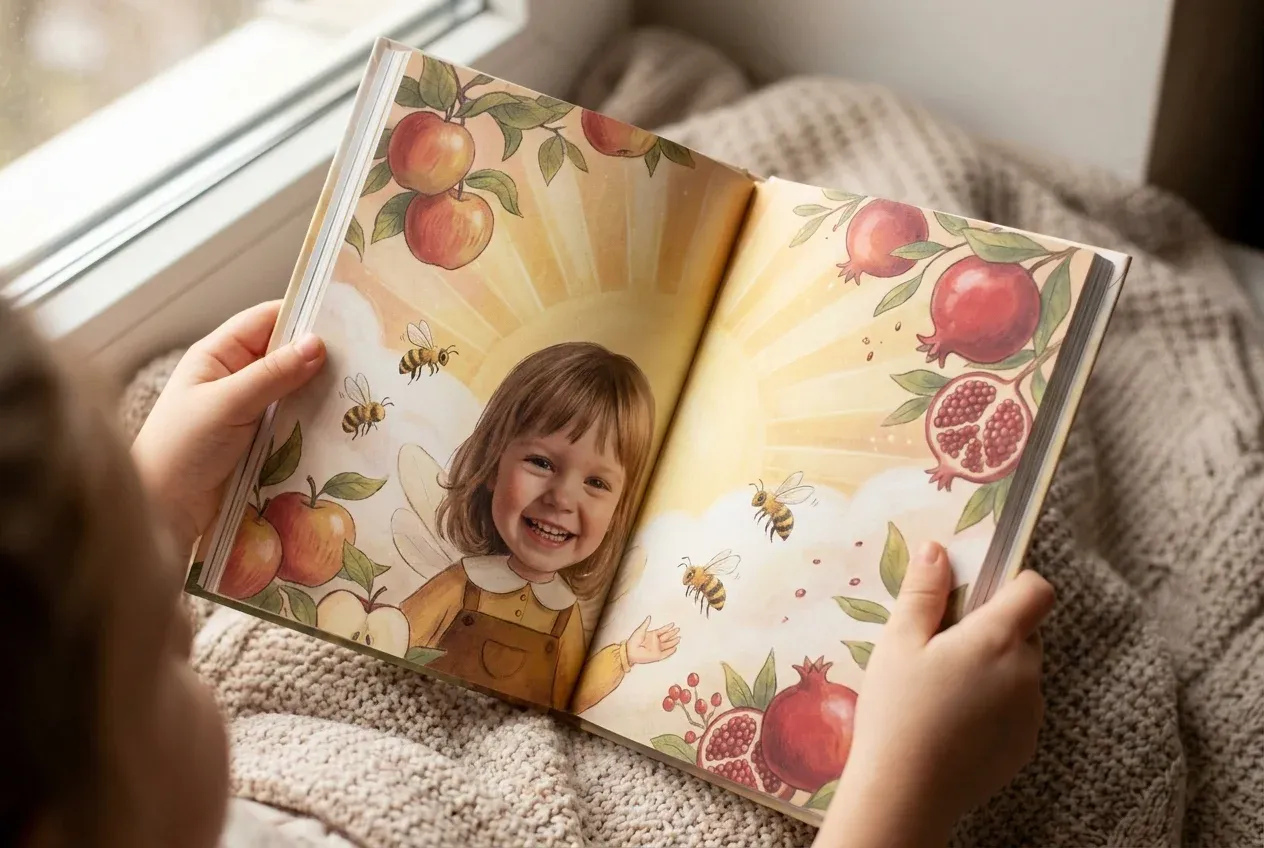
At Epic Little Hero, parents and grandparents upload a few photos of their child, and our AI generates illustrations that actually look like that child — their real face, their hair, their expression — woven into a New Year story. The result isn't just a book with a name printed on the cover. It's a story where your child can point to the page and say, "That's me. I'm the one blowing the shofar." That's a different kind of reading experience entirely. You can see how other families have done it in our post on meaningful Rosh Hashanah gifts for kids that go beyond candy, or browse themes to find the right fit using our guide to choosing the perfect personalized book theme.
Books start at $29, deliver instantly as a print-ready PDF, and can be printed at home or at any local print shop — which means even if Rosh Hashanah is next week, you're not too late.
Frequently Asked Questions
What are the three major Jewish High Holidays?
The three major High Holidays are Rosh Hashanah (the Jewish New Year), Yom Kippur (the Day of Atonement), and Sukkot (the Feast of Tabernacles). Rosh Hashanah and Yom Kippur are often grouped as the High Holy Days specifically, while Sukkot follows a week later. Together they form a season of reflection, renewal, and gratitude that spans roughly three weeks in September or October each year.
What are some good Jewish books for children?
For the High Holidays, standout picks by age include:
- Ages 1–3: "Rosh Hashanah Is Coming!" (Ceil Szabo), "Happy New Year, Biscuit!"
- Ages 3–5: "The Hardest Word" (Jacqueline Jules), "Apples and Honey" (Joan Holub), "Lori's Sukkah" (Fran Manushkin)
- Ages 5–7: "Even Higher" (Eric Kimmel), "The Sukkot Wedding" (Linda Elovitz Marshall)
- All ages: A personalized book where the child is the main character in a Rosh Hashanah story
When should I start reading High Holiday books with my child?
Two to three weeks before the holidays is ideal. That's enough time for a book to become familiar — children often want the same book read repeatedly, which is actually how comprehension deepens. Starting around early-to-mid September means you'll have time to revisit a favorite two or three times before Rosh Hashanah arrives, and the concepts will feel familiar rather than brand-new when the holiday table is set.
Are there High Holiday books that work for very young toddlers (under 2)?
Yes — board books are the format to look for. They're durable, short, and usually focus on one or two sensory details (the smell of honey, the sound of the shofar) rather than a full narrative. At this age the goal isn't comprehension of meaning — it's exposure to the sounds, sights, and vocabulary of the holiday. Even a one-year-old absorbs more than we think when a familiar adult reads with warmth and enthusiasm.
Can a personalized book actually look like my child?
At Epic Little Hero, yes — and that's the key difference from most personalized books on the market. Rather than swapping in a name, our AI generates custom illustrations based on photos you upload, so the child in the story genuinely resembles your child. Most families find this is the detail that makes the biggest impression, both on the child and on grandparents. You can read a full comparison in our post on what 'personalized' really means in a children's book.
This High Holiday season, the books you choose don't have to be either traditional or personal — they can be both. Start with a few curated picks that introduce Rosh Hashanah, Yom Kippur, and Sukkot in language your child can hold onto. Then, if you want to give them something truly once-in-a-lifetime, create a personalized High Holiday book where they're the one writing their name in the Book of Life, dipping the apple, and welcoming a sweet new year — as the star of their very own story.